One of the crazy things about travelling is how jam-packed the days and nights are as compared to normal life back home. It’s a concentrated period of taking in a plethora sights and sounds and smells, experiencing other cultures and people, and making the most of the limited time until you have to go home again.
We recently returned from a holiday to Egypt and Doha, spanning 15 days, including 6 flights (eating up more than 30 hours in total), 5 different accommodations, a river cruise, horse and ‘carriage’ rides, and a lot of driving. The contrasts we experienced were vast, and the nomadic schedule – which involved us moving every few days – was exhausting, such that, even days after returning home, I still felt disoriented and confused about where I was (especially in the middle of the night), and felt like I was in motion. It was gruelling, but it was worth it, as you’ll learn over the next few posts.
Never. Be. Bored.
It had been seven years since we’d last travelled internationally, so I made sure to take in the experience on the ground before we left. To me, airports encapsulate a sense of adventure and possibility, with thousands of people heading off to distant lands, ready to experience the vast diversity of creation on our planet.
Once in the air, the first thing that struck me was how we can’t escape our society’s conditioning of constant distraction. When I first travelled overseas, in 1989, each passenger had their own set of earphones (which is still the case now), but the entertainment was limited to a few audio channels (personal choices), or – collectively – watching the one or two movies (depending on flight time) that played on the one giant screen at the front of your cabin section.
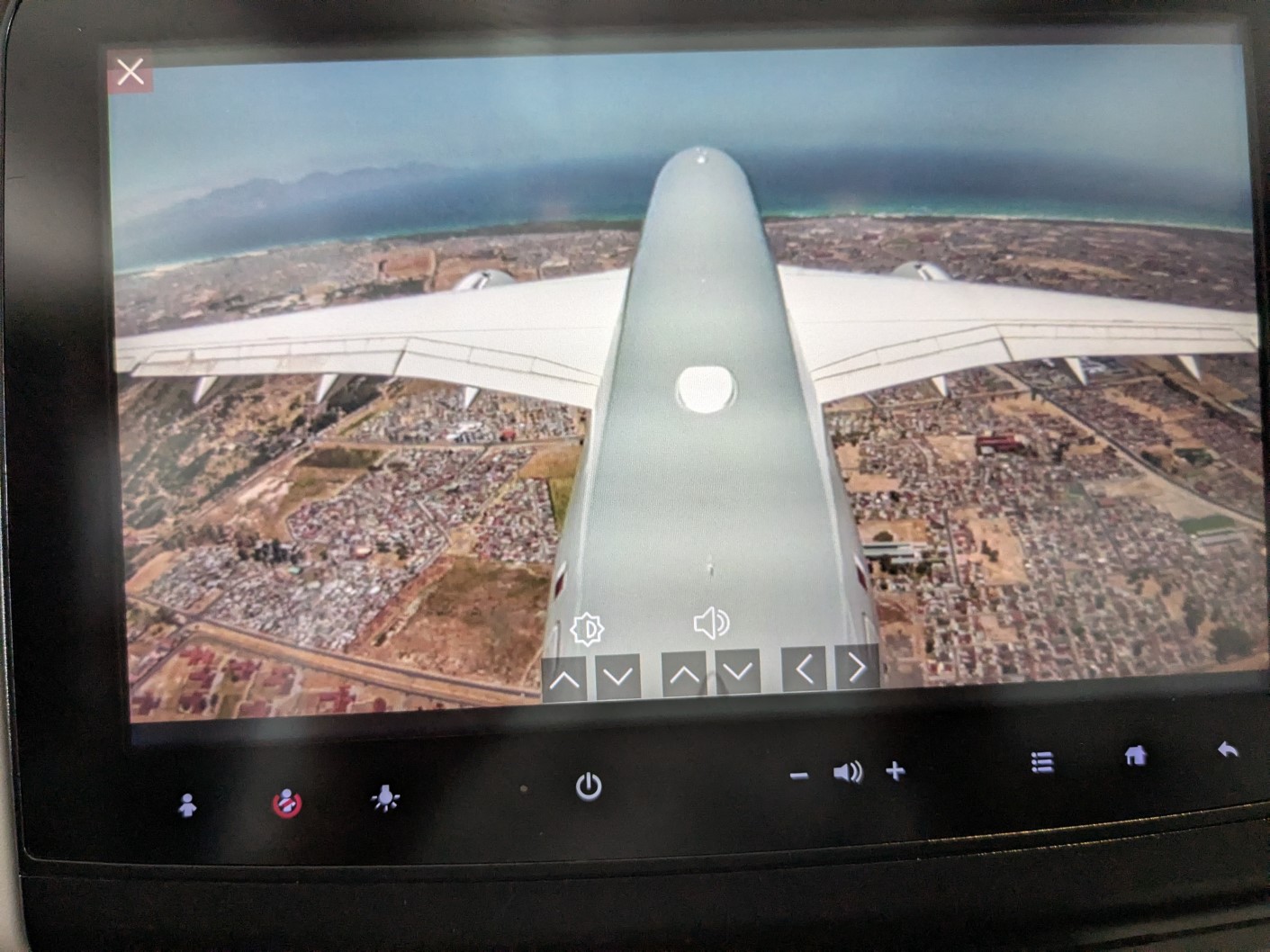
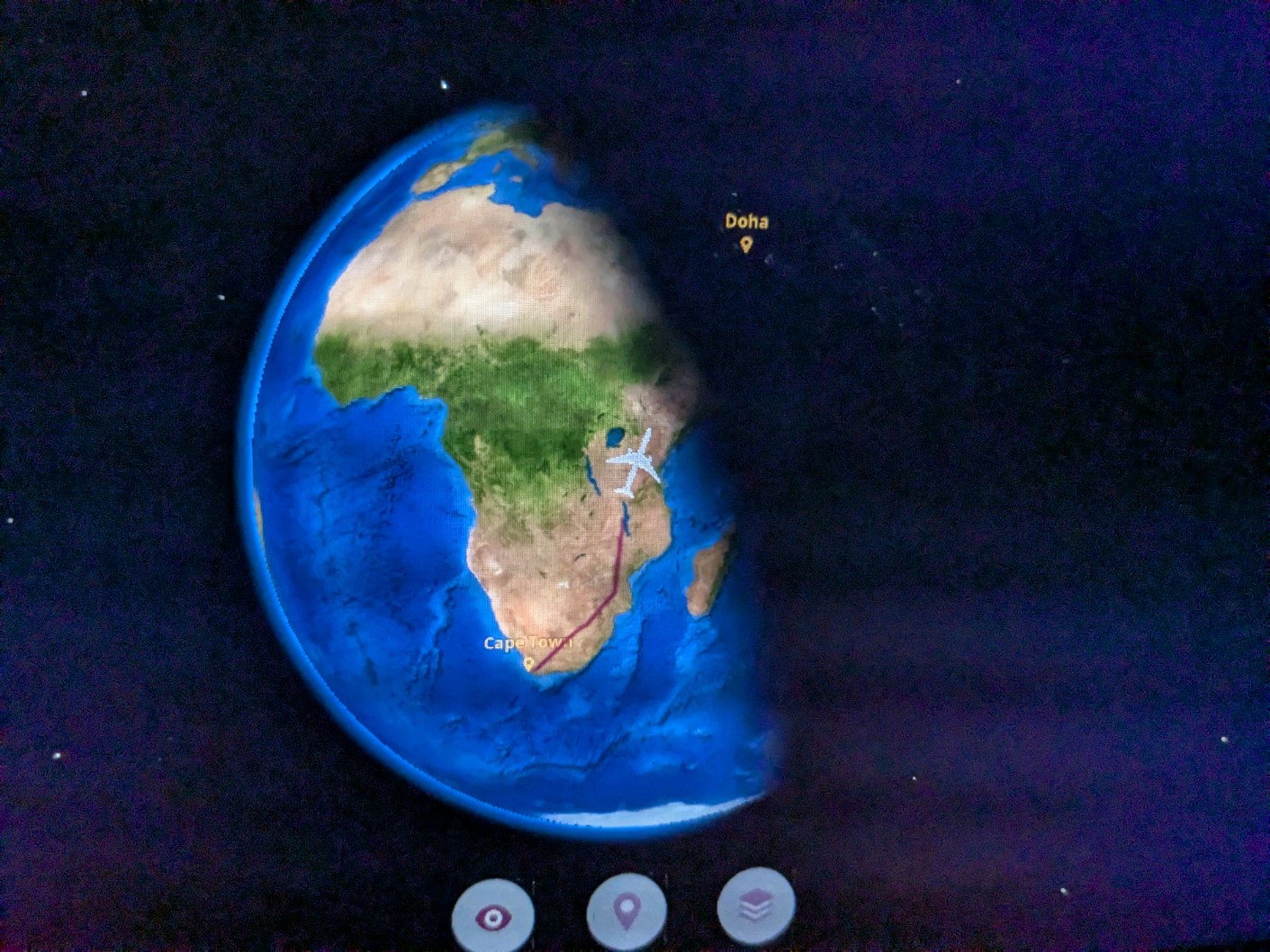
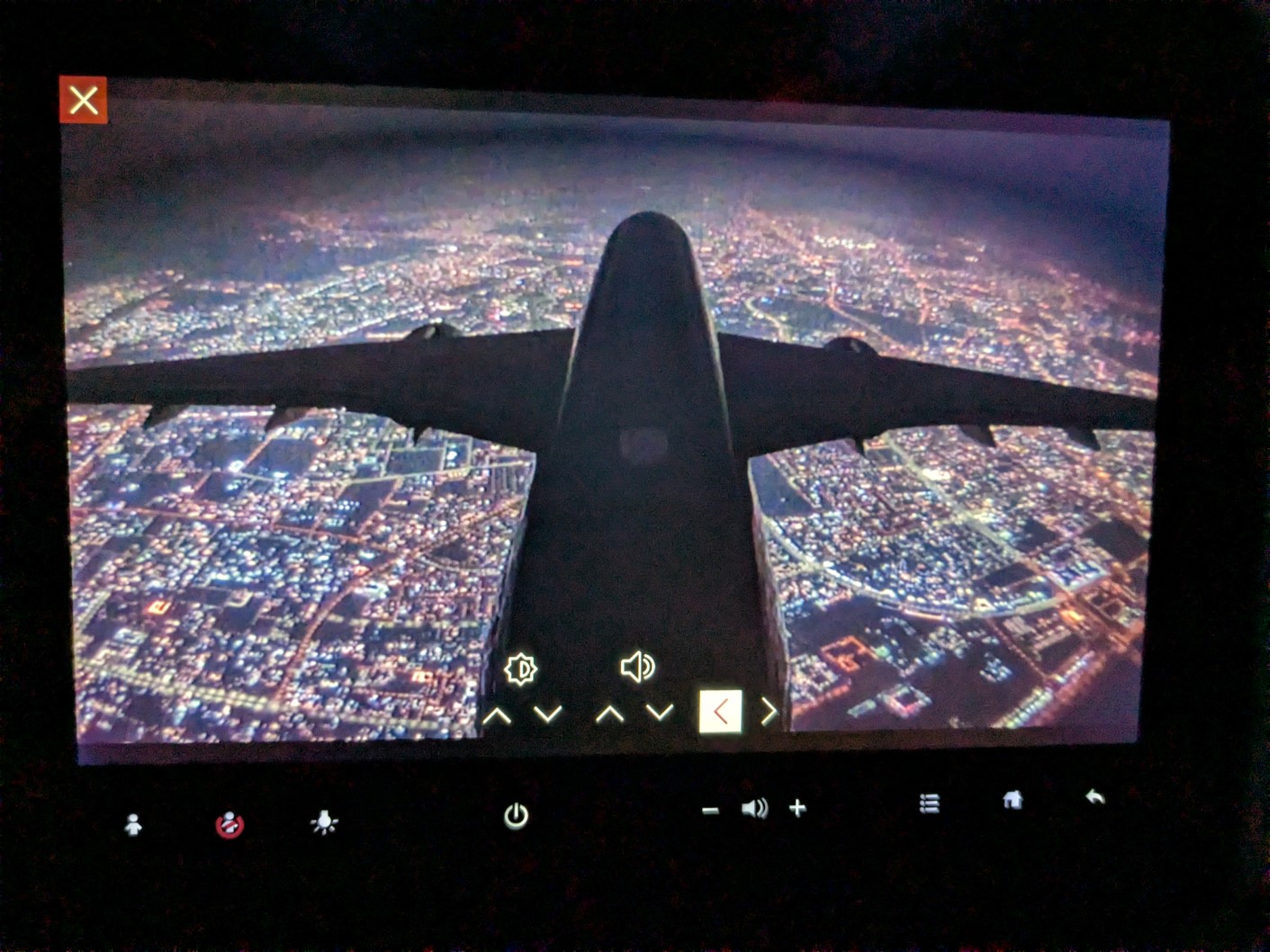
Fast forward to today, and you don’t have to be bored for even a second. On our Qatar Airways plane, each passenger (economy class, in case you’re wondering) had their own personal tablet built into the seat in front of them, with a personal choice of 8000 entertainment options (according Kevin Hart in the safety video). These options included a plethora of movies (in various categories and languages), TV shows, live TV, video games, full music albums, and podcasts. Being an Islamic nation’s carrier, it also included the Holy Quran – both to recite from the screen, and with a choice of audio recordings. There was also information about the destination (and other destinations the airline flies to), a 3D flight map with various views and sets of information, and live views from three cameras outside the plane. And if that wasn’t enough, there was also free, Starlink-provided WiFi to connect your personal device to, so you could remain in constant contact with those on the ground.
One would think that people would welcome the opportunity for at least some solitude, rest, and reflection. Being thousands of metres above the world for hours is a perfect chance to disconnect from our lives on the ground, and get a break from the near-constant stimulation that surrounds us in our everyday lives. But the marvels of modern technology simply bring them along for the ride. I’m not judging people who indulge in these options, because I did too at times. On long flights, entertainment can be a welcome distraction from the discomfort of being packed in like sardines. But it can seem extreme if you’re occupied with it the entire time – even forgoing sleep on a 10.5-hour flight (as did one man who seemed to watch all the John Wick movies one after the other).
Welcome to Doha
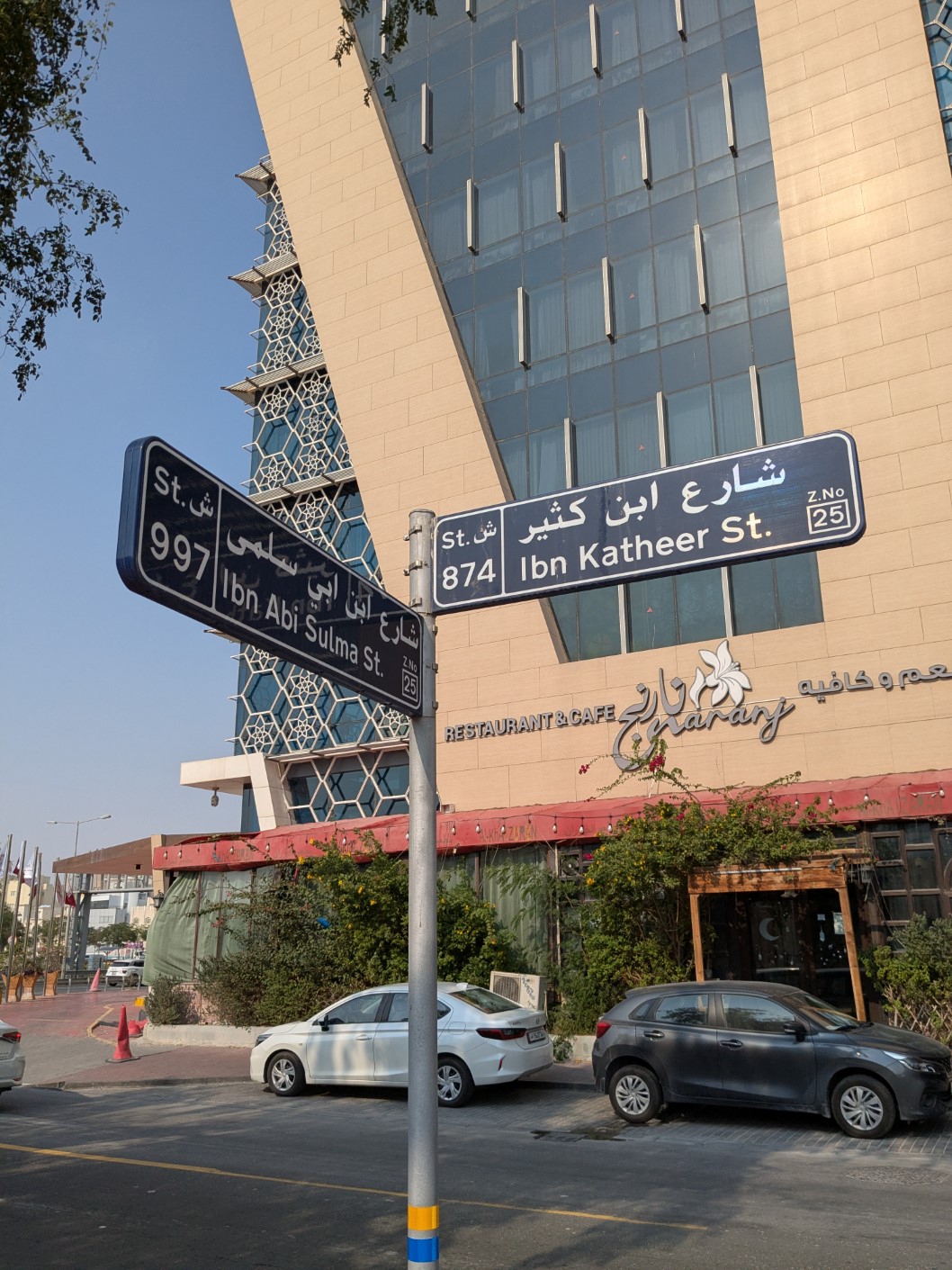
We landed in Qatar’s capital – Doha – past 11 p.m., ahead of a very short night’s sleep. The next day, we walked around the area to get some groceries and food, given that we were in self-catering accommodation. What struck us, then and later on, is the strange looks we got – probably because hardly anyone was walking on the streets. The pavements were just empty, and we were puzzled. The roads, of course, were full of cars (both private drivers and Ubers / taxis) everywhere. The weather couldn’t have been an excuse, because, being winter, the temperatures were in the comfortable mid-to-low 20s Celsius range.
Being allergic to walking just seemed to be the culture of the place, which was so strange to me. (I even witnessed a drive-through ATM later on.)
Our first activity was to visit the National Museum of Qatar, with its standout architecture (fashioned after the desert rose crystal formations in the nearby desert). The displays inside were impressive, showcasing the nation’s history (heavily tied to pearling, and later oil), and including items like TV sets from the 80s and rotary phones – which, I suppose, qualifies as a historical artefact to today’s kids (and another reminder of my rapidly-advancing years).
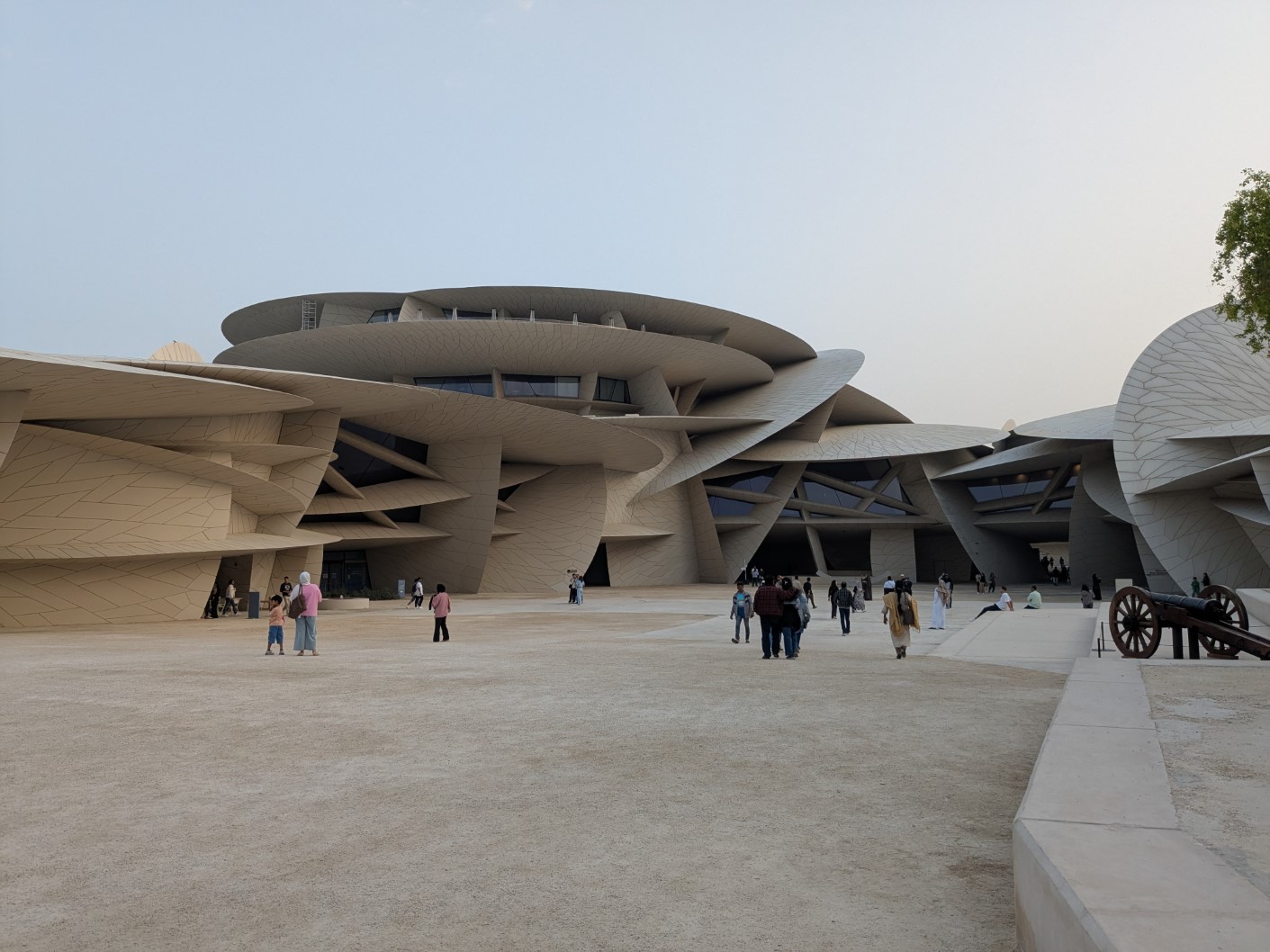
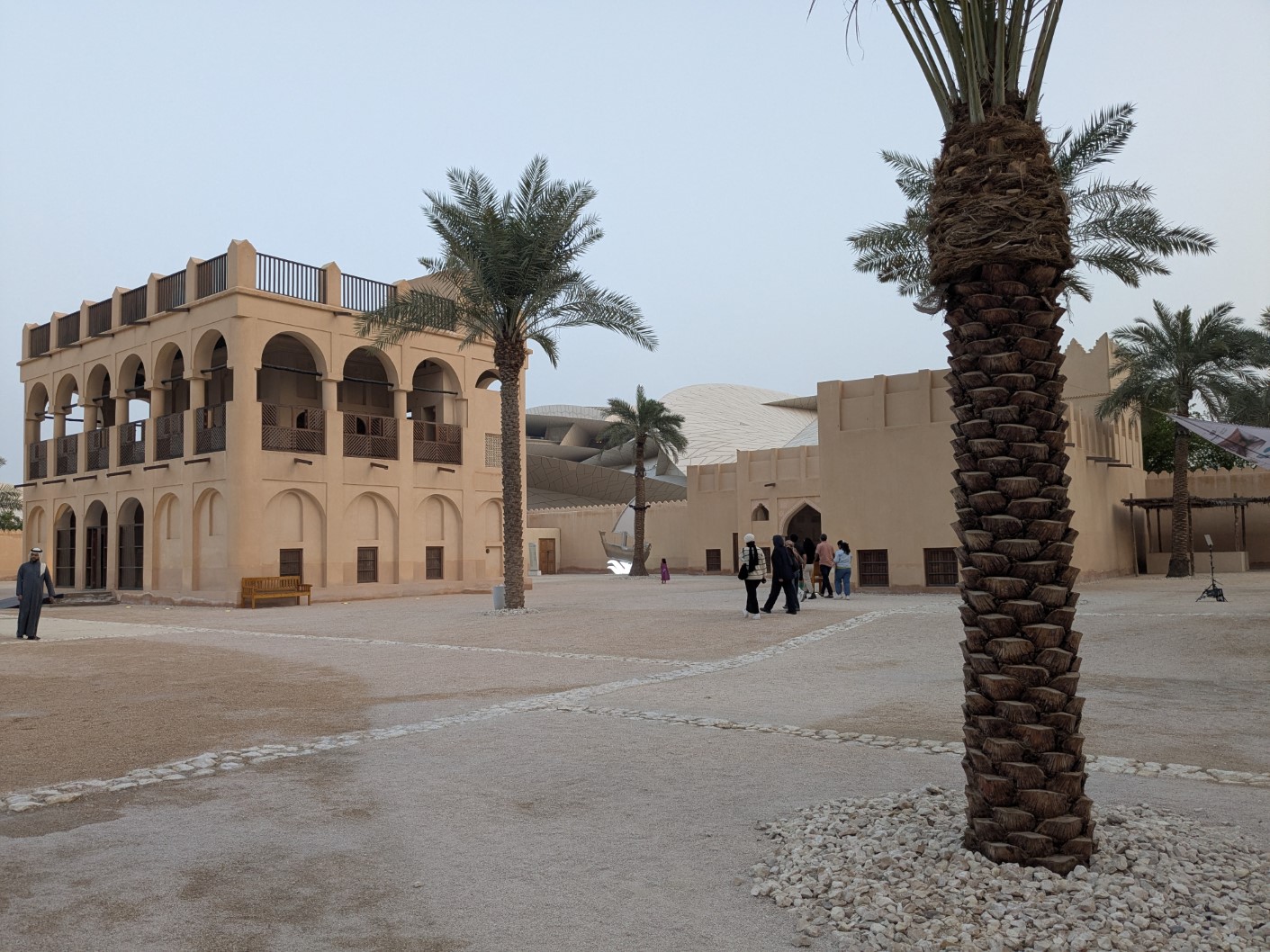
Outside the building, there was a cool ship playground (our kids are well past that age, though), and a recently-restored old palace – once the home of the ruler of Qatar – which was fun to explore.
Lots to see
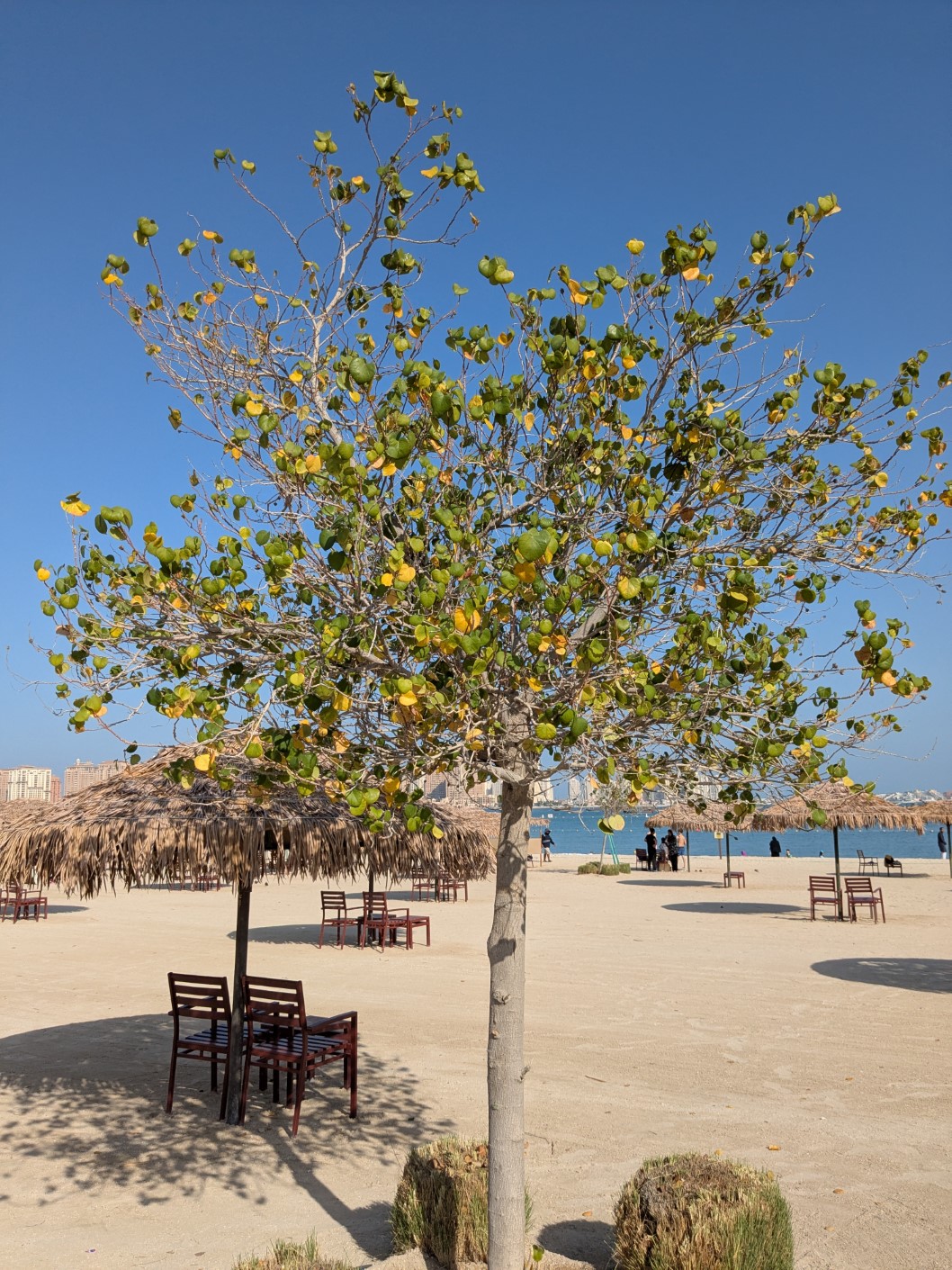
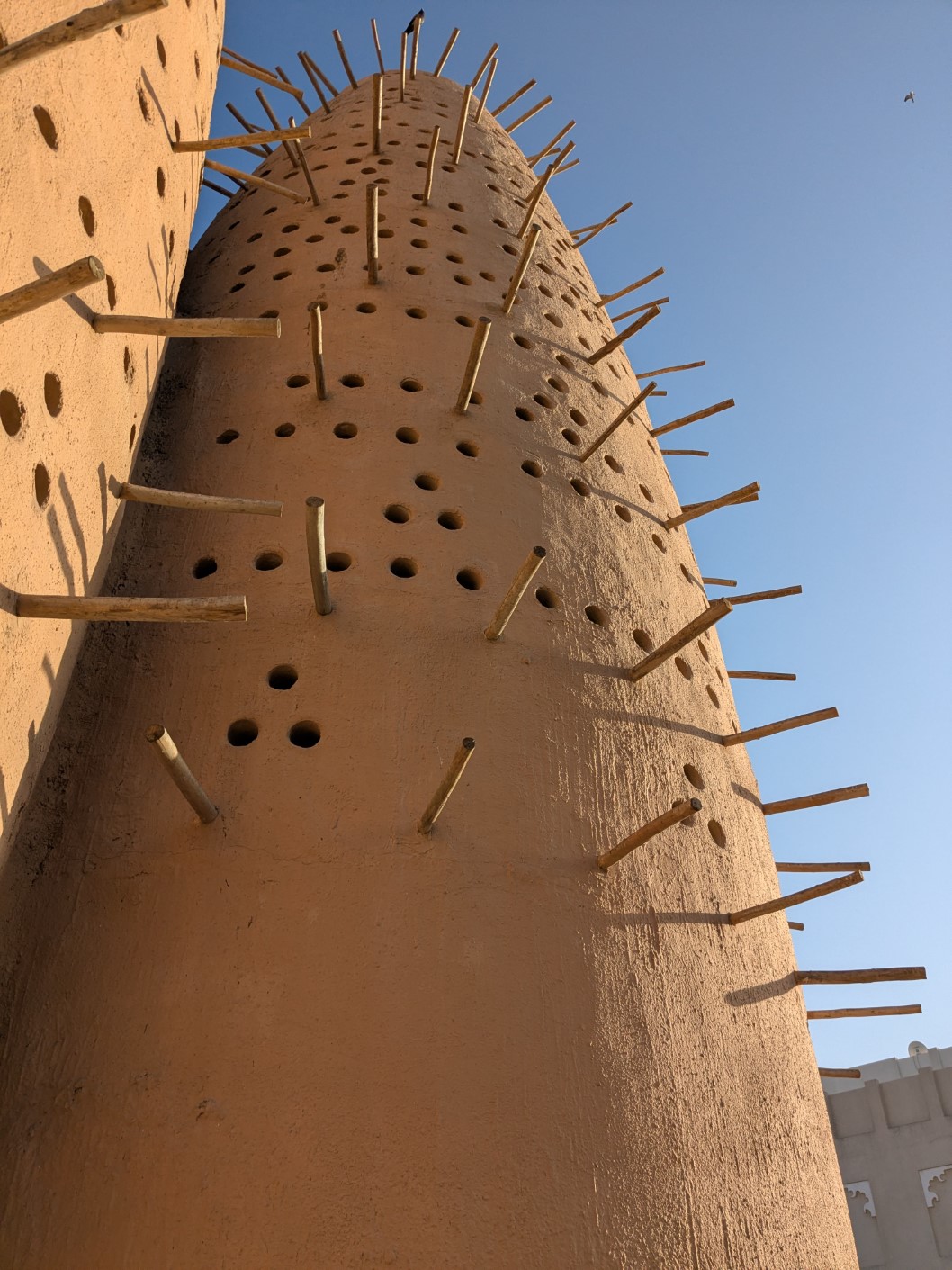
The next day, we briefly walked through a marketplace – Souq Waqif (which we visited later that evening) – before heading to Katara Cultural Village, where we spent some time on the beach (which felt more like a bay, actually). I was delighted to find Indian Mynas – a bird which was very common where I grew up (though they’re not pleasant creatures – being classified as an invasive species). We also walked briefly through some of the ‘village’ (mostly high-end shopping) while trying to find the Katara Mosque, which had some cool, Timbuktu-styled pigeon towers outside.
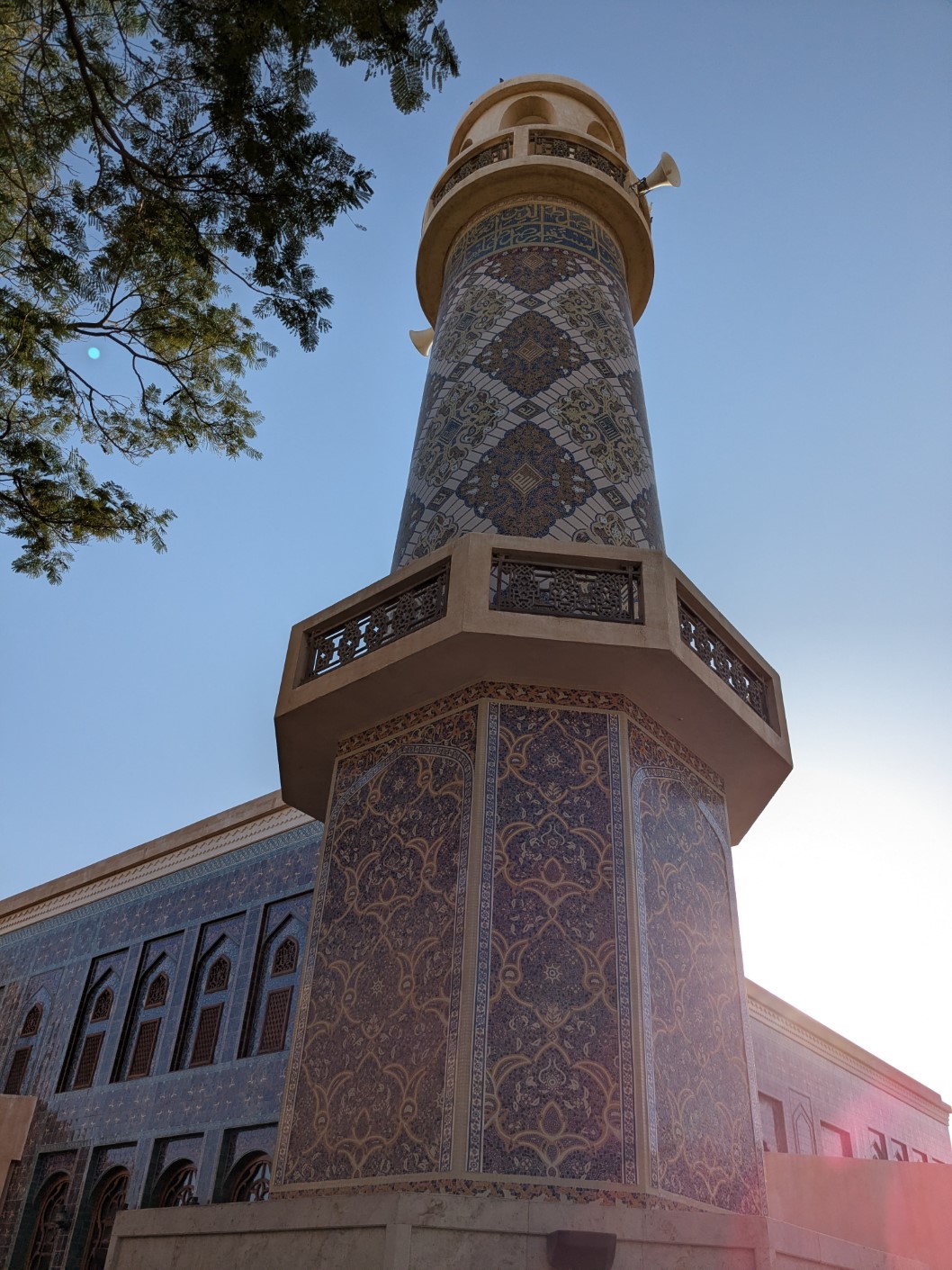
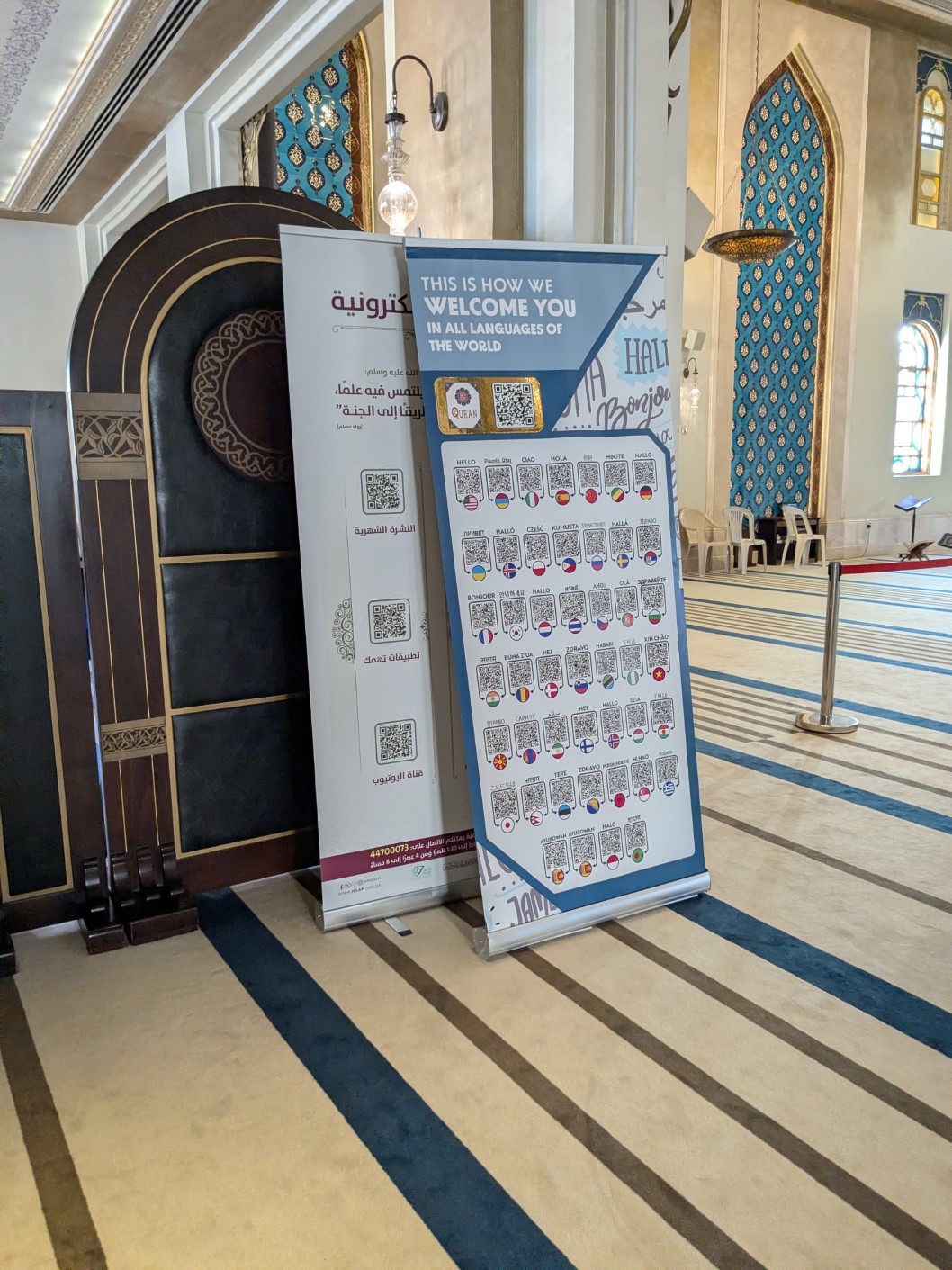
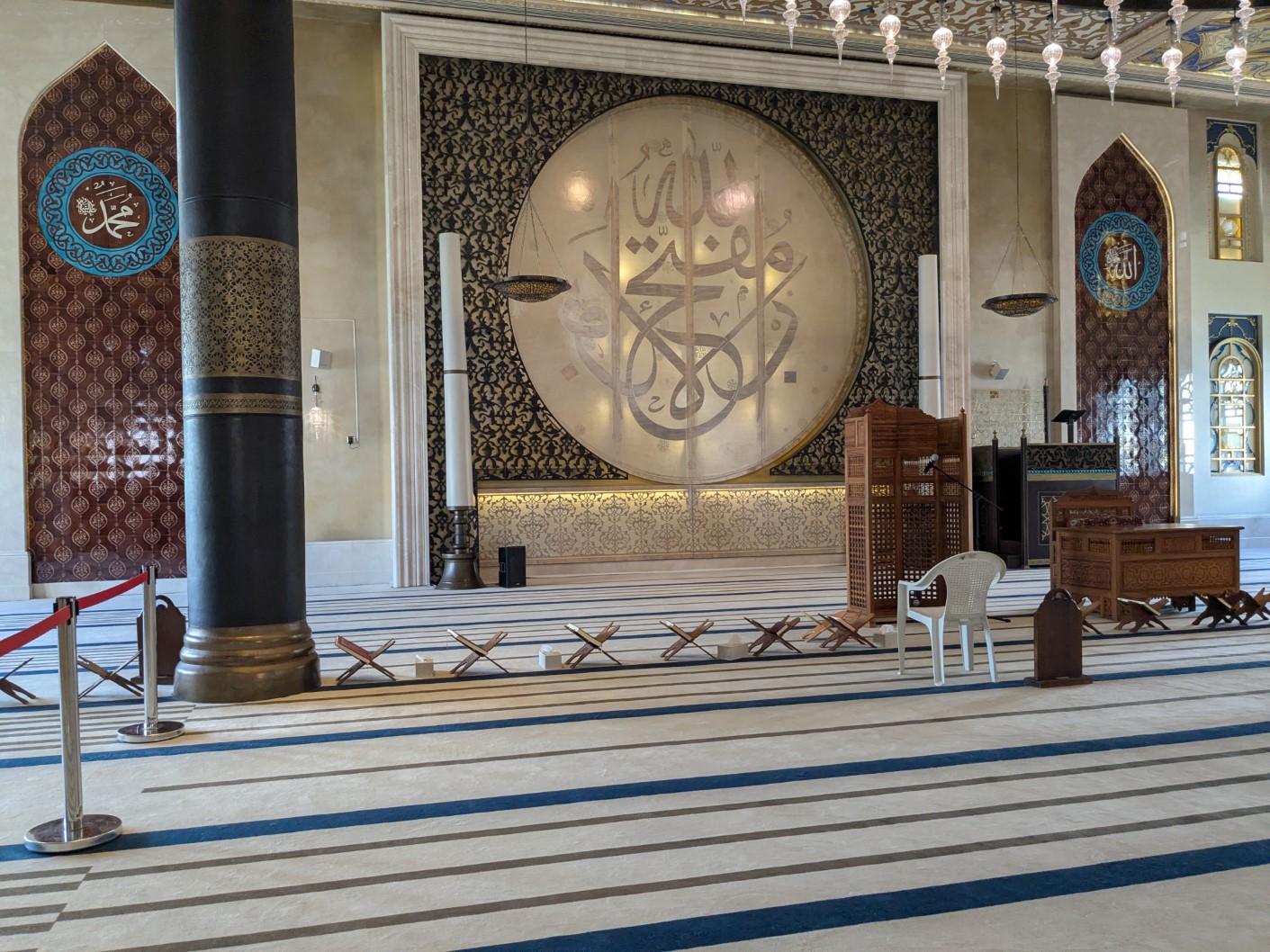
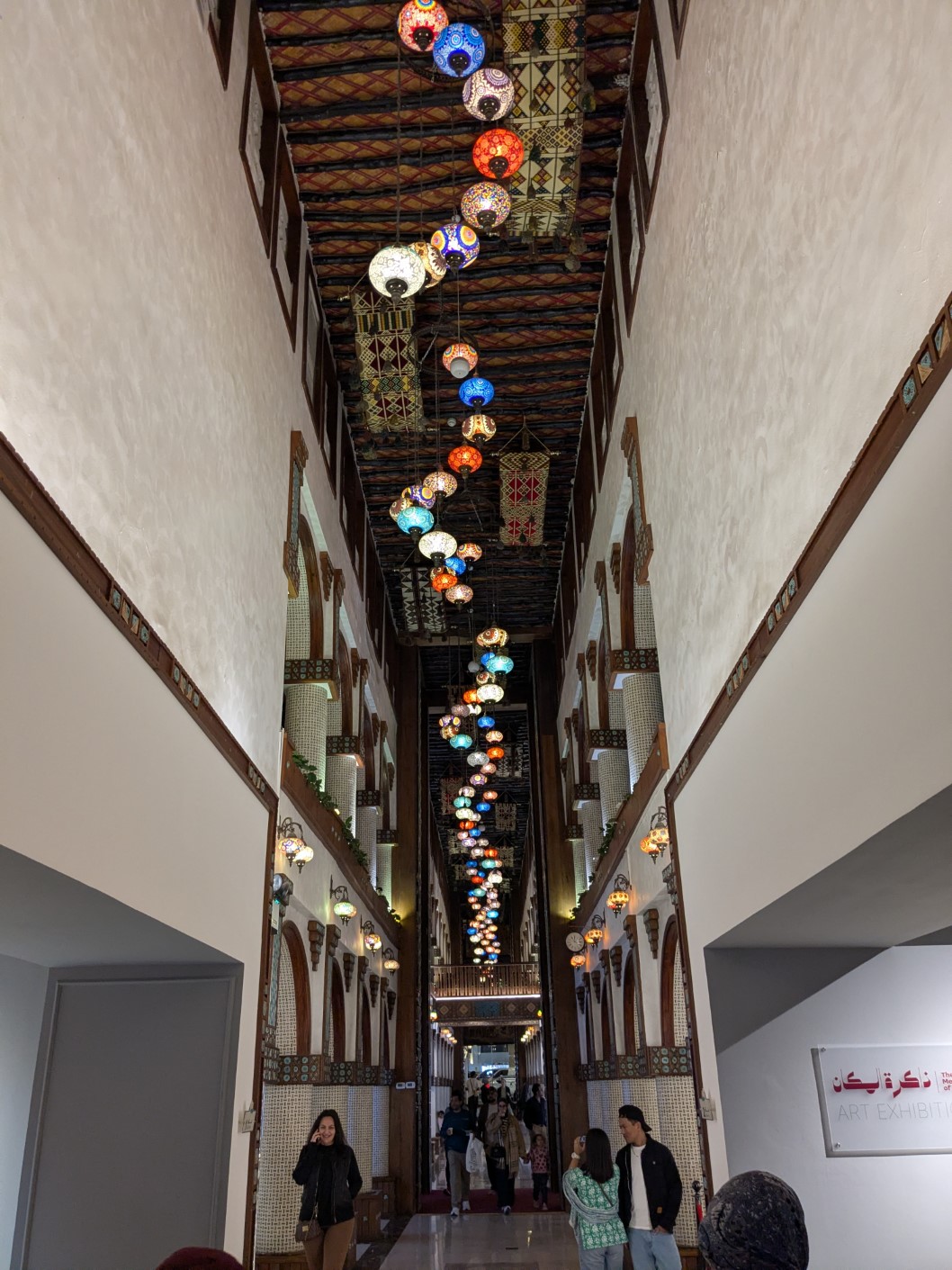
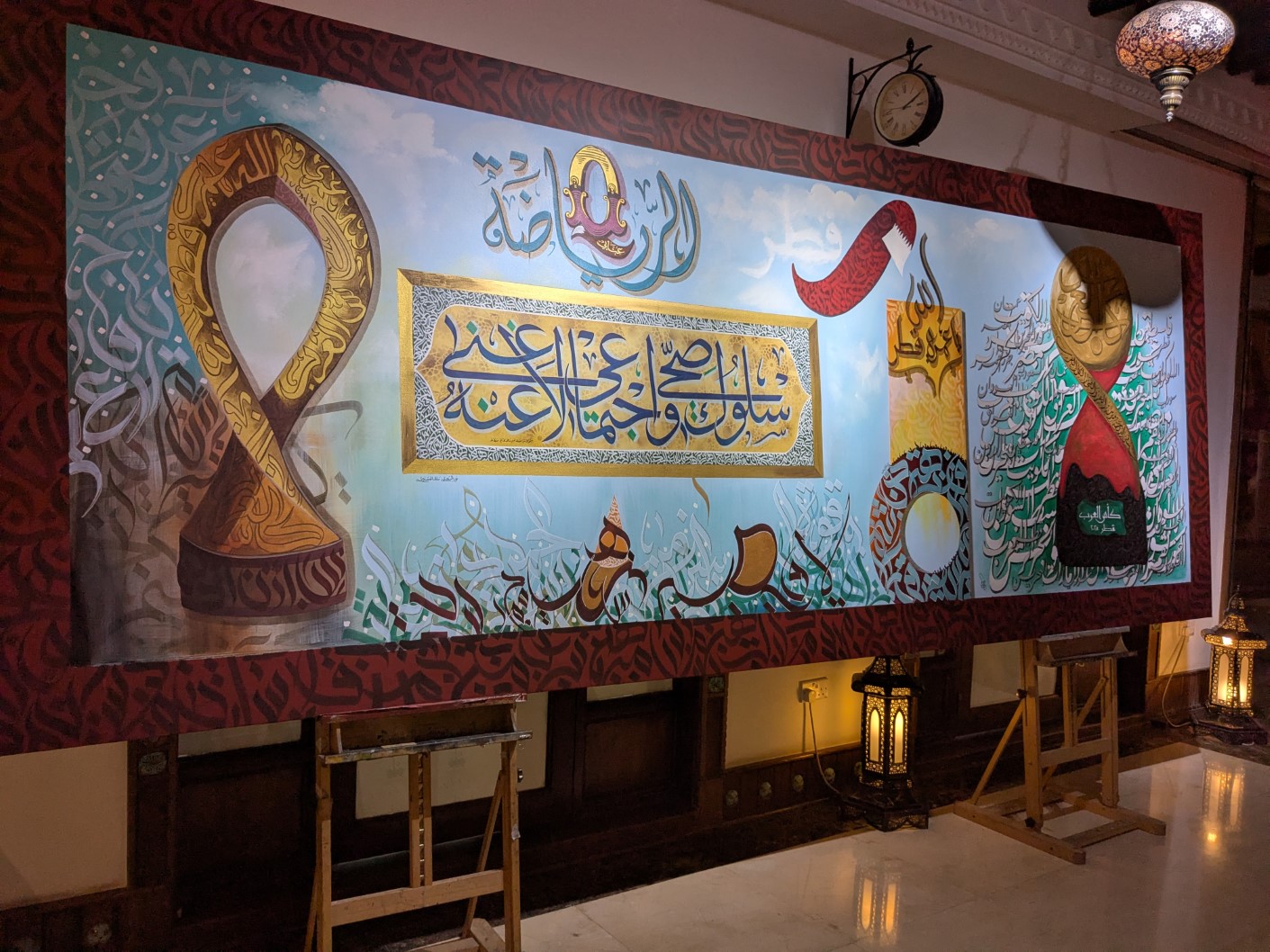
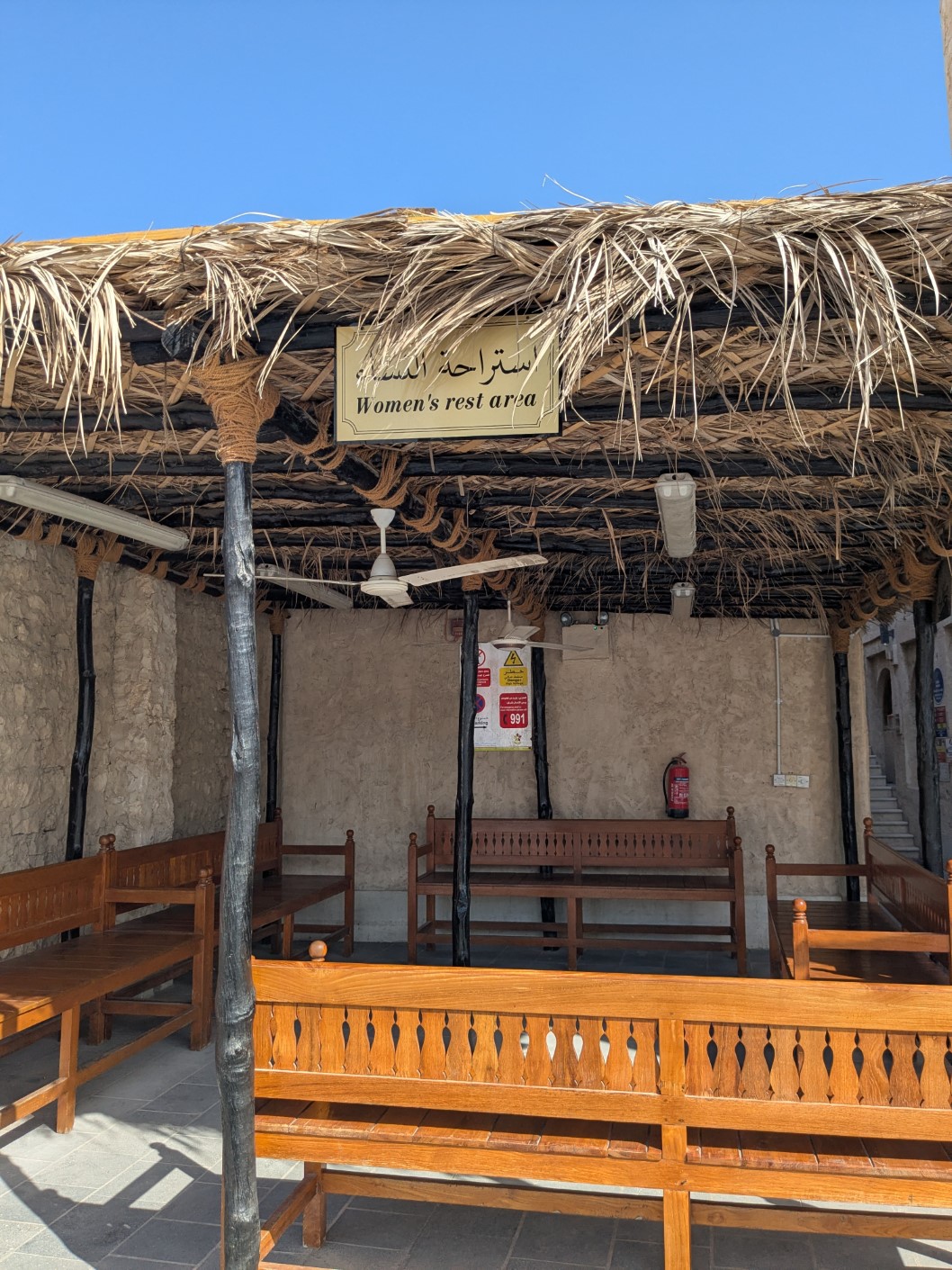
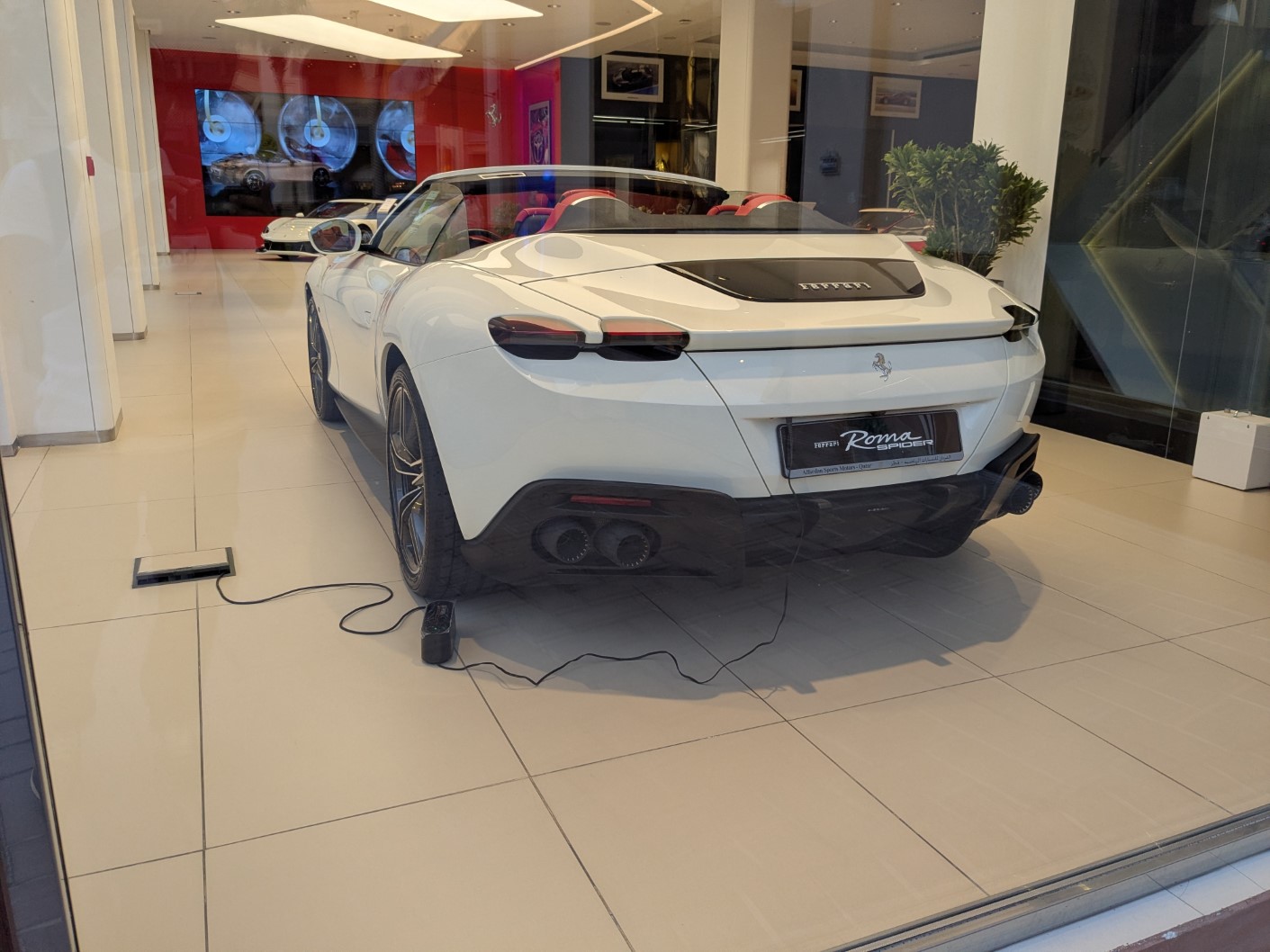
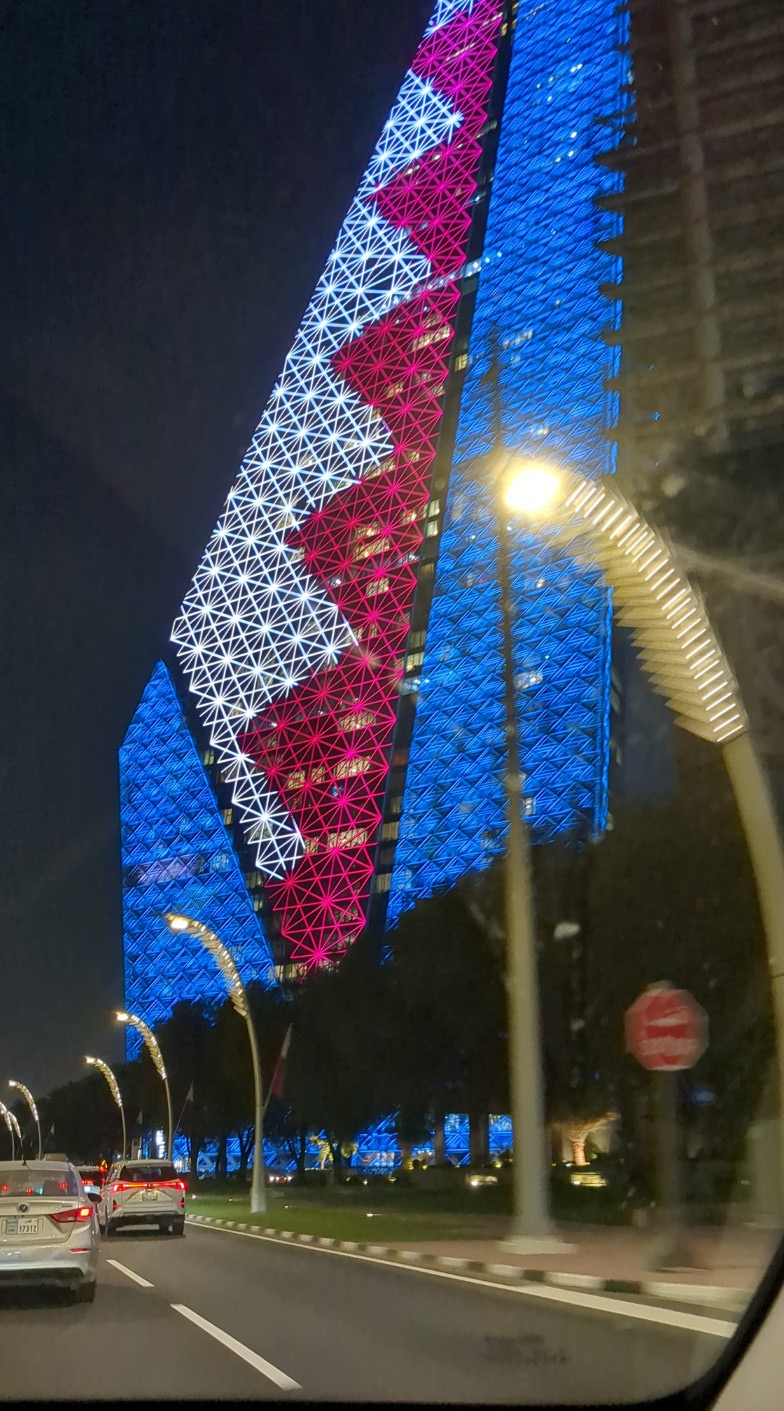
That night, we visited The Pearl – a 4 square-kilometre artificial island which cost $15 billion to build. Given the nation’s wealth, and this being one of its highlights, the shops and facilities were predictably high-end. Coming in (from our hop-on, hop-off bus), we were greeted by a Ferrari dealership on one side. Not far away was a Rolls Royce dealership, too. Clearly, this was not a place for us common folk, though we did enjoy walking along the harbour as we searched for a light show which never materialised.
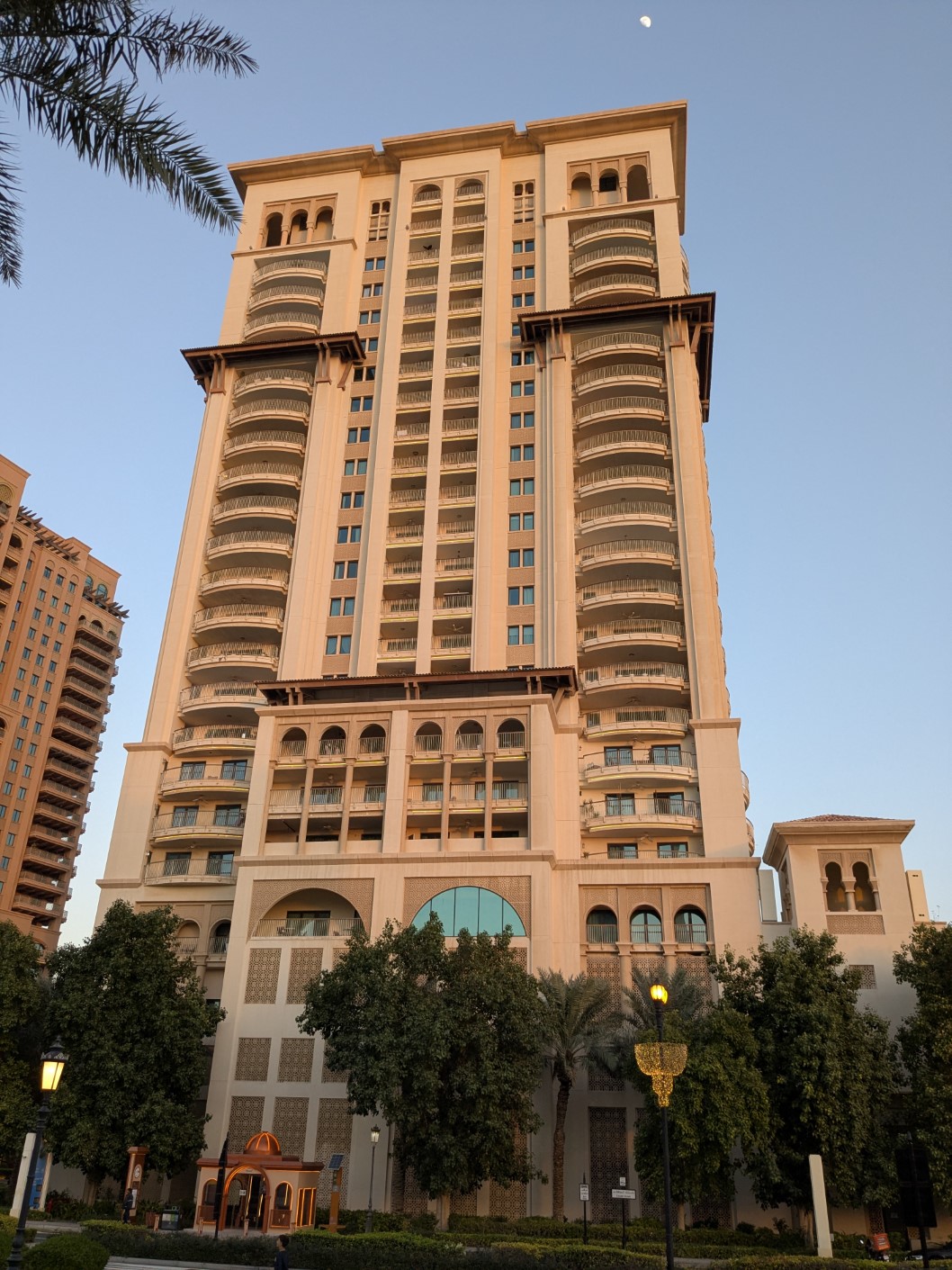
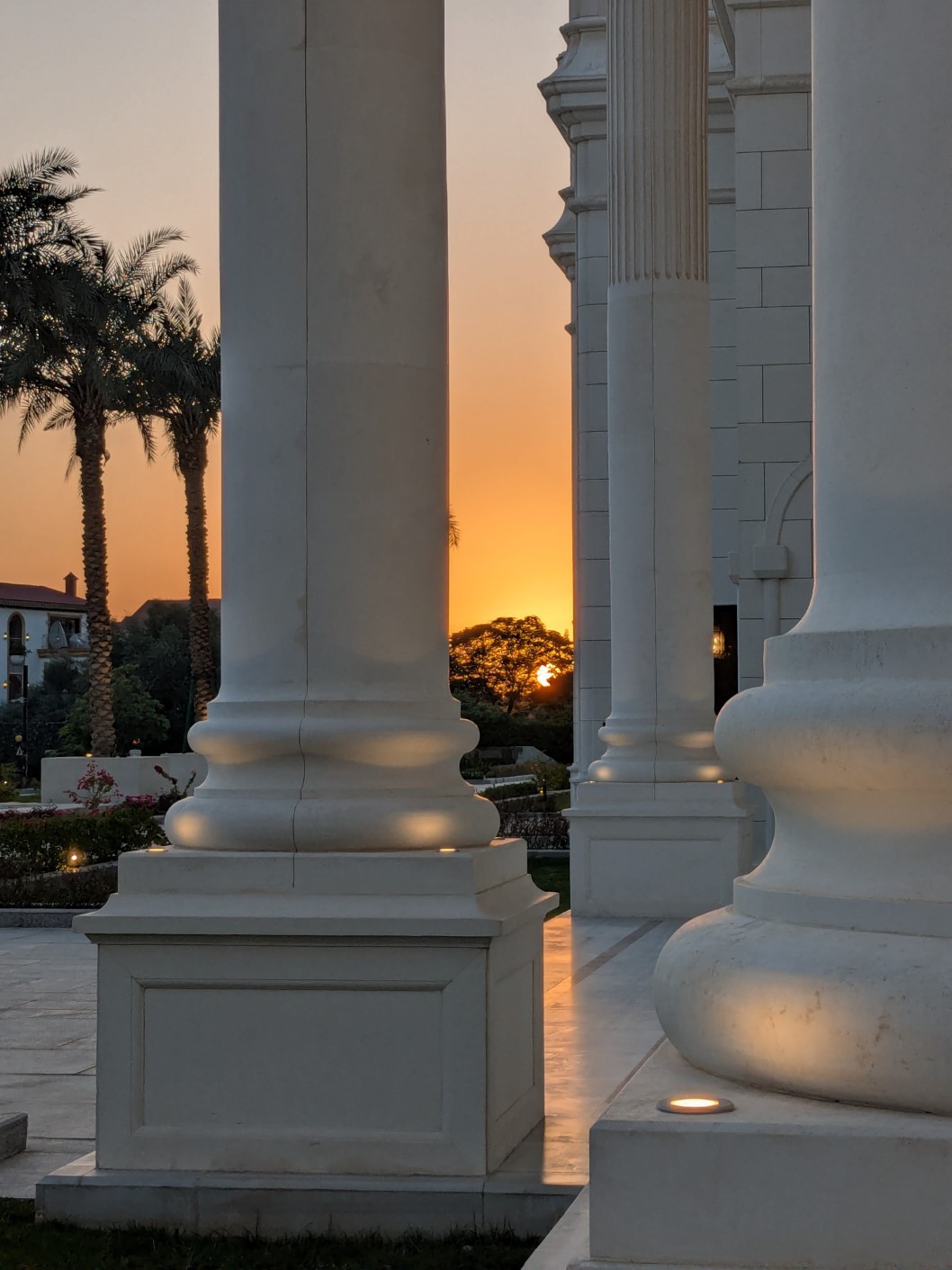
The highlight, though, was visiting and praying in the huge Hamad Bin Jassim Mosque, which was by far the most opulent I’ve ever been to. We actually felt afraid approaching it, given the serious-looking security guard near the entrance, and the reports I’d read about them not being accommodating to younger kids. (This wasn’t an issue for us, though, given that our kids were not toddlers.)
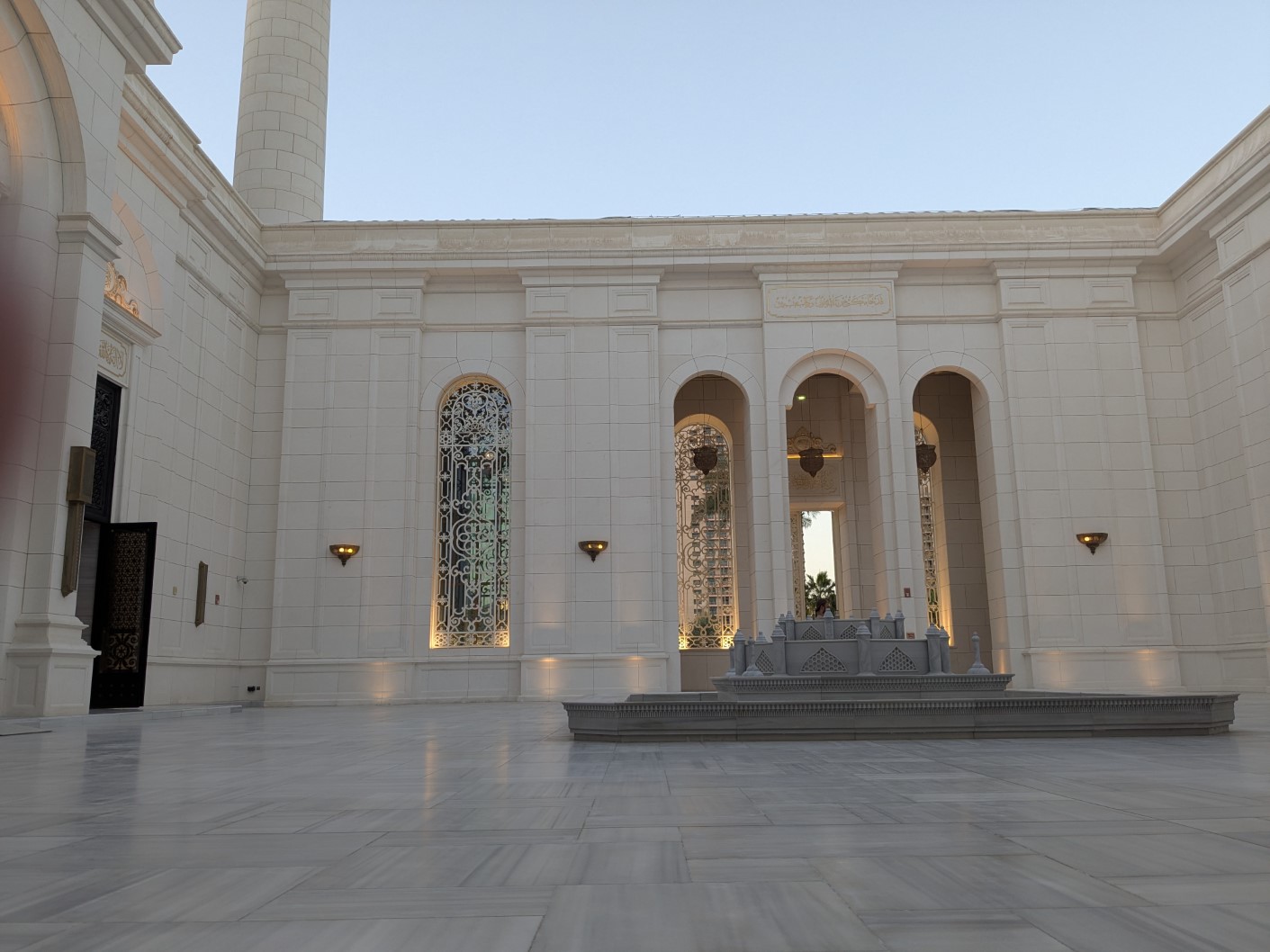
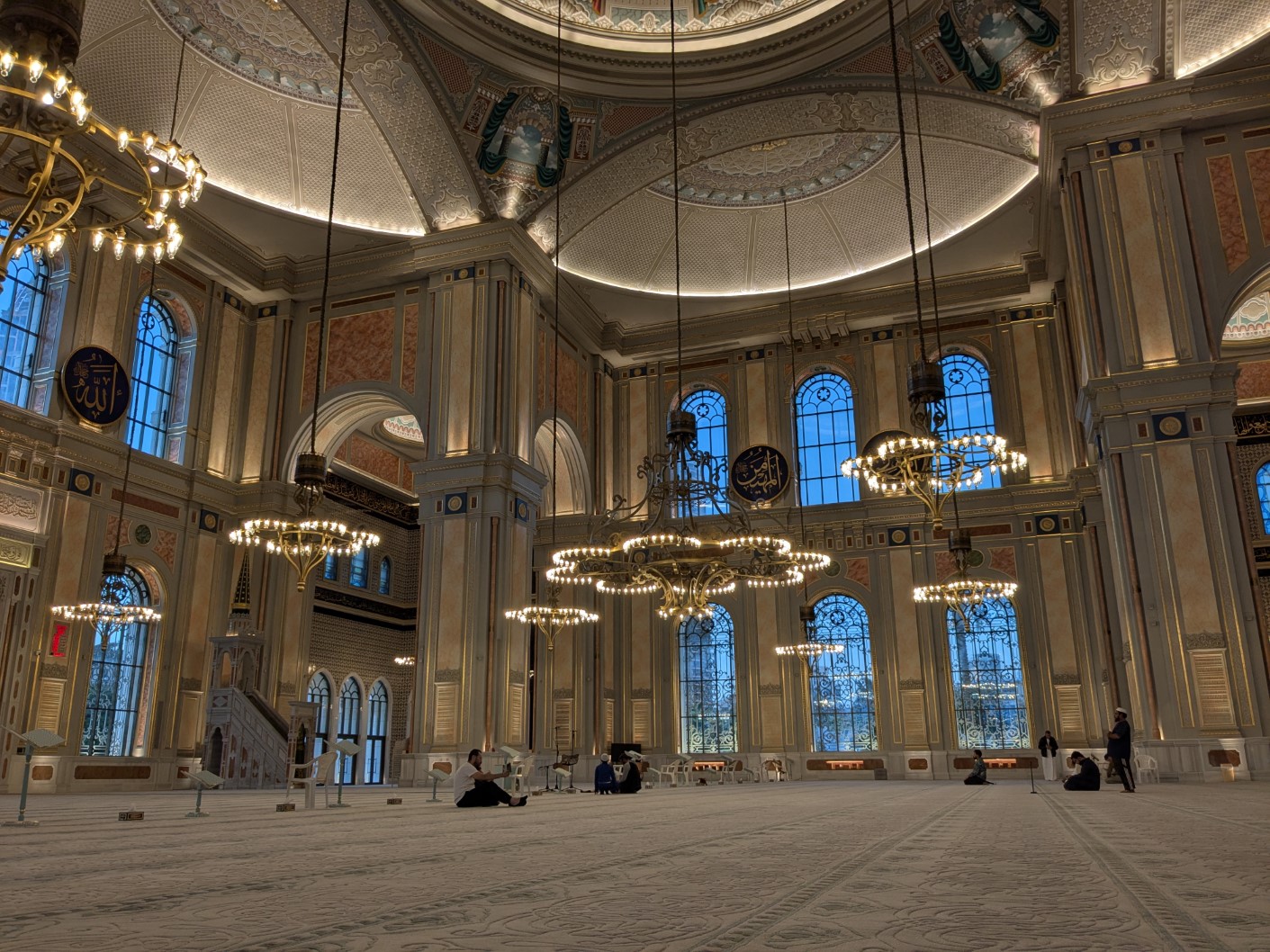
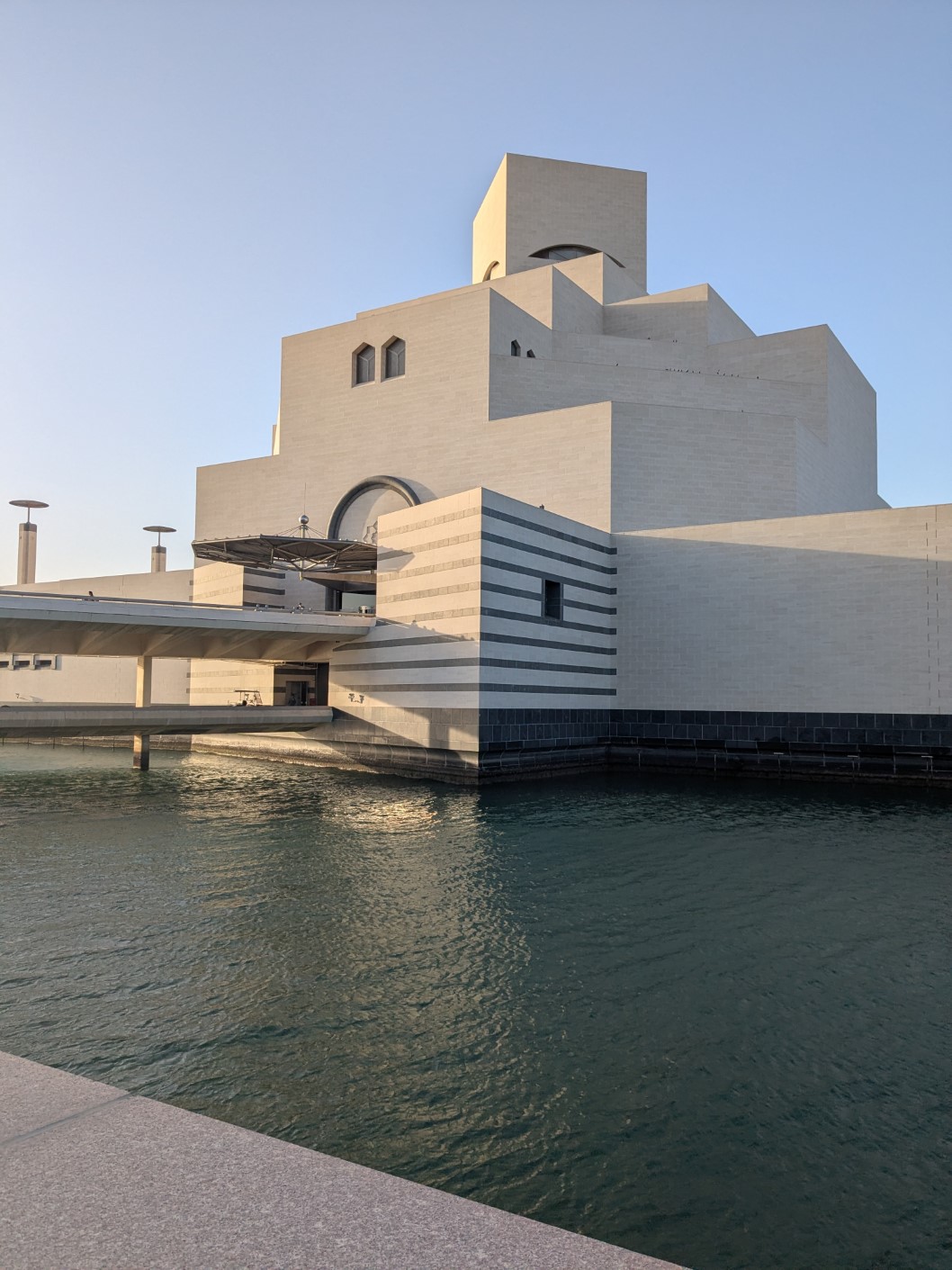
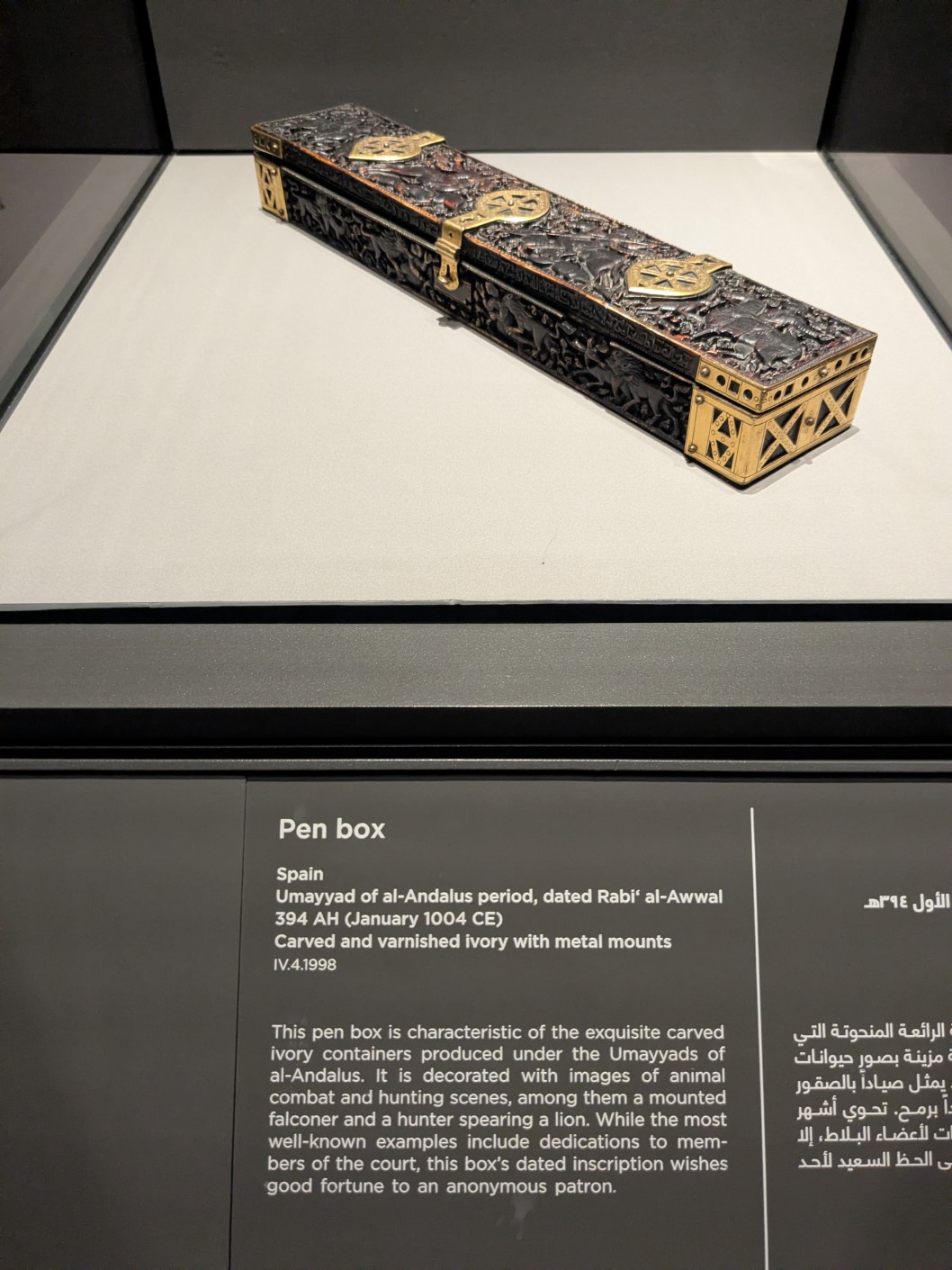
The following day, we hit the Museum of Islamic Art, which – like the other prominent attractions of Doha – was a beautifully-designed space, both inside and out. I think the name is misleading, though, because although there was some artwork, the displays took us through the history of Islamic civilisation, with artefacts from various eras and regions where Islam has spread. “Museum of Islamic Civilisation” would have been far more appropriate.
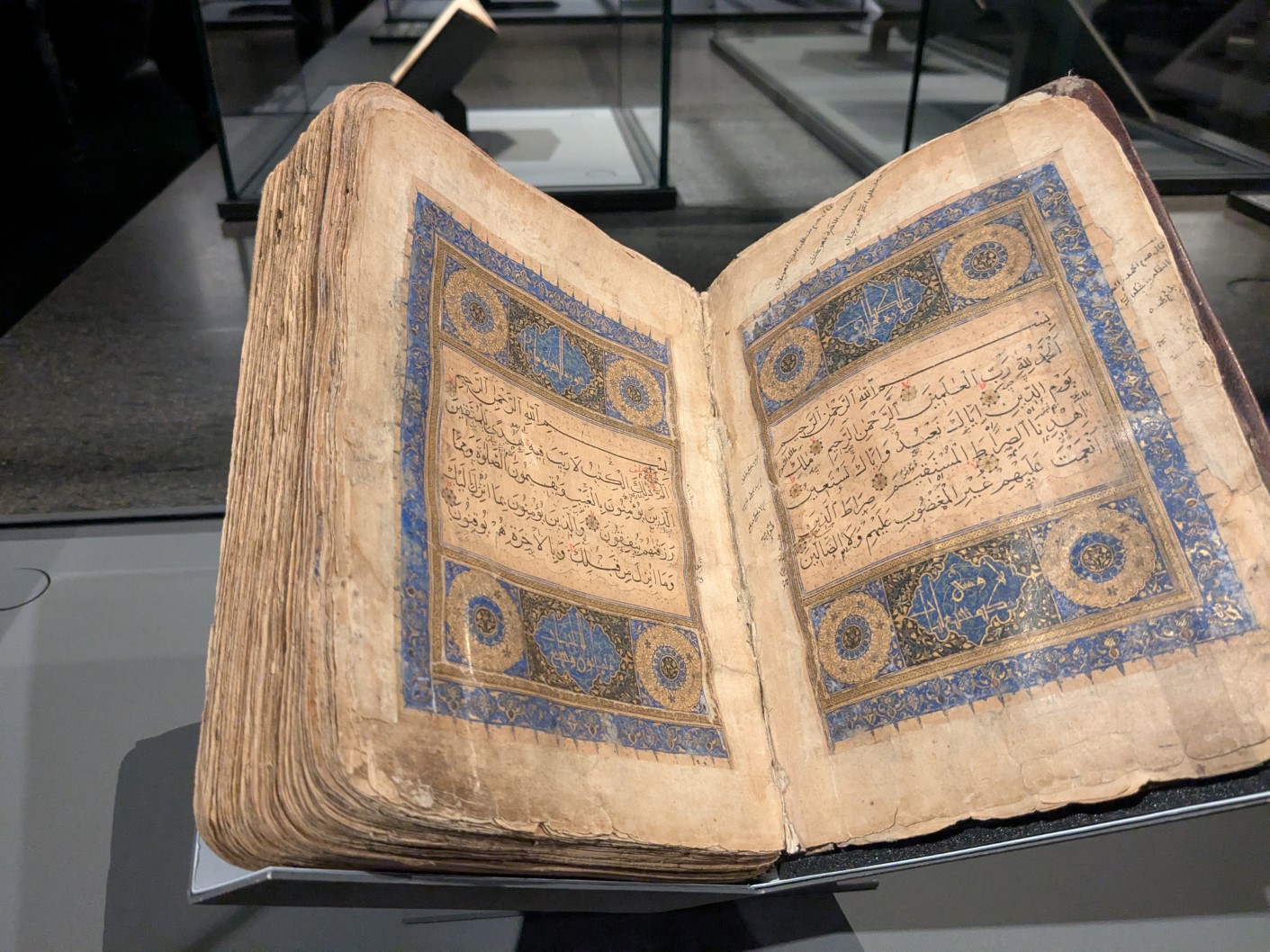
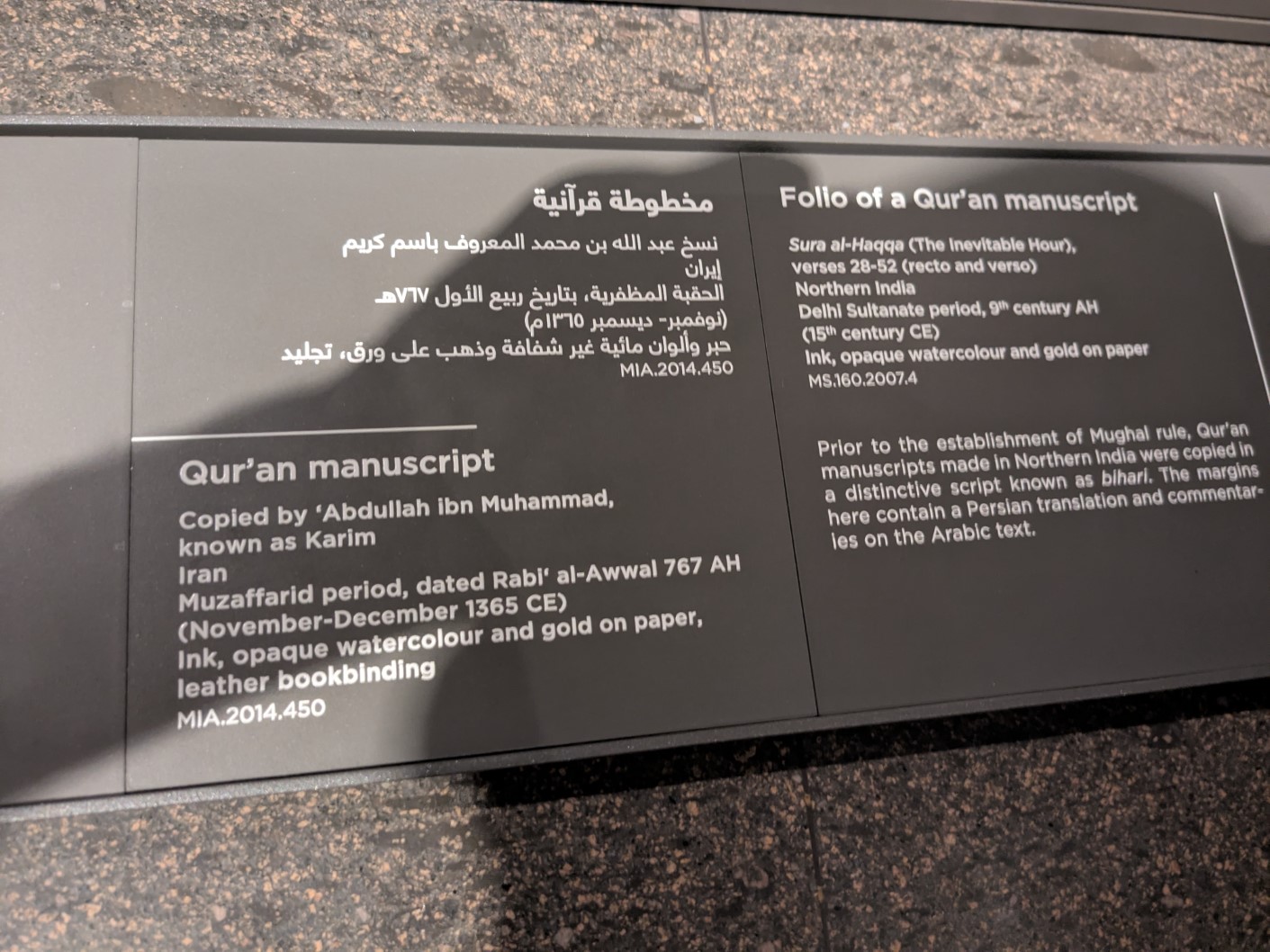
Some of the items on display included ancient texts, handwritten Qurans, jewellery, cooking utensils, and more. What stood out most for me were the numerous ornate pen boxes, highlighting the prominent position of writing in Islamic civilisation, historically.
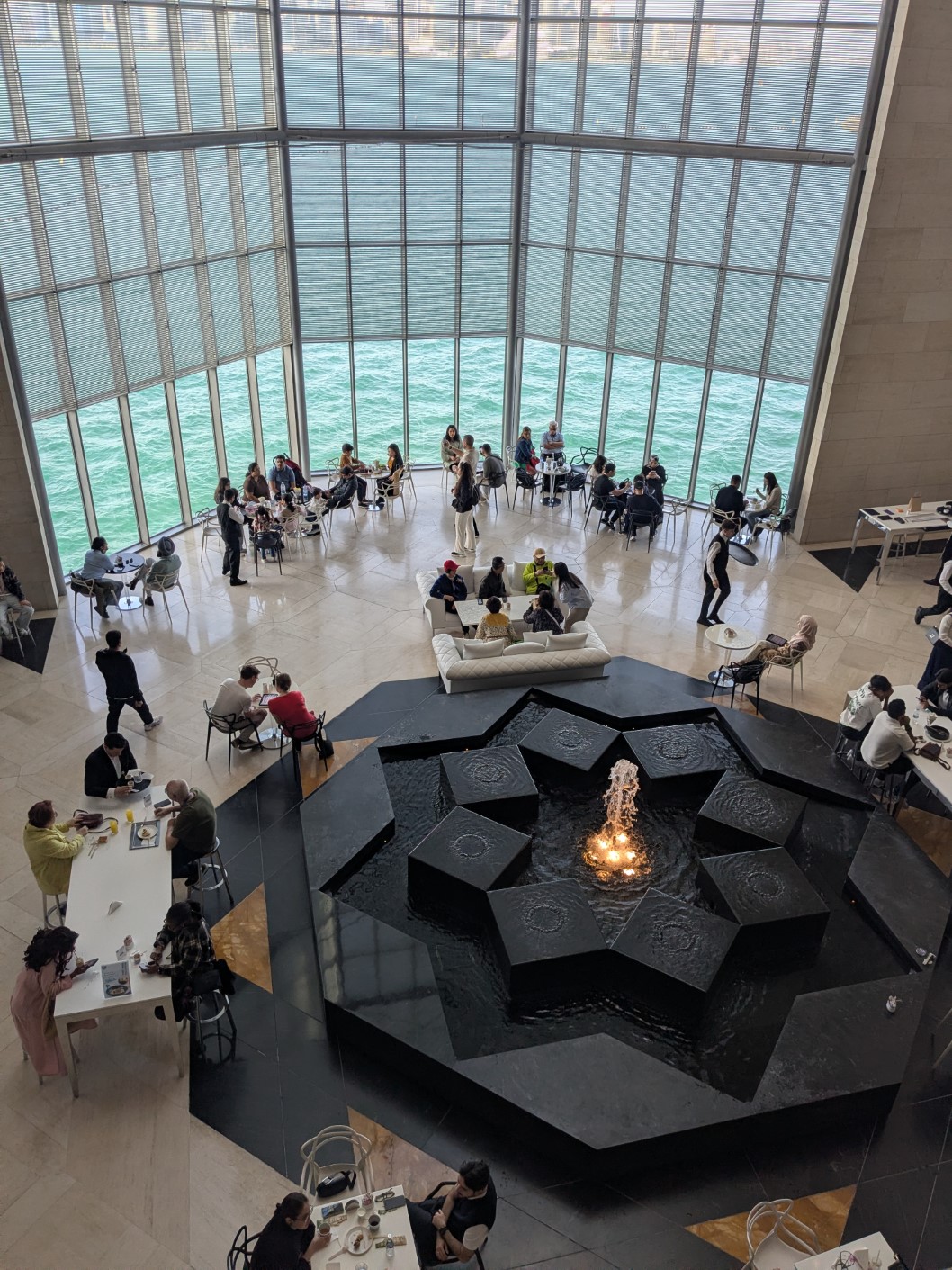
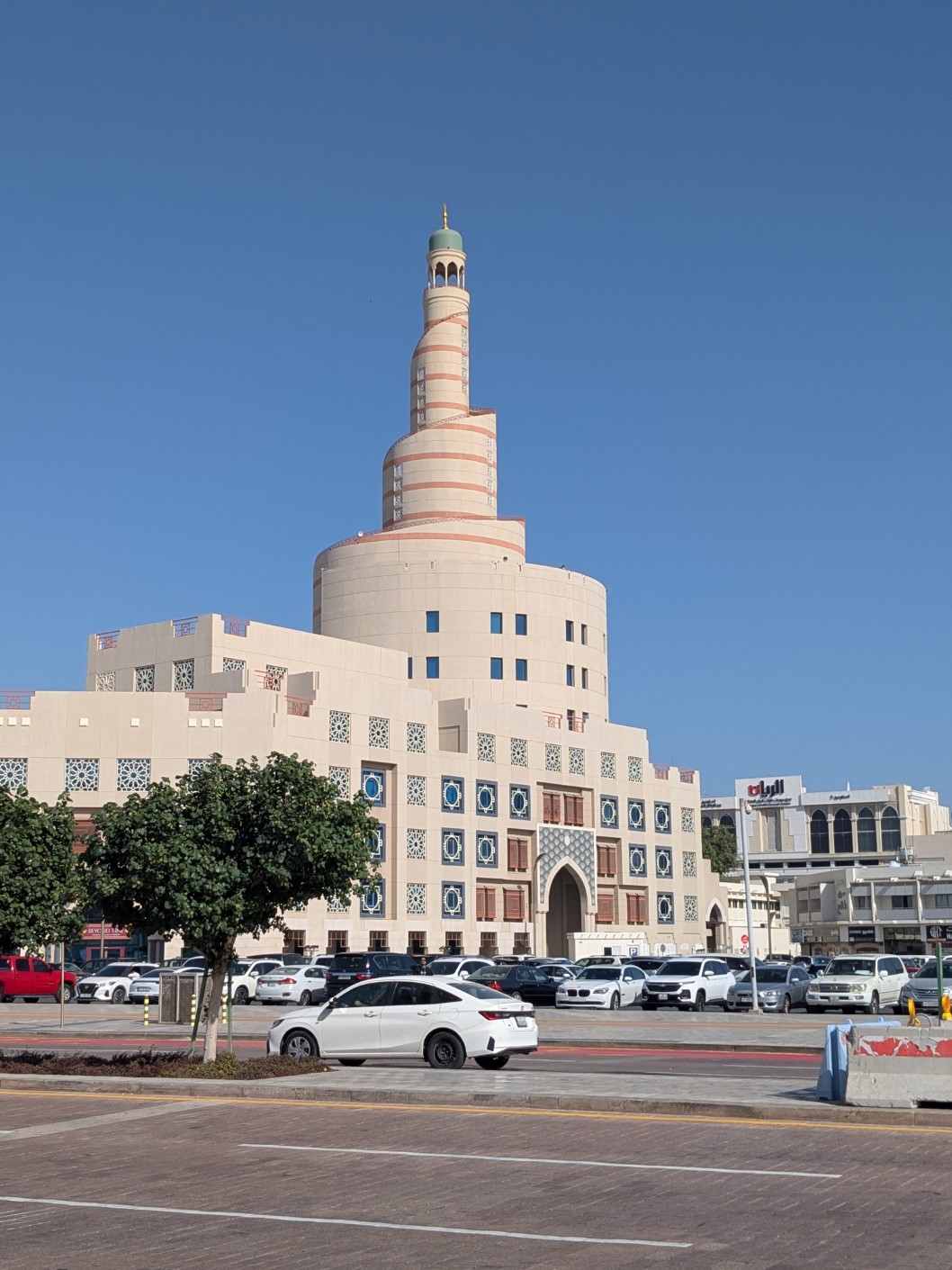
Following this, we headed to the Education City Mosque / Minaretein Centre, which was a fantastic, modern space which buzzing with activity after the evening prayer.
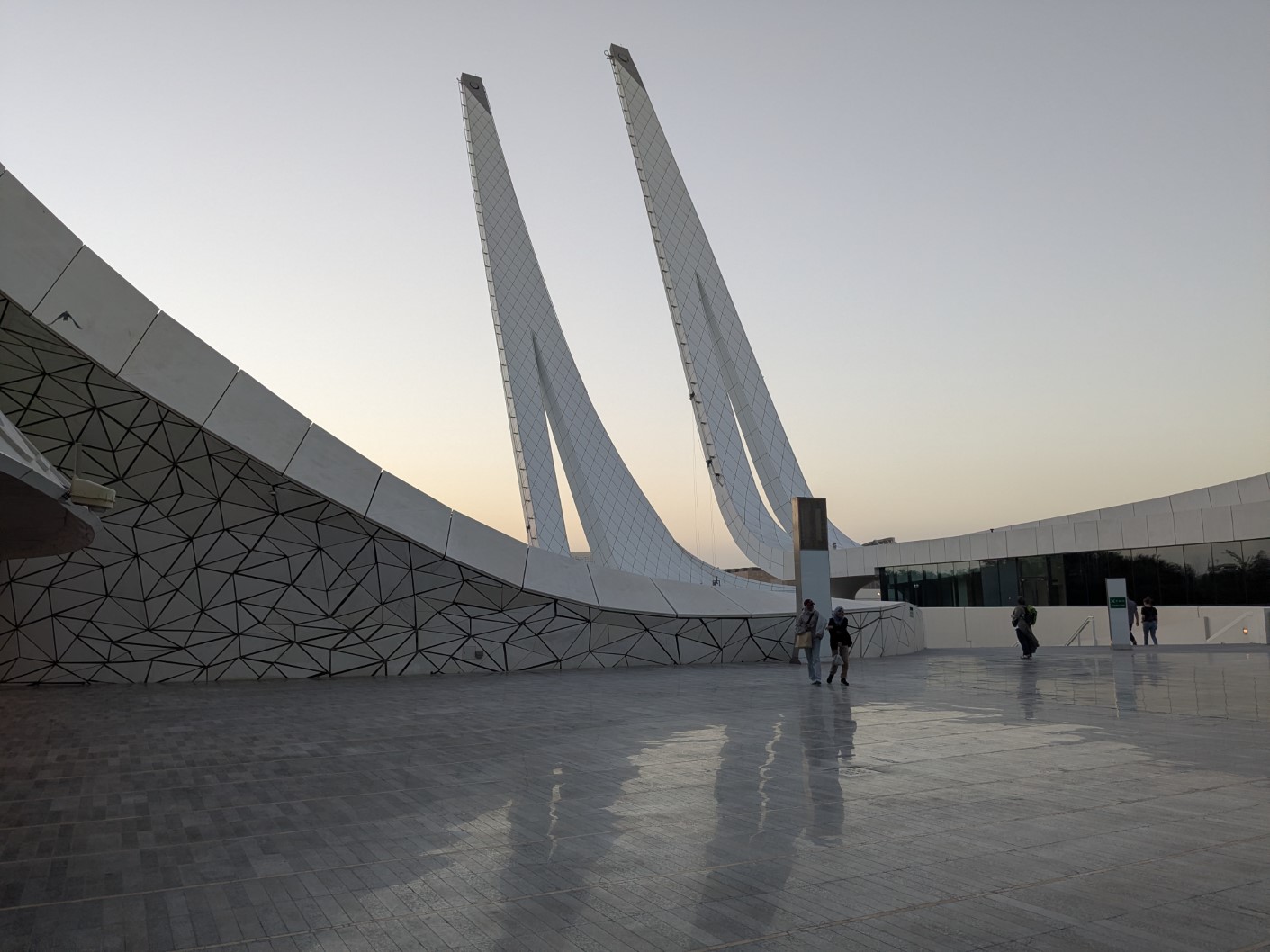
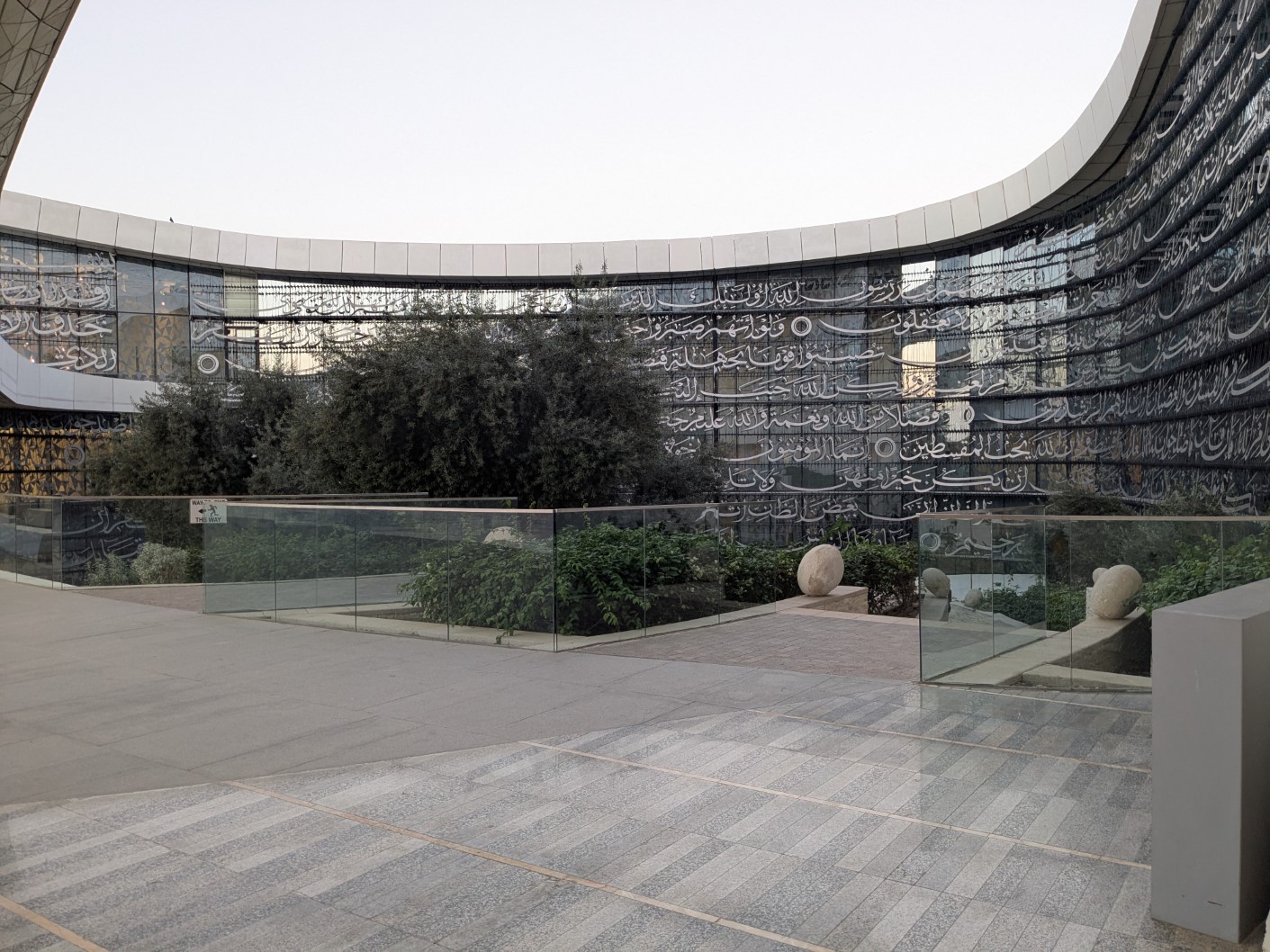
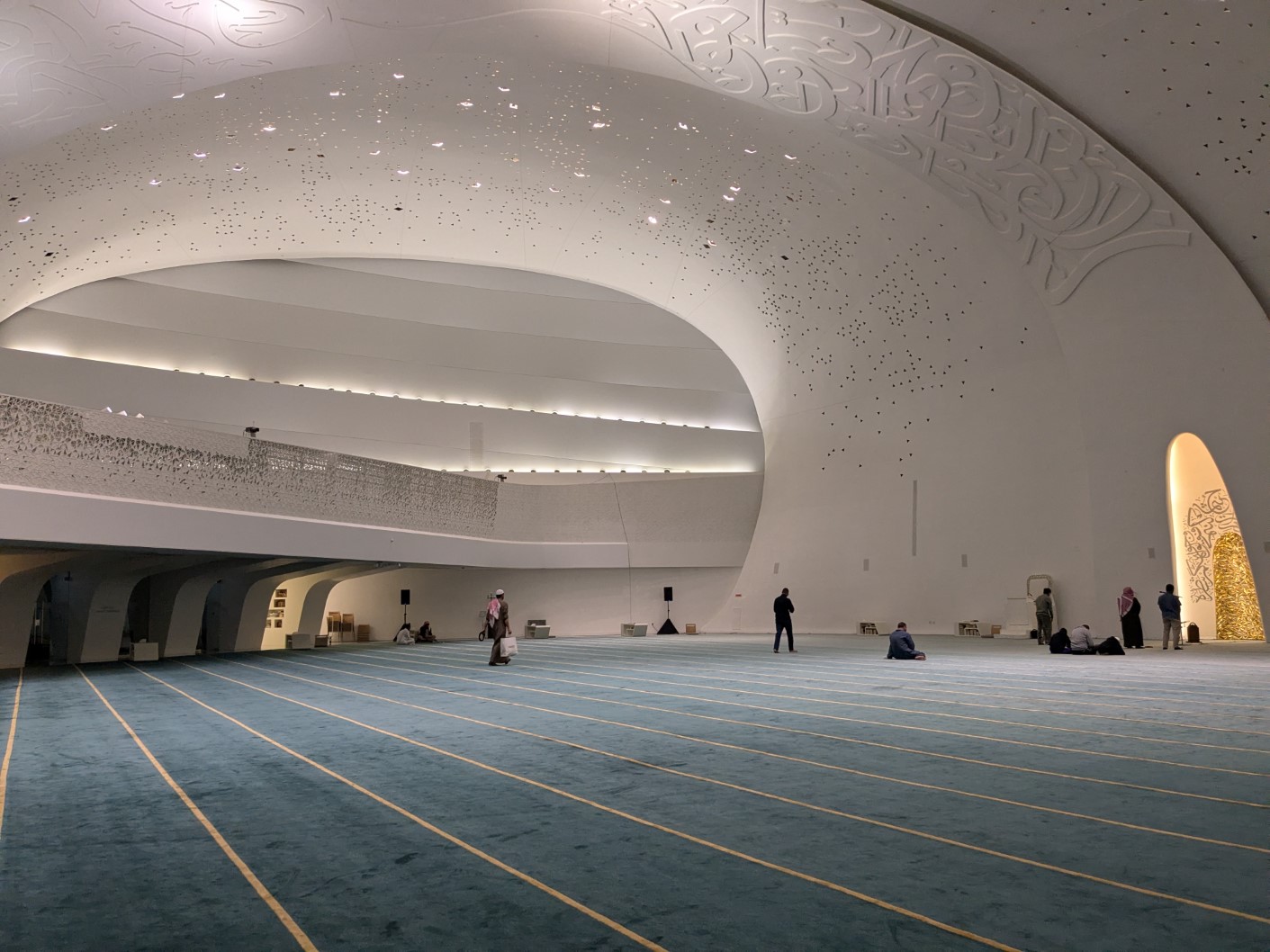
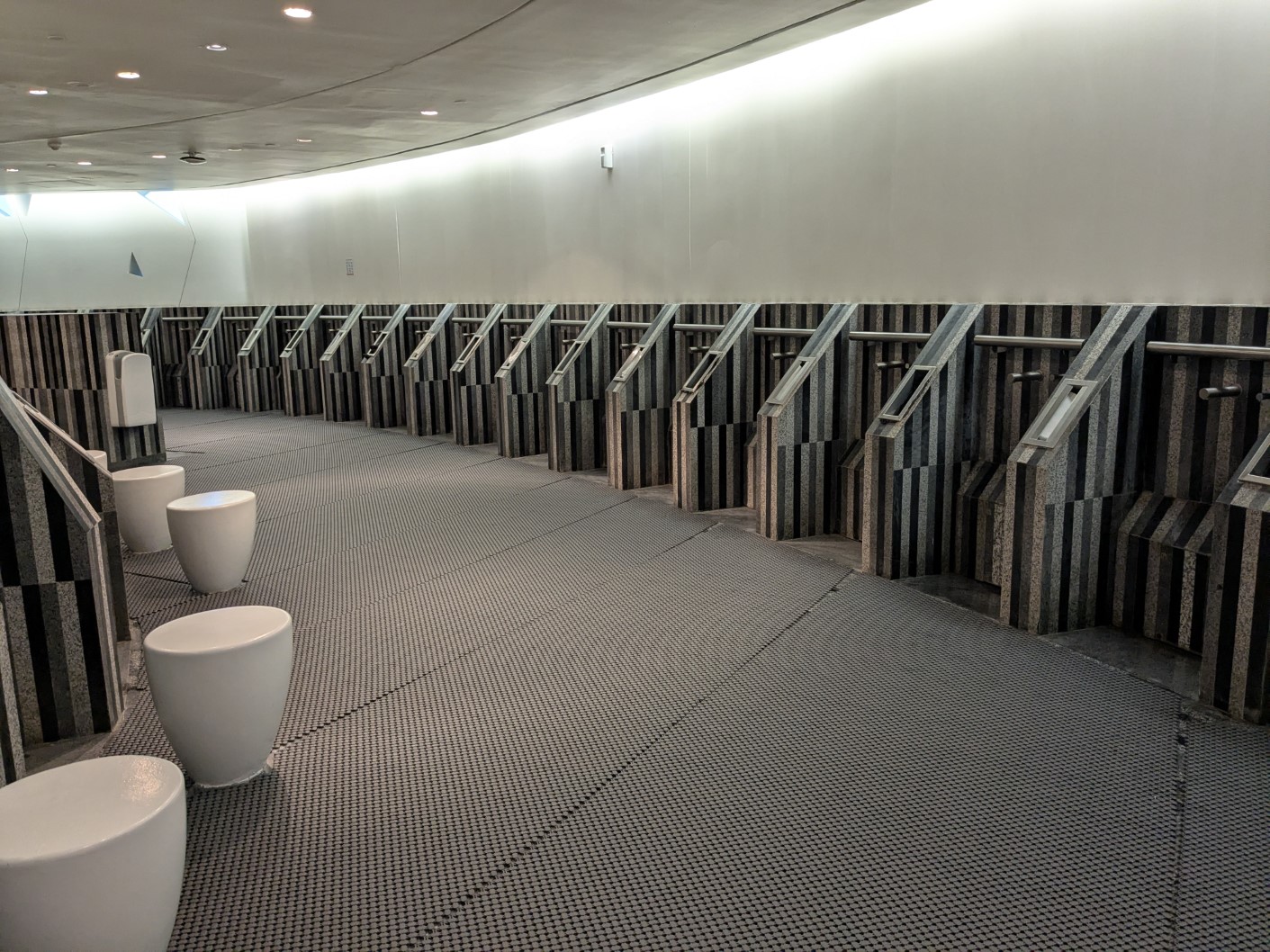
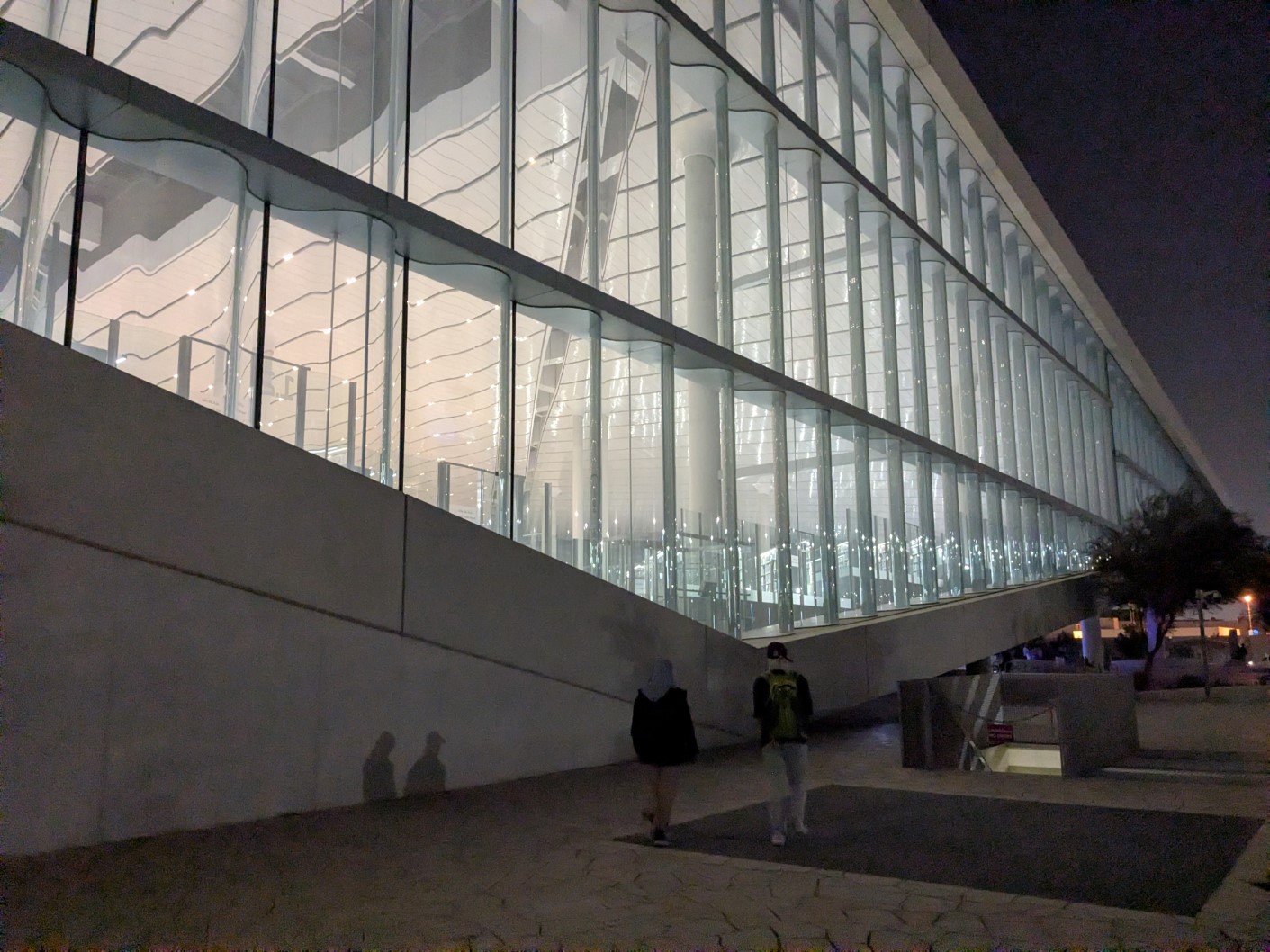
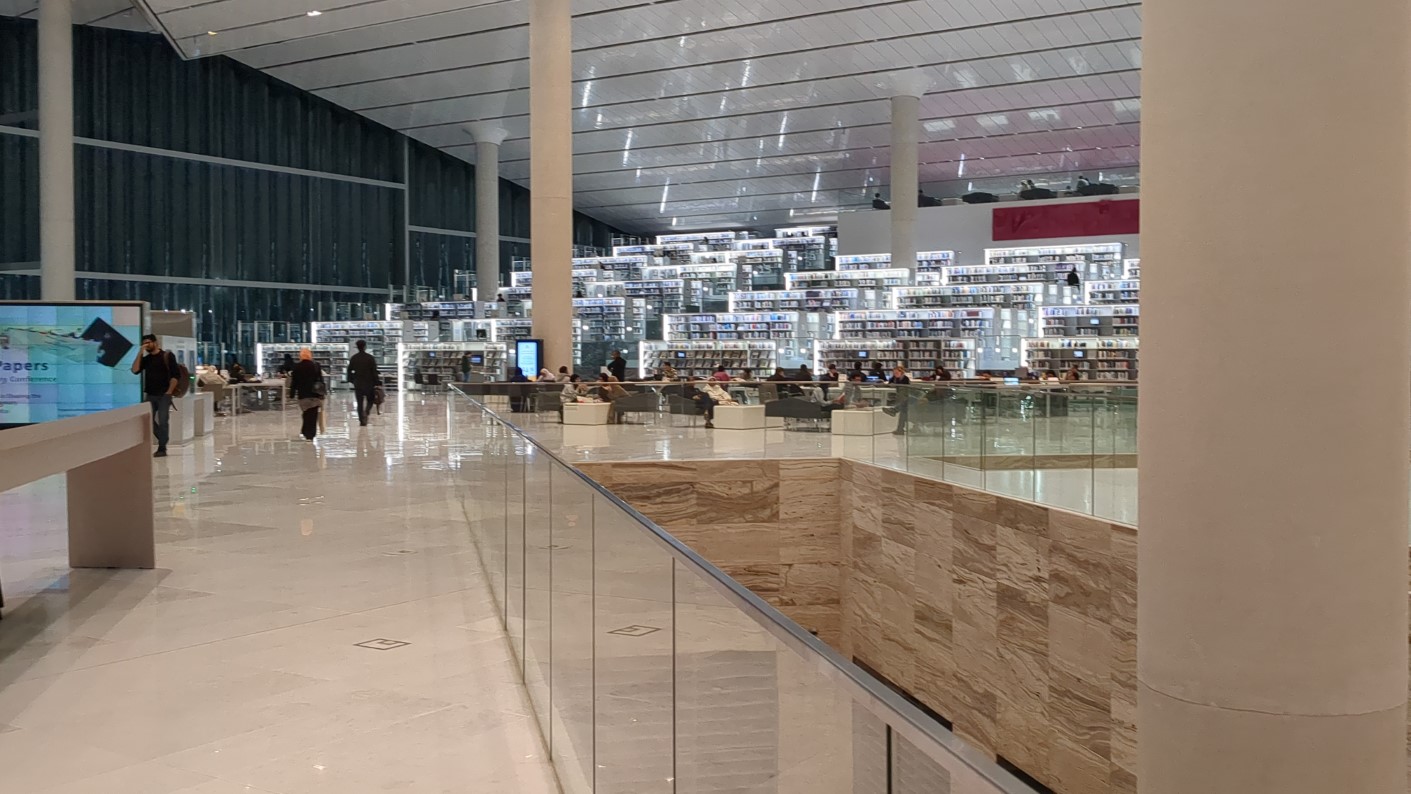
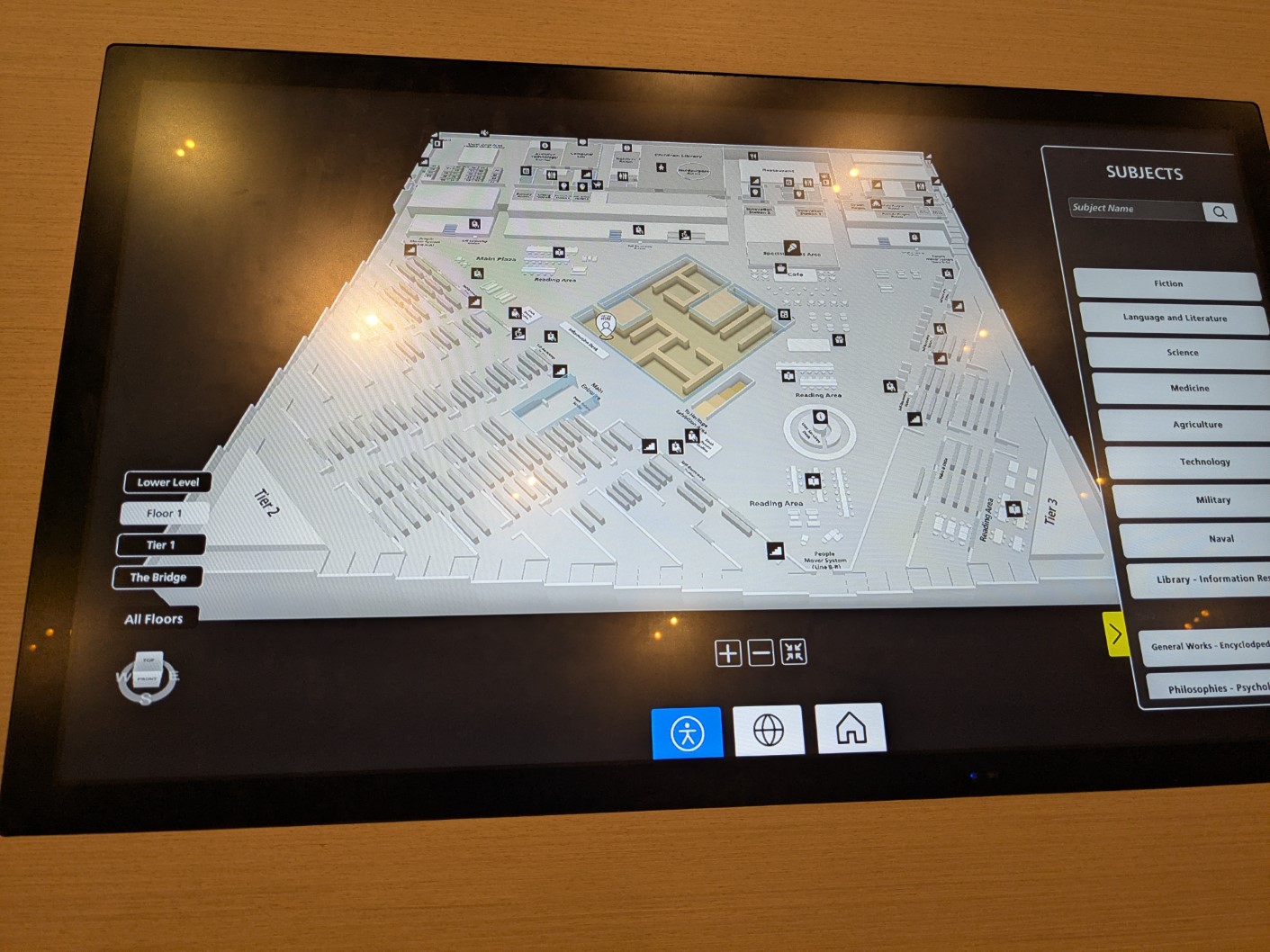
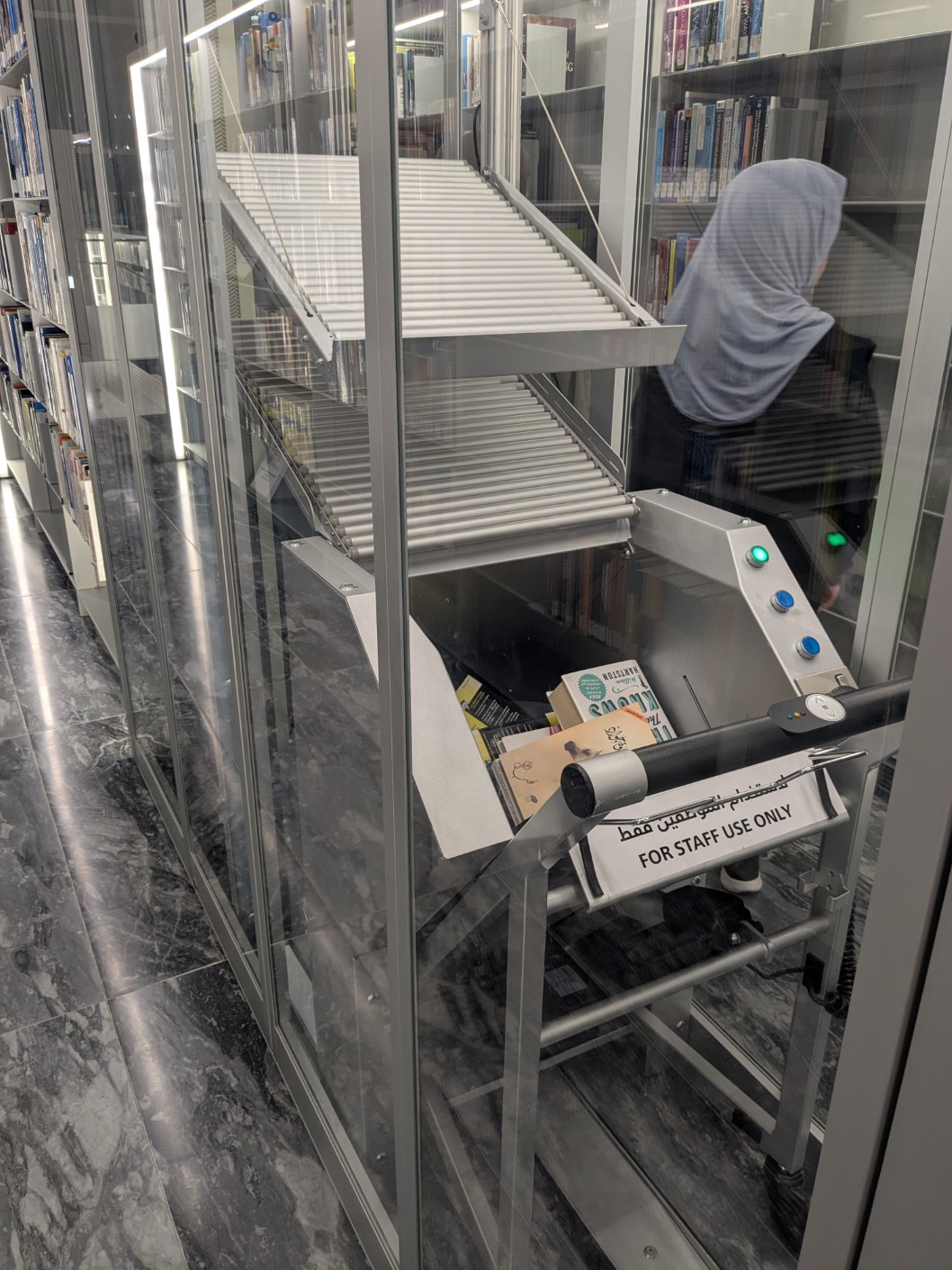
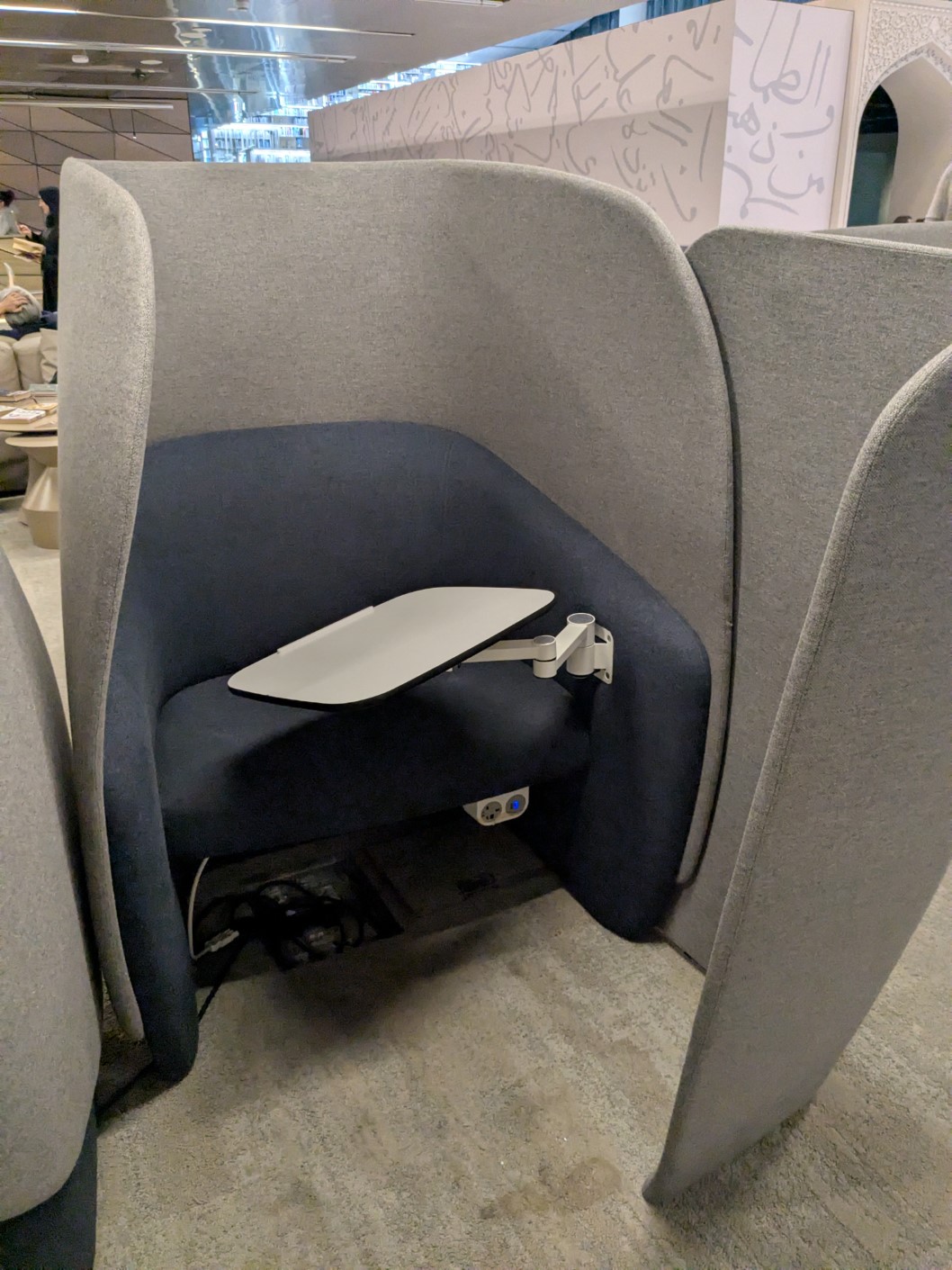
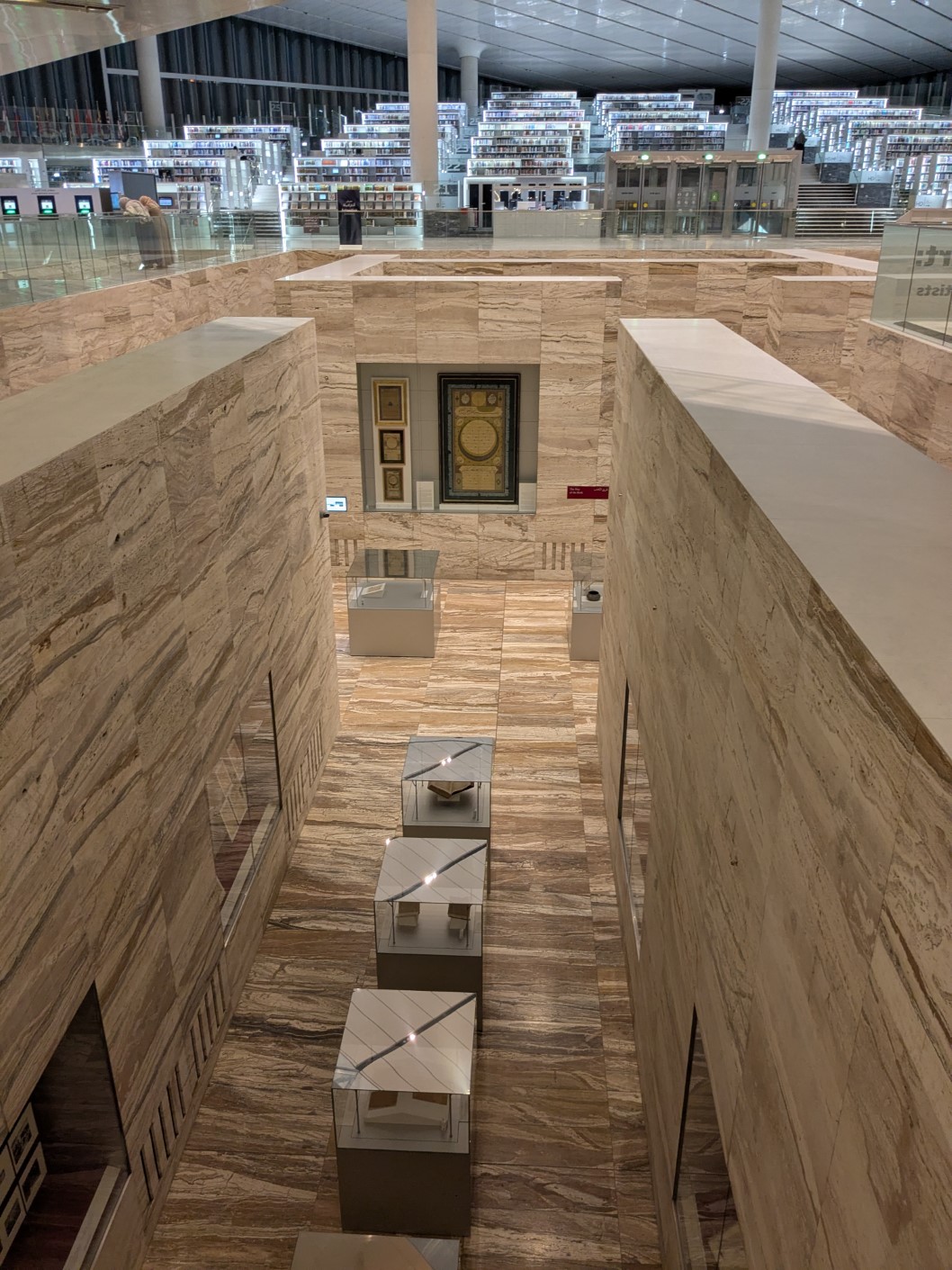
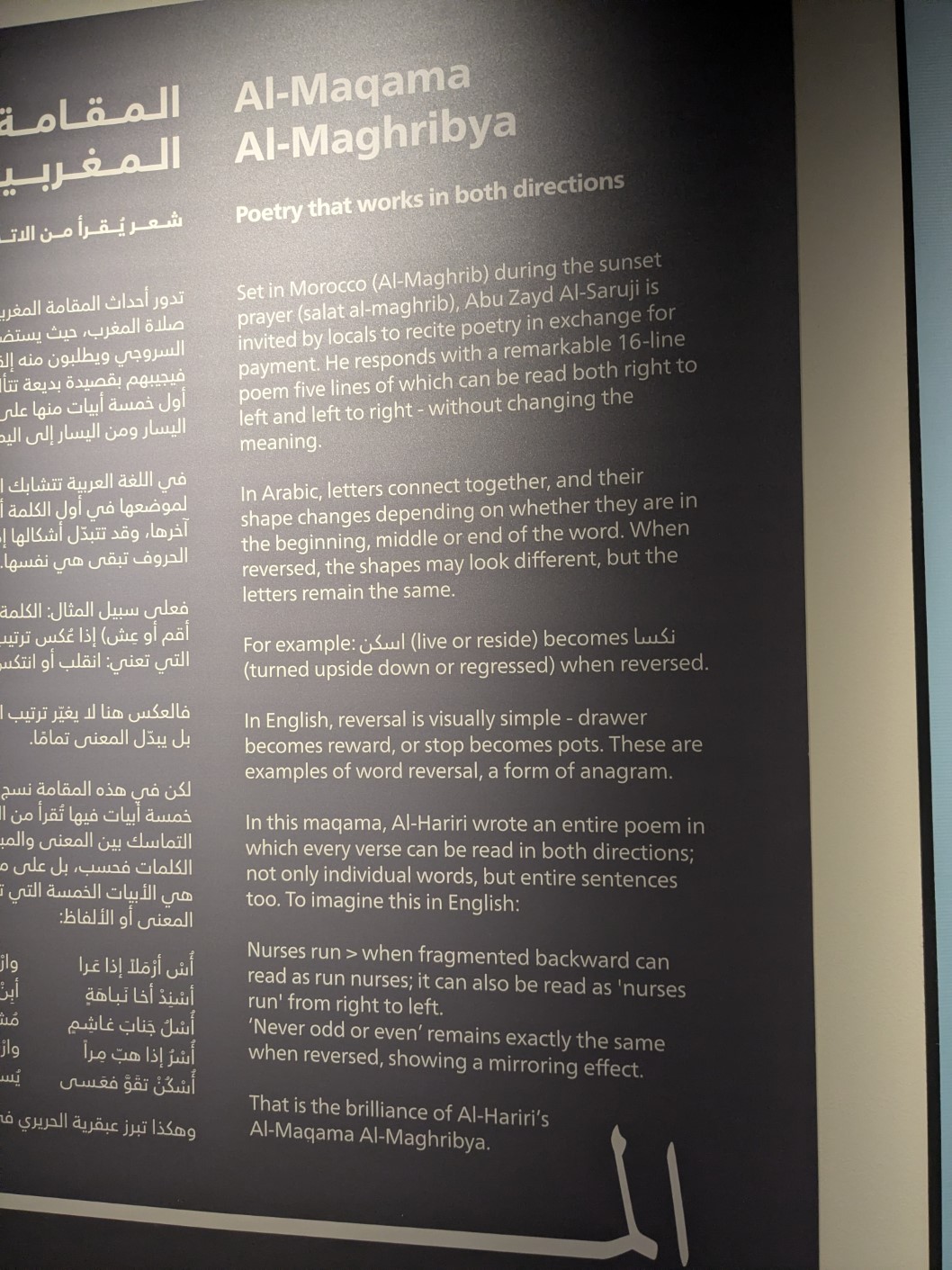
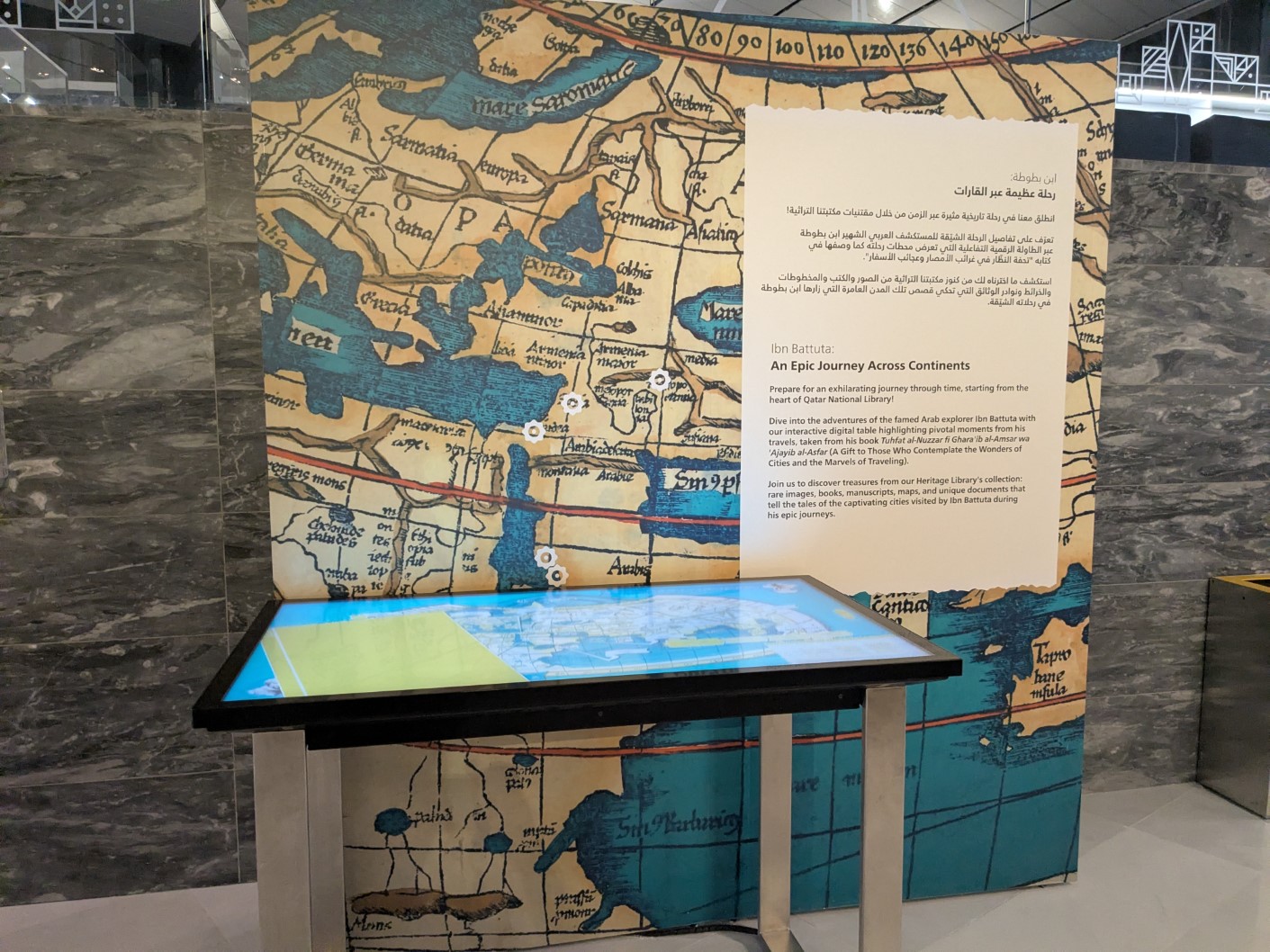
The Education City area is made up of 12 square kilometres, housing numerous institutions, including satellite campuses of eight international universities. Fittingly, it also includes the vast Qatar National Library, which is a dream for book lovers and knowledge seekers. As non-residents, we obviously couldn’t take any books out, but it was an absolute pleasure walking around the many levels and areas of this incredible institution. (Check out this walking tour if you’re curious.) It included a museum display on Arabic literature, including a section on the Maqāmāt al-Ḥarīrī – which includes an entire poem where every verse can be read in both directions.
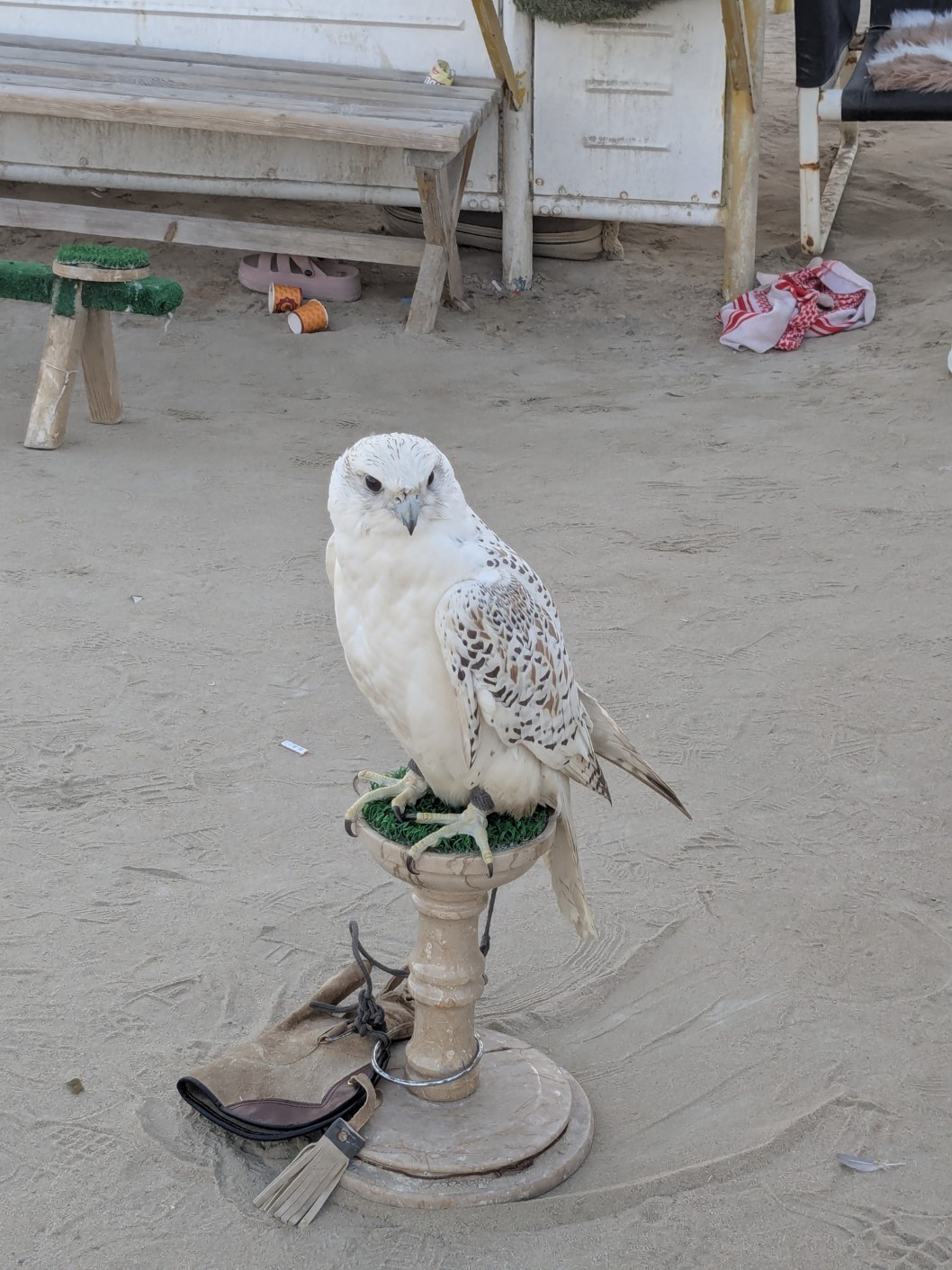
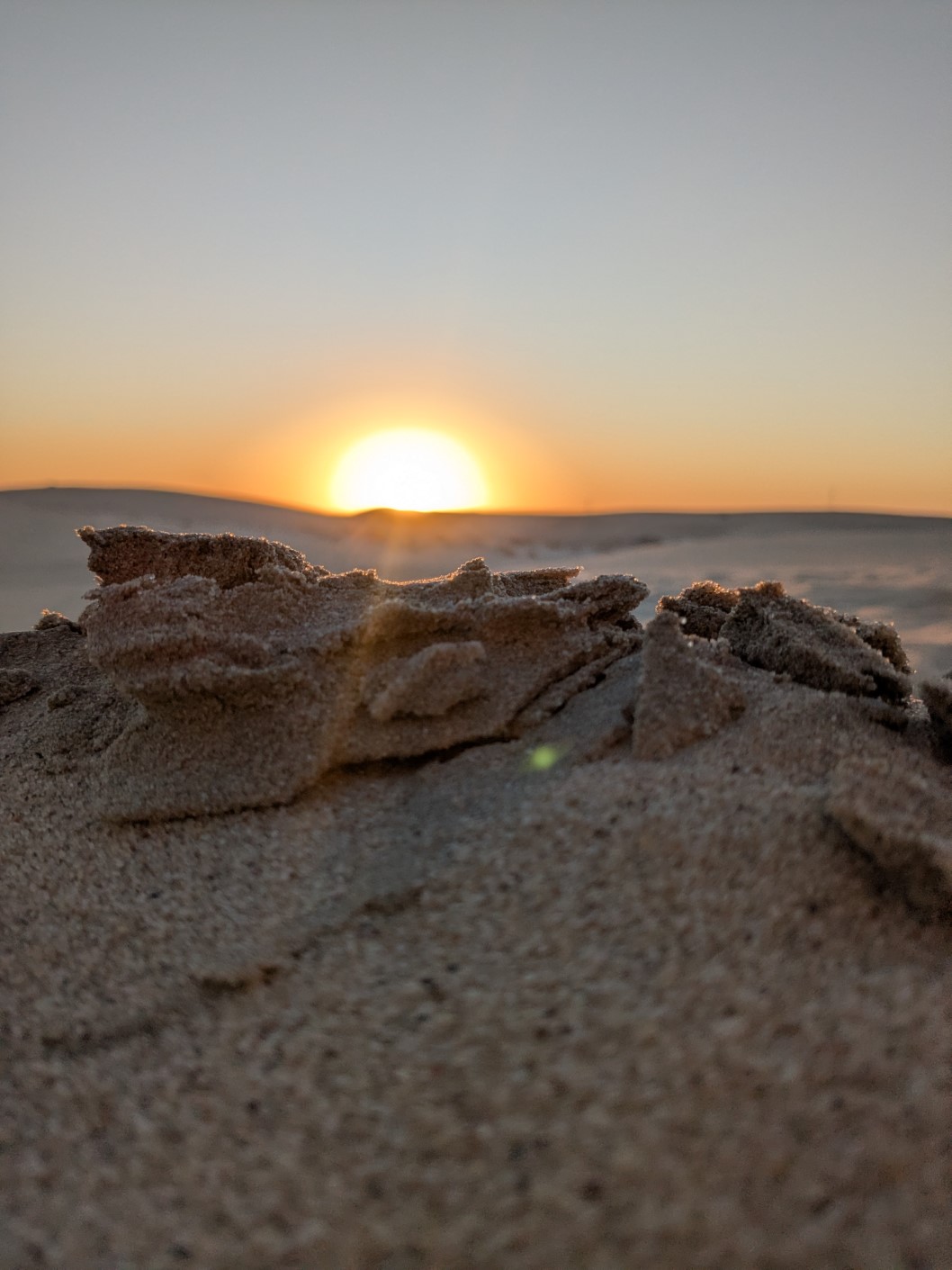
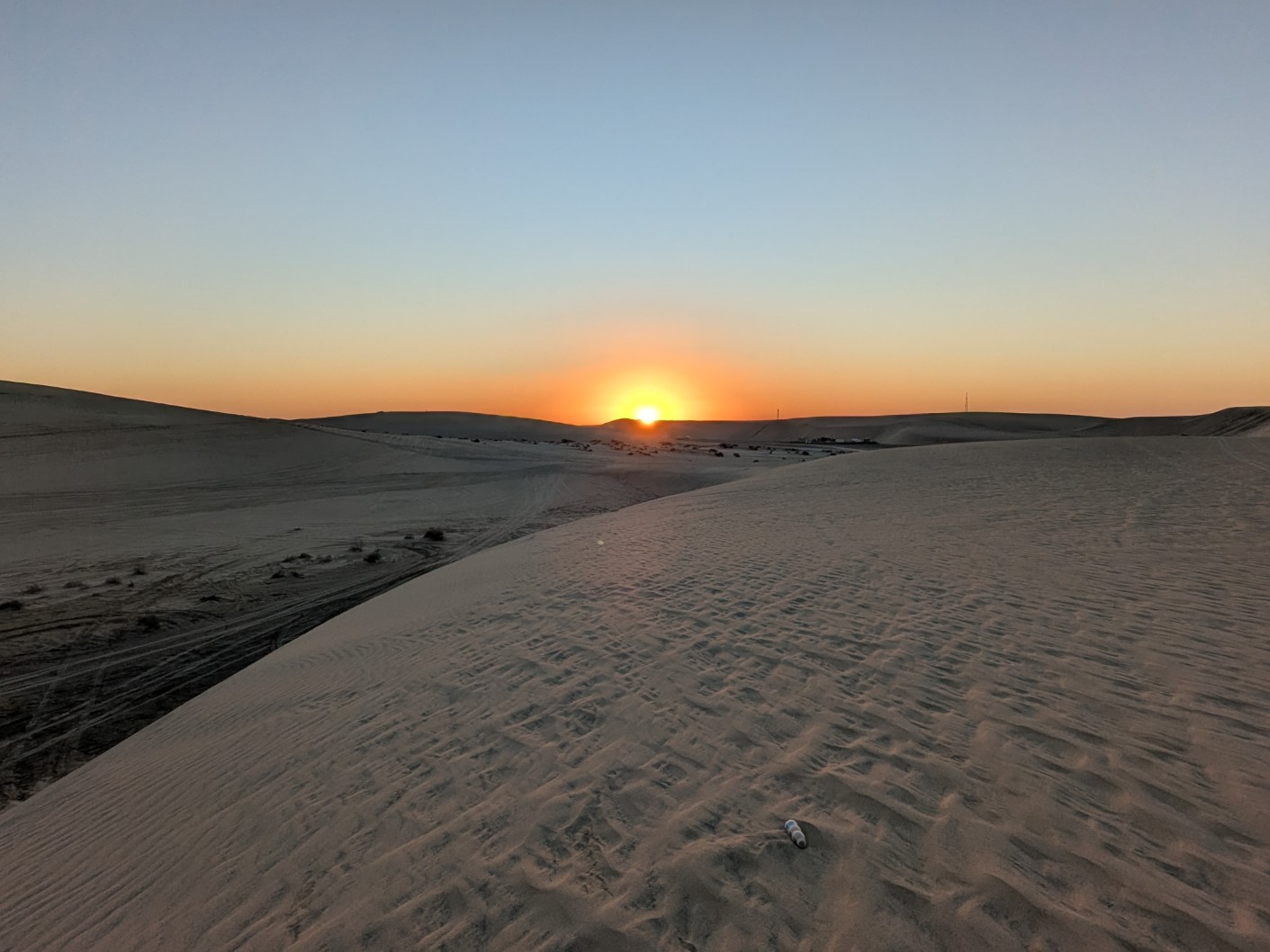
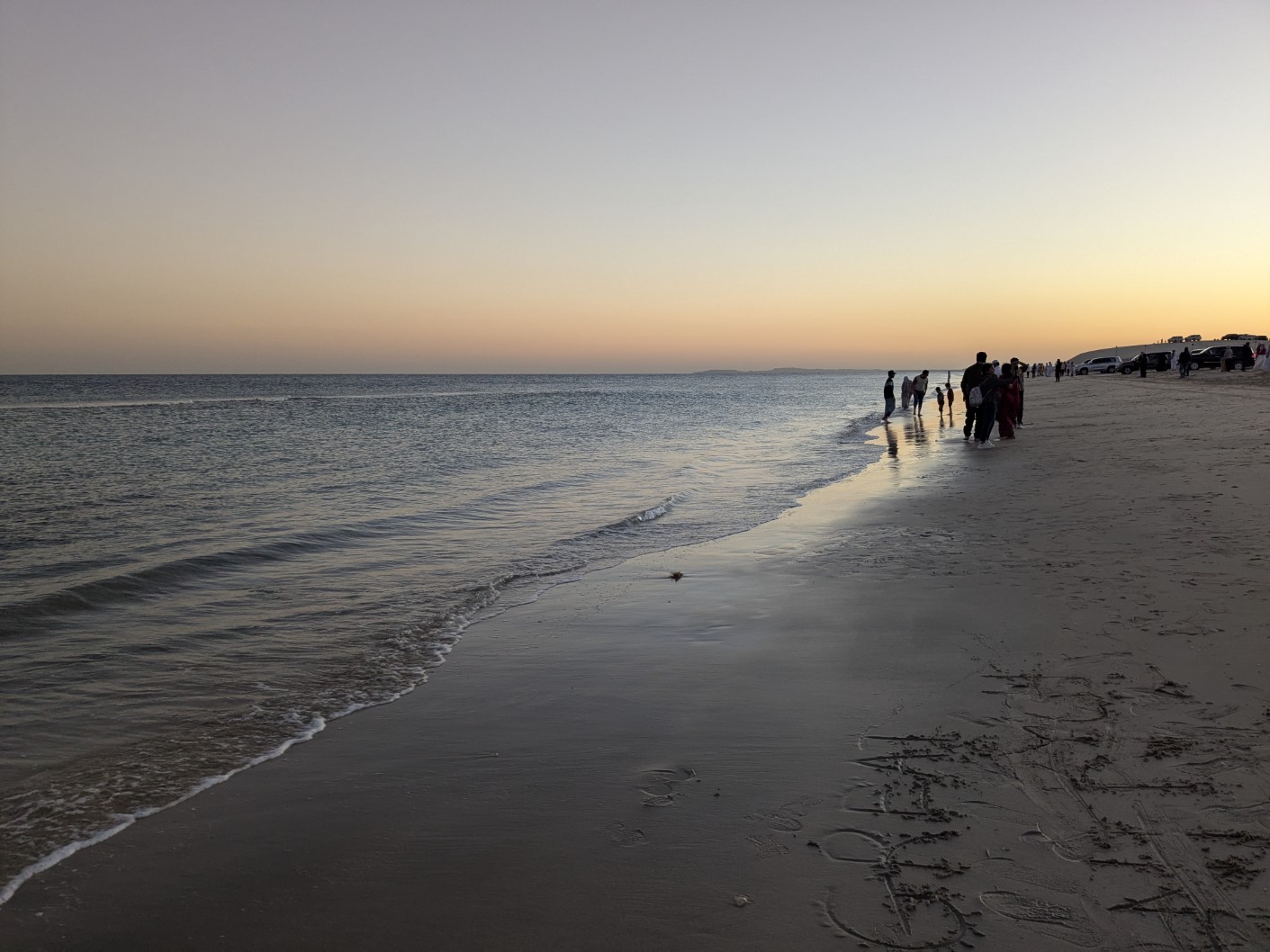
Our last day in Doha – new year’s eve (though, to be honest, dates had lost meaning by then) – was to be the most adventurous of all, with a ‘desert safari’ which covered a camel ride, holding a falcon, quad biking, dune bashing in a 4×4, sandboarding, and a visit to the ‘inland sea’ – where the desert dunes meet the Persian Gulf. The actual dune bashing (see Rio Ferdinand’s reactions here) was the craziest part, and I really don’t know how these guys avoid hitting each other when they drive up and down dunes without being able to see what’s ahead. As a frequent victim of motion sickness, it was all too much for me, and I threw up generously (in a plastic bag in the car) on the way back. It was the second time in 2025, after an unfortunate kayak ride in January that year.
Moving on
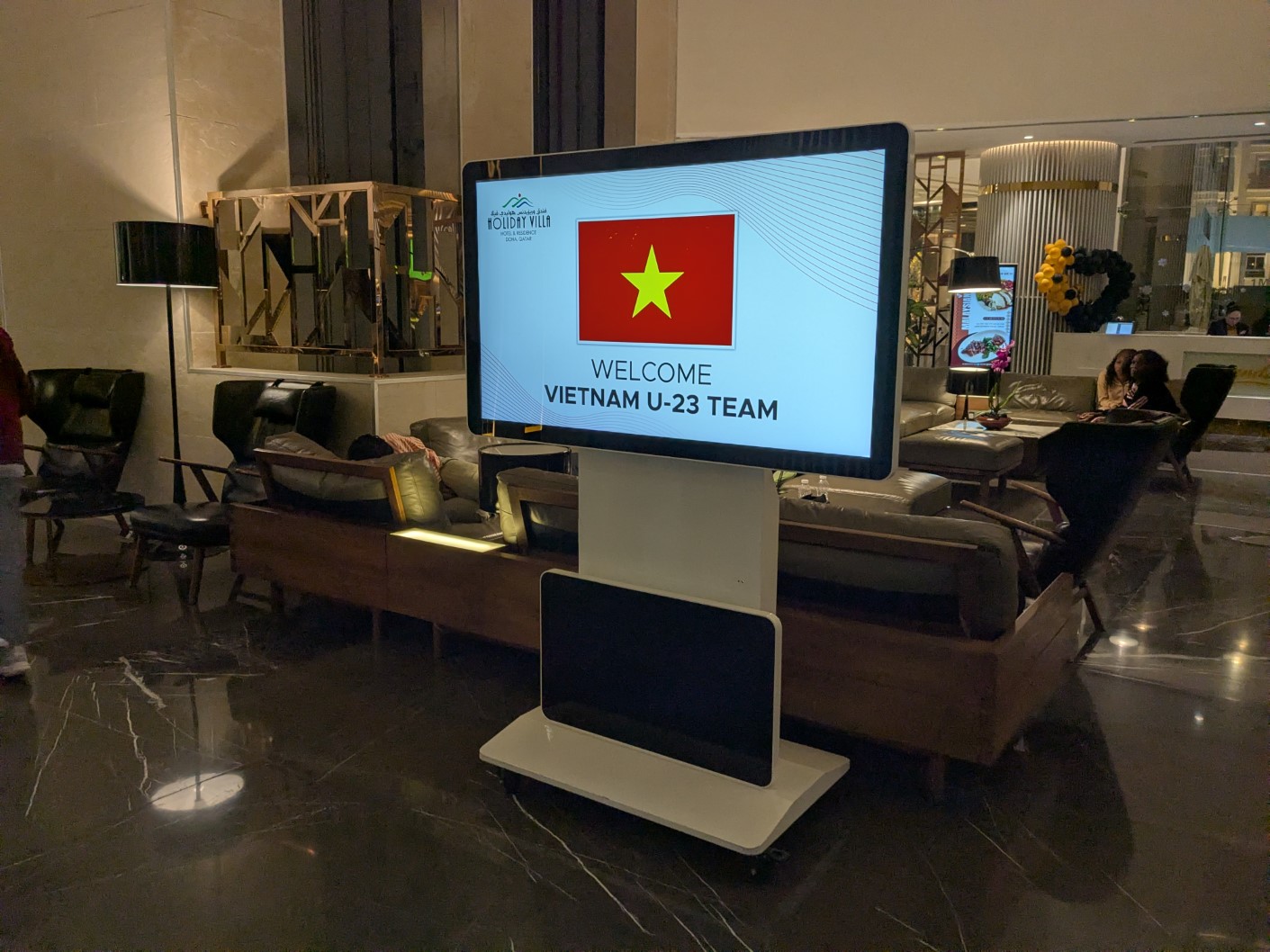
We closed out the year by packing for our flight the next day, and sorting out the money and admin around the time that the clock struck 12. From our side of town, we couldn’t see the fireworks or hear the celebrations, but given that we avoid such gatherings even at home, it was no big loss.
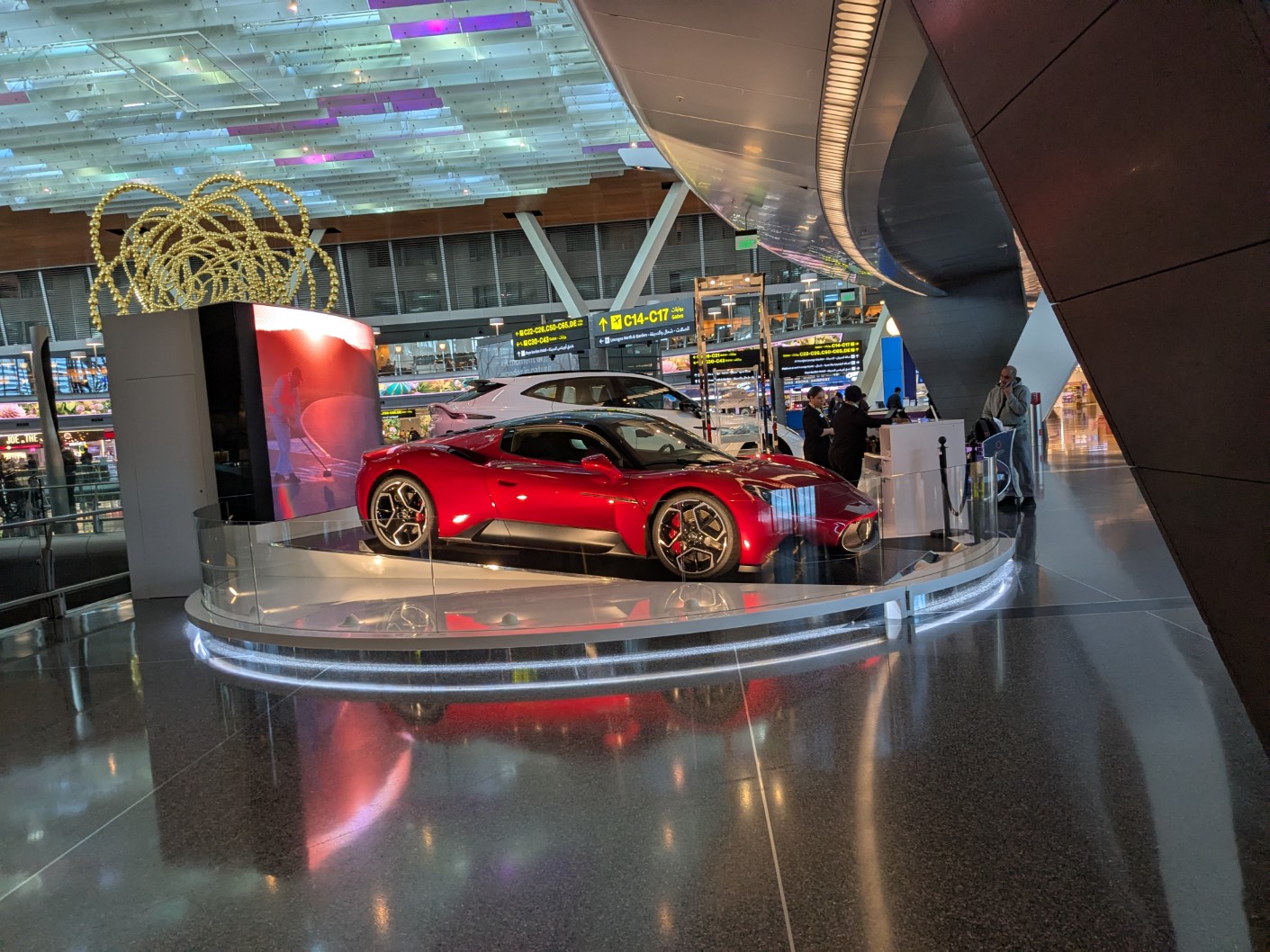
The next morning, we headed out to the astounding Hamad International Airport, which has often been voted as the best airport in the world. It’s huge inside, with shops mirroring the opulence of the city itself. There’s even a tram on the upper level, given the distance between some terminals. (We didn’t get to take it, unfortunately.)
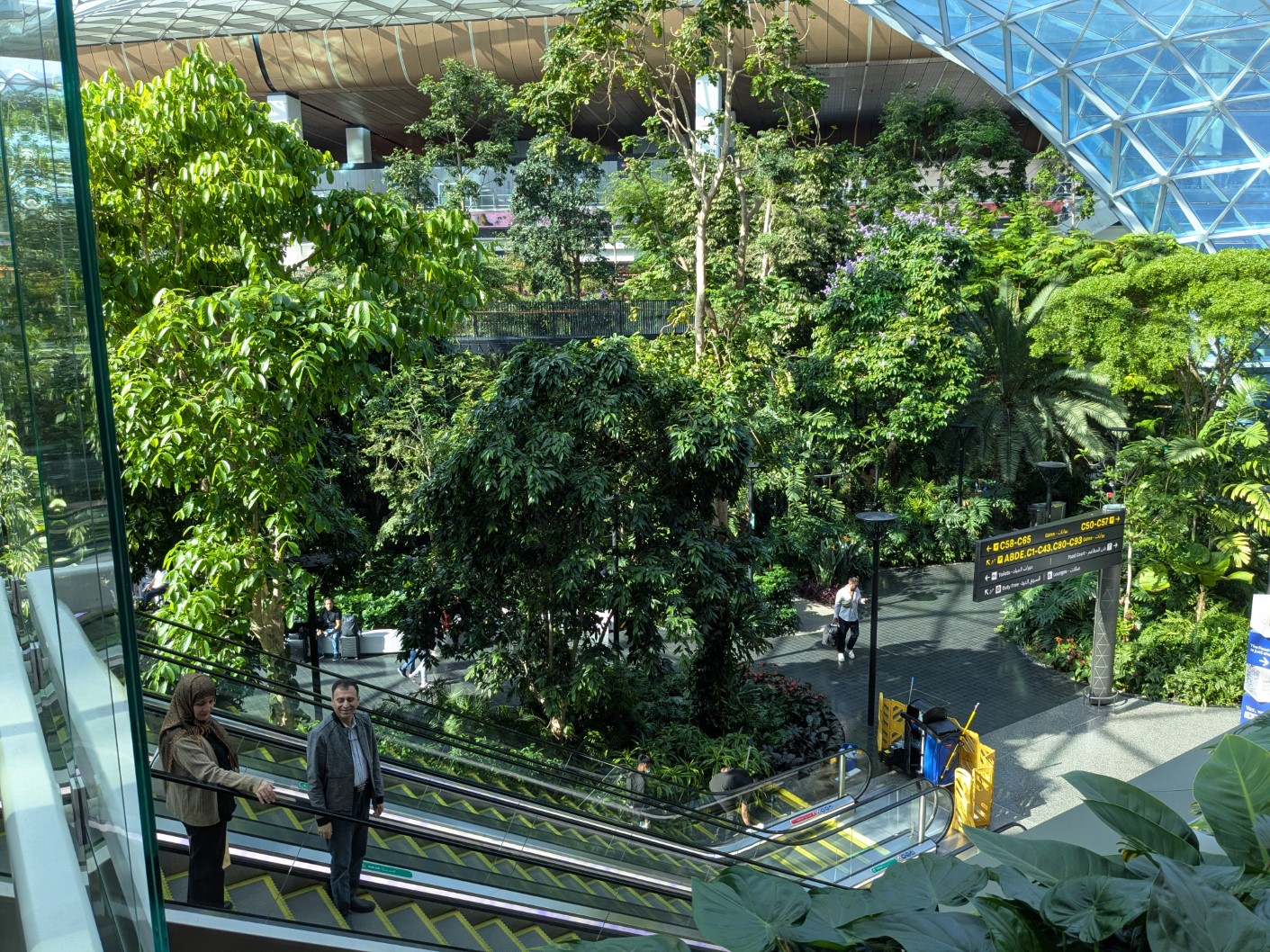
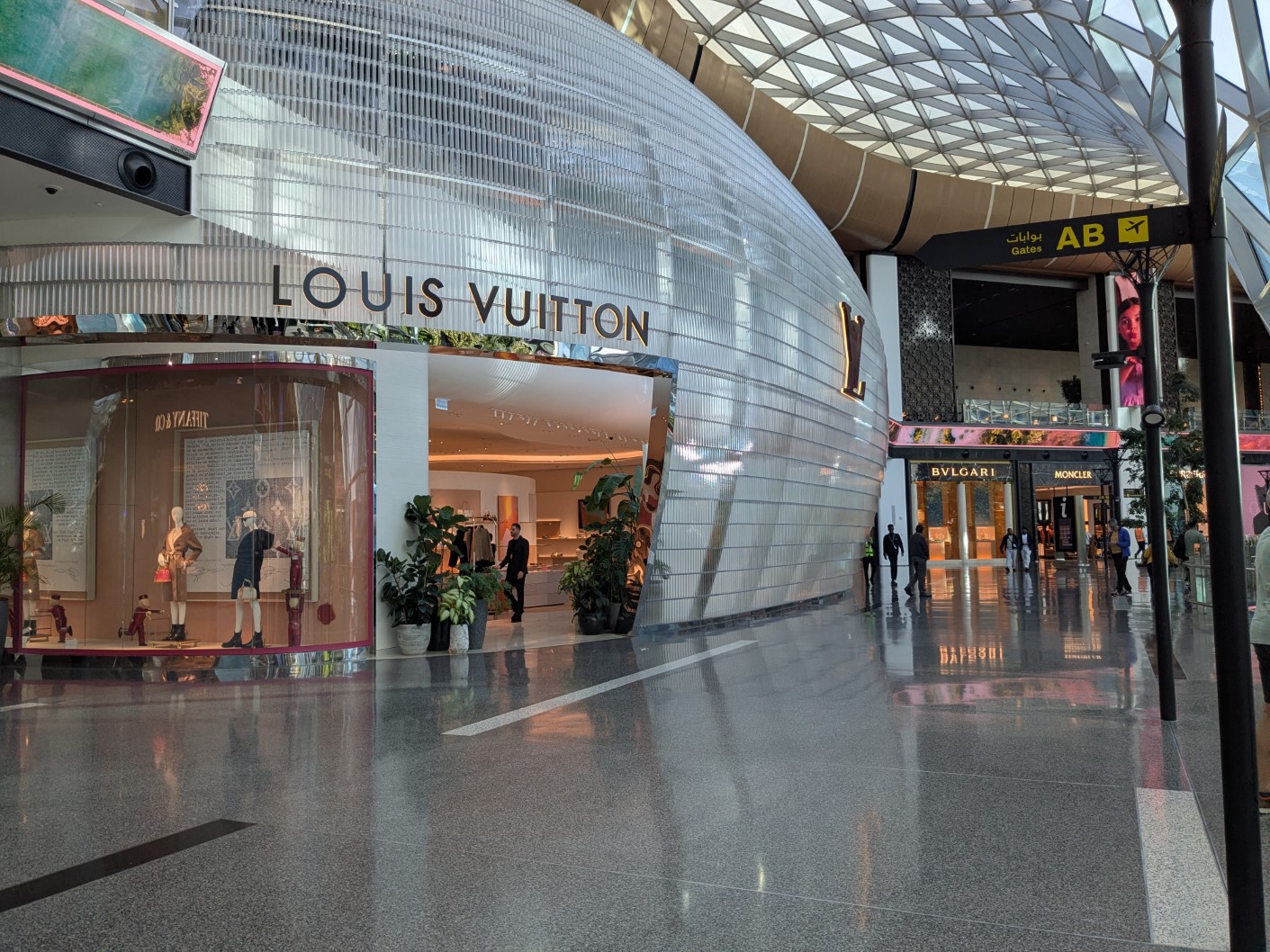
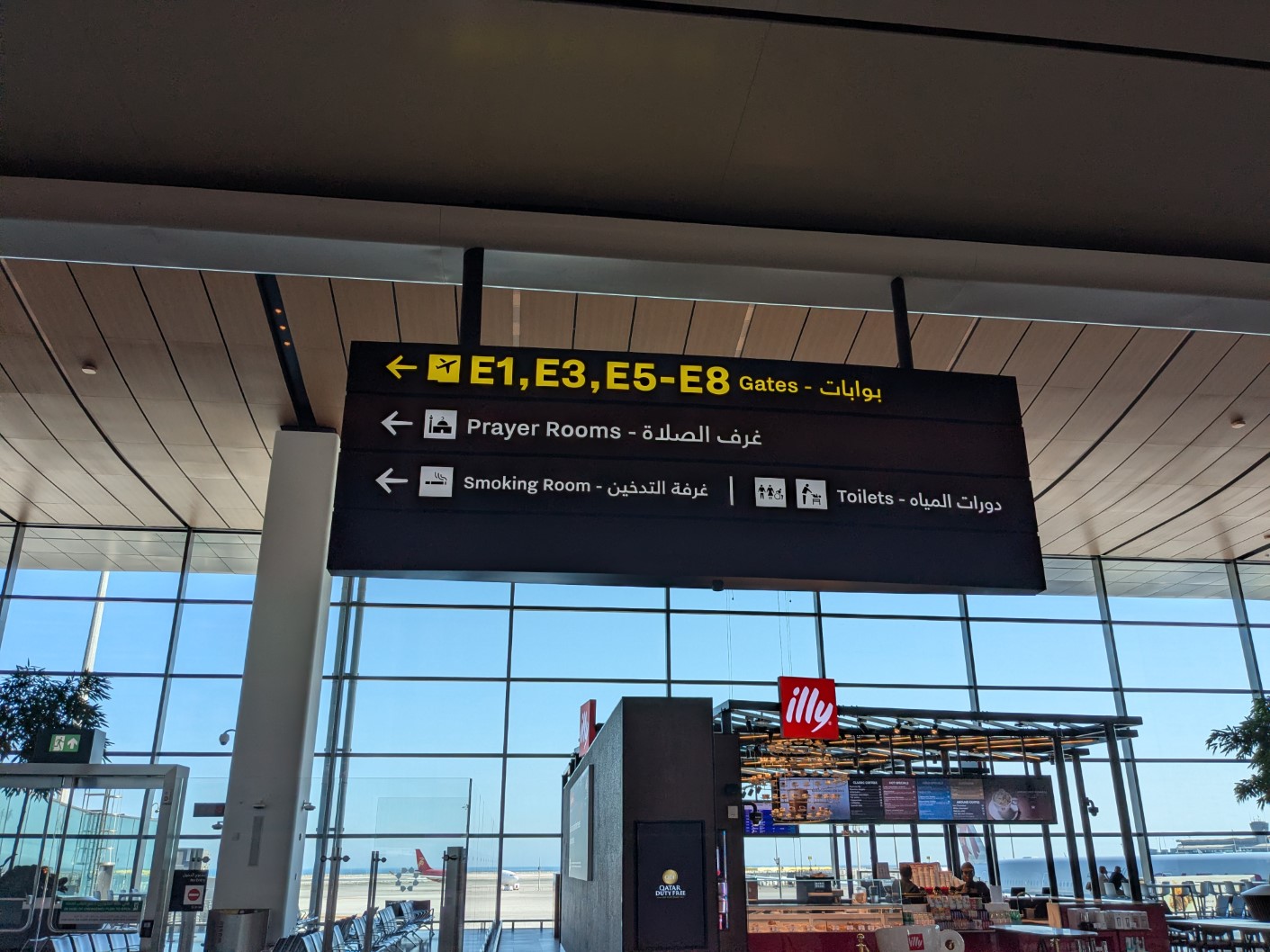
Due to a gate change, we made it just in time to board our flight to Cairo.
And that’s where things changed drastically…
To be continued in the next part... (and all posts in the series will eventually be available at this link).
 slip-sliding away.....
What an incredible adventure, Yacoob, and so well told! I especially love the museums and historical sites; they’re always my favorites. Thank you for this wonderful tale. And the cliff-hanger regarding Cairo! Yikes. Can’t wait.
I really enjoyed reading this Yacoob. It makes me nostalgic for the international trips we used to take regularly. Doha sounds like a fascinating place, with plenty to do and see and some beautiful landscapes and cityscapes. Reading this would make anyone want to visit (the closest we’ve been is Morocco). Thanks for sharing your experiences there.