Previous entries in this series:
Growing up, I was captivated by ancient Egypt when we studied it in Grade 5. I wanted to visit – especially to see the pyramids and Sphinx – and finally got my wish on a family holiday a few years later, at the end of 1997 (soon after the Luxor massacre – which enabled us to get upgrades, and police escorts on our tours). 14 years later, I returned for a few days – that time with my wife, on our way home after Hajj in 2011. Incidentally, this latest visit – at the end of 2025 (well, the start of 2026) came 14 years after that, marking a pattern of sorts.
Early signs
We always knew Egypt would be dramatically different to Doha. Before we even boarded our flight to Cairo, our plane was changed (presumably to an older one), and the boarding process was overcrowded, noisy, and a longer wait than normal. None of this was problematic, but they were signs of things to come at our destination.
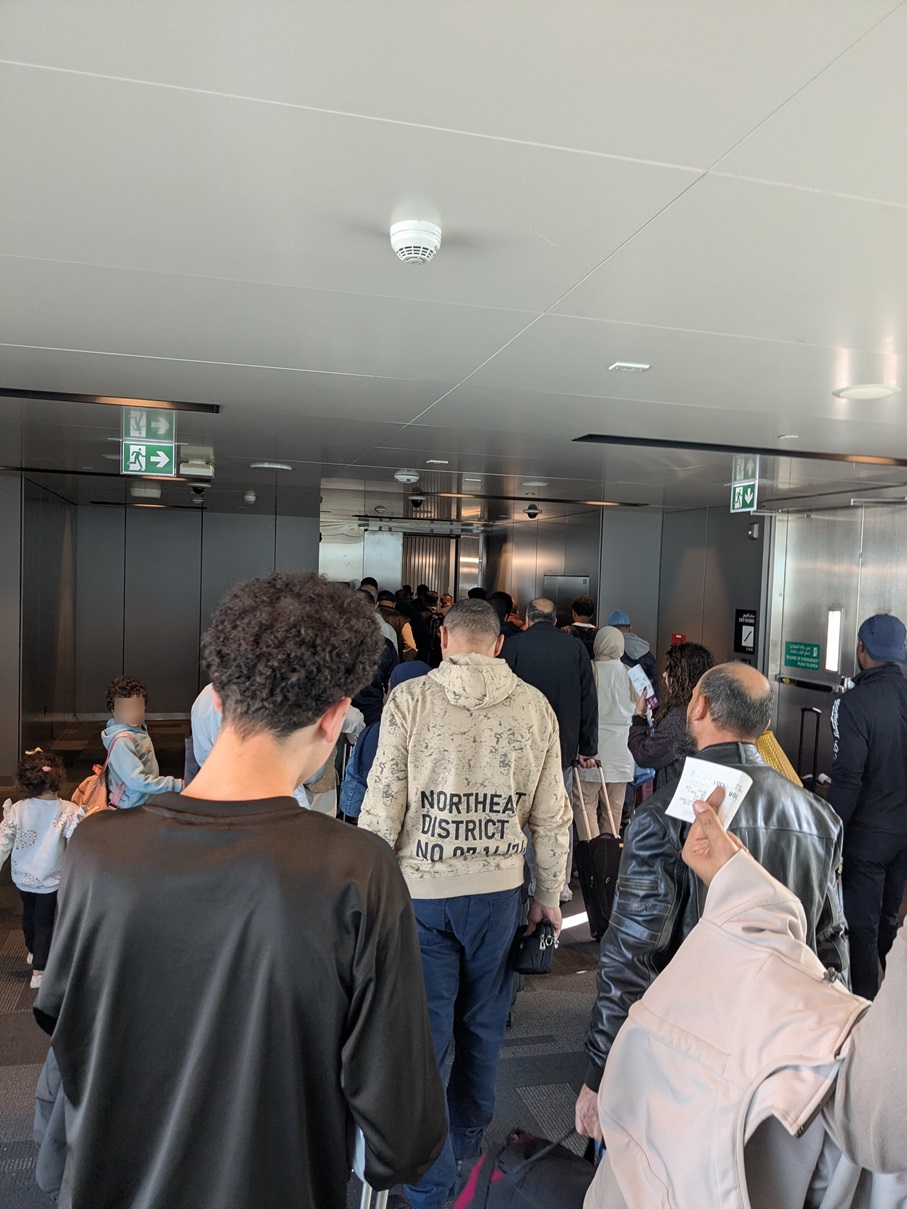
A late gate change in Doha, and the time it took to find and get to our new gate, meant that we were unable to get lunch at the airport. So, we were grateful to receive a meal on our flight, after presuming we wouldn’t get anything on the almost 4-hour journey. Turns out, that was the last meal we’d eat in comfort for the next 24 hours…
When we got through immigration at Cairo airport – surprisingly not needing the visas which we’d paid for on arrival, because either we came from an Arab country, or the attendant in the booth thought I was Arab. We collected our luggage and in the arrivals area, decided not to get my wife a local sim, given that my phone was working. (I’d purchased a regional eSim before we left home.) We assumed we’d get one near our accommodation later on, which turned out to be a mistake.
Thursday night marks the start of the weekend in the Arab world (Friday and Saturday being their weekend), which might explain the chaos we found when we headed out to meet our pre-arranged taxi. It was super crowded, police were chasing taxis away, and communicating with our driver to find him in that mess was stressful. But we eventually found him, marking the start of a memorable trip.
His English wasn’t great, but he tried very hard, and it was a reasonable conversation. As South Africans, the quickest way to get anyone to recognise where we’re from is to say “Mandela” – to which his reply was that he “loves peace” and “loves freedom”. He was slightly older than me, and had studied (and possibly practiced) law, but said that it wasn’t a good profession to be in in Egypt (for reasons he didn’t elaborate on), so he drove a taxi to earn an ethical income instead.
He showed us pictures of his kids (as Egyptian drivers often do), and spoke of the long hours he worked pushing him to smoke to relieve the stress. (Smoking, we found, is the norm in Egypt – despite the gross warning pictures on their cigarette boxes, going further than just text warnings we see back home.)
He eventually resorted to conversing with me through Google Translate, which worked well, but scared me as he looked at his phone while driving in the middle of lanes for much of the ride. I’d later realise that lane straddling is in fact a norm on the chaotic roads of Egypt – the polar opposite to the orderliness of Doha.
Nightmare in Giza
When we arrived in Giza – the area of the pyramids – we soon realised something was terribly wrong. There must be different districts or sections, and we kept hoping we’d be in one of the decent ones as we drove trying to find our hotel – a place Booking.com rated as 4 stars, with good reviews and pictures (and supposedly a 6-minute walk from the pyramids).
The area was effectively one of the slums of Giza, with run-down buildings, dirt, and poor lighting building up a feeling of despair within us as we observed from inside the car. The population of Greater Cairo is over 20 million, and Giza – effectively its own city – holds close to 5 million people, making it the most densely-populated in the world. And here we were – smack bang in the middle of it all.
Our driver’s English, by then, included the phrases “What is this?” and “Oh my God”, as he also asked locals for directions.
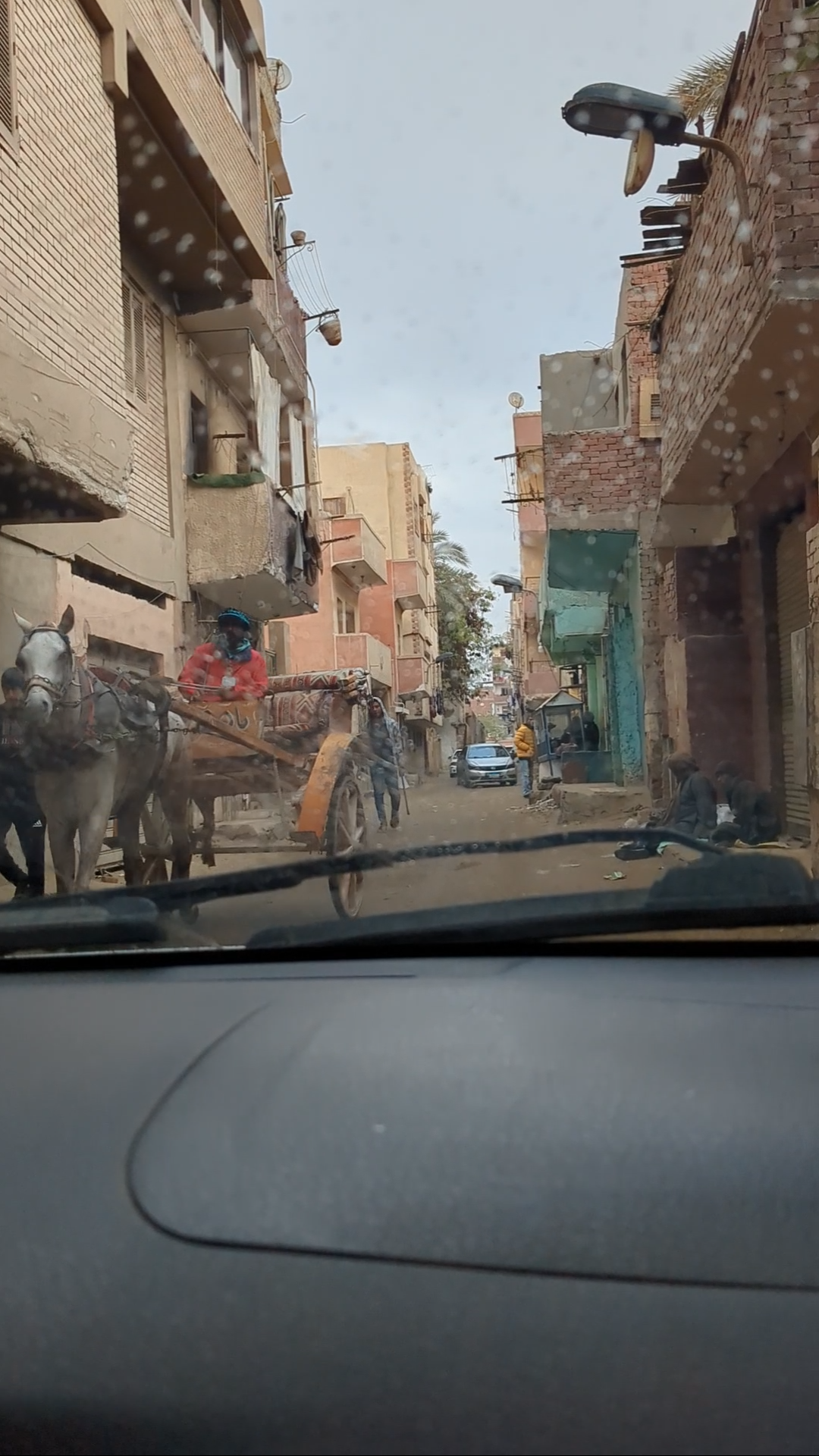
Google Maps clearly didn’t know this place, and tried taking us down roads that were not accessible, as we ended up in narrow, sandy alleyways – sometimes sharing the ‘road’ with dogs, horses, and camels. Some of the alleys were so narrow I didn’t think the car could even get out of them once it was in, but our fearless driver persisted – now encouraging us to pray with him as we tried to find this elusive ‘hotel’ he’d never been to before. As he said, most places in the area have the name ‘pyramids’ in them, so our hotel’s name didn’t stand out much.
Our anxiety was peaking, as we realised our predicament: we were in a foreign country where we didn’t speak the language, in a slum area at night, with all our luggage, and only one working phone – which, as a data-only eSim – couldn’t make local calls. (We regretted not getting my wife a local sim at the airport.)
But our driver promised to take care of us and not leave us in the middle of nowhere, which was comforting…but we didn’t know him from a bar of soap, and we’d read warnings about tourists being scammed in Egypt, so there was still some doubt.
We couldn’t call the hotel to figure out how to get there, so, fortunately, our driver – may Allah bless him – made the call for us, and eventually got us to the place. Before leaving us, he warned us to be careful when walking outside, given that we had two daughters. Coming from a local, that rather ominous warning only reinforced the dread that we felt.
We got into the building, which turned out to be more of a B&B / inn / guest house, and checked in – paying our full fee, as per payment terms. Our host – a young man – was assisted by what seemed to be his 12-year-old brother, as we took our stuff up the small staircase to our rooms.
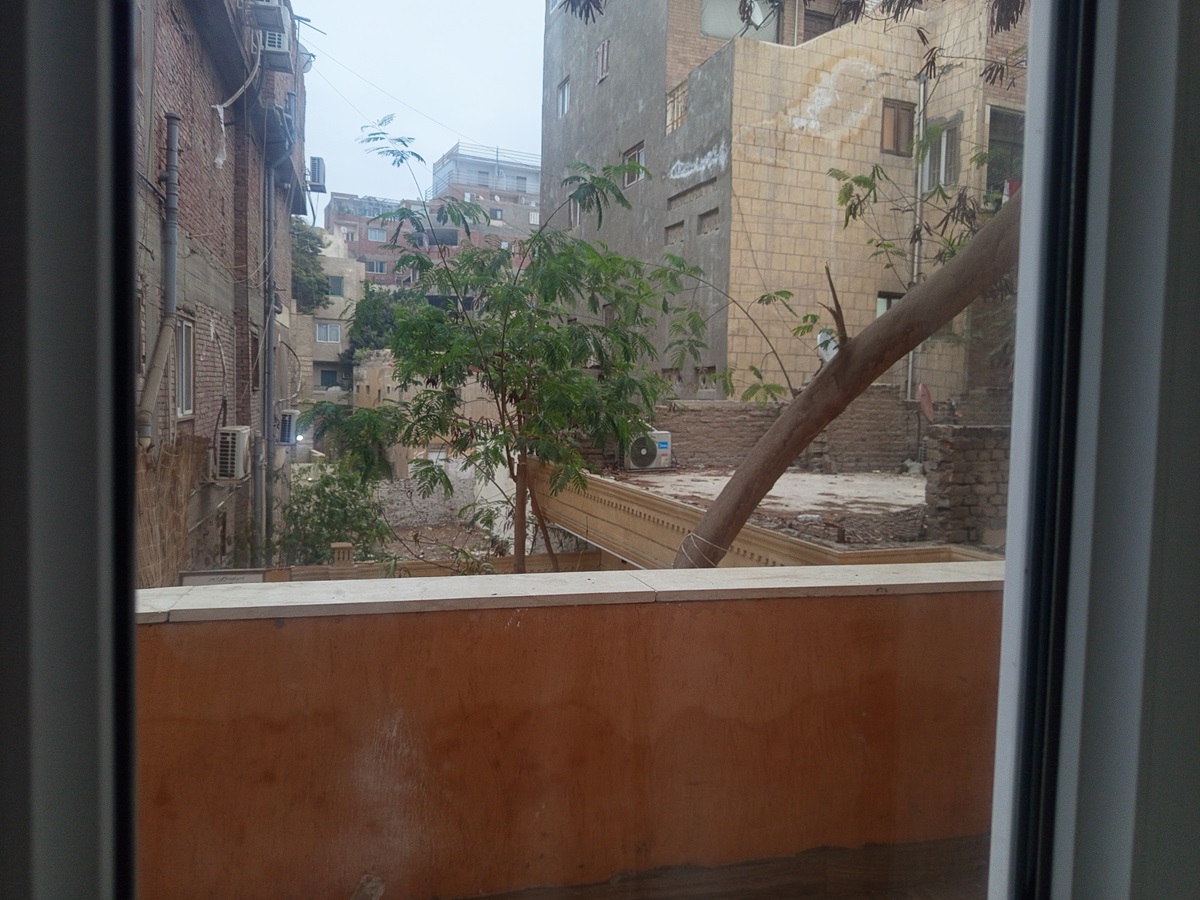
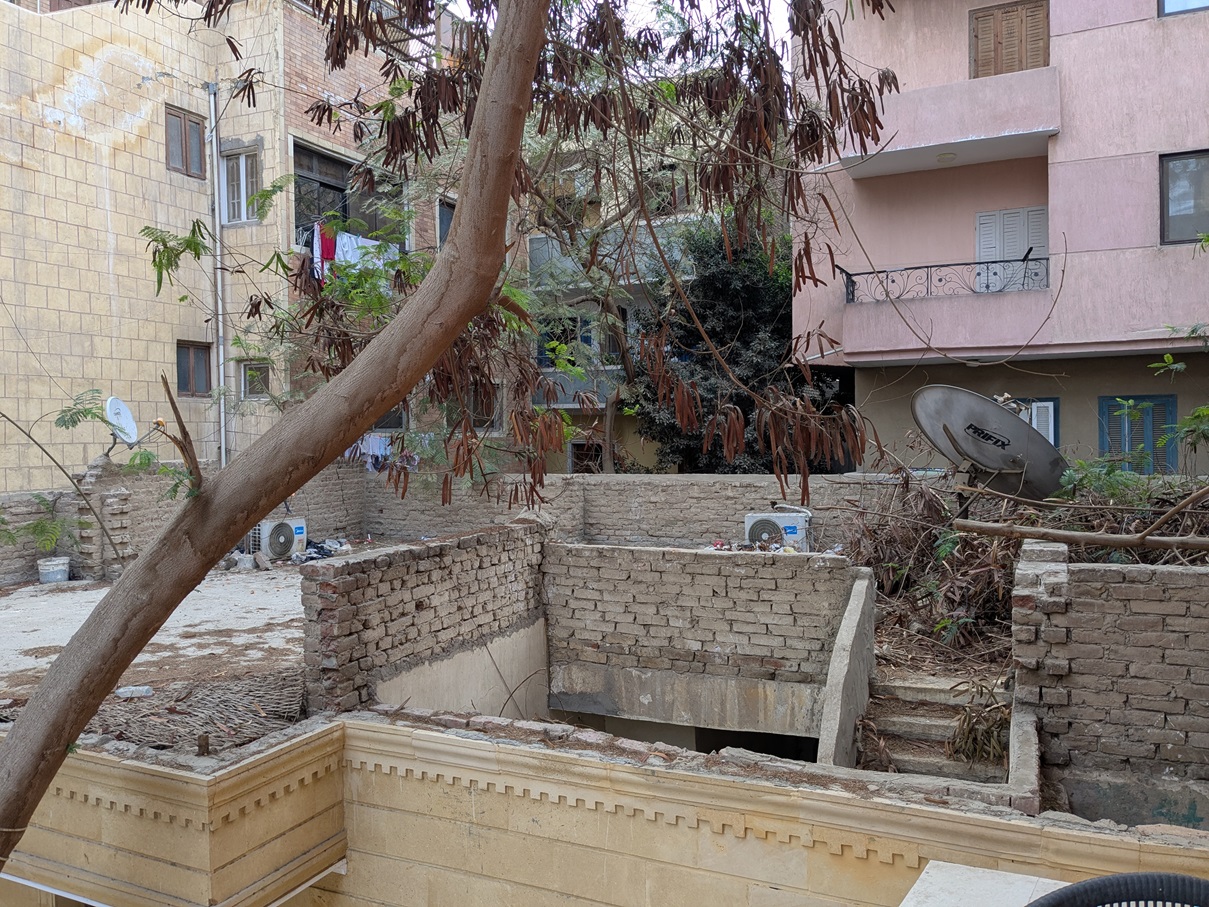
Despite the run-down neighbourhood, the building itself looked decent from the outside, and inside, we could tell they’d renovated the place. But it was definitely not a “hotel” by the Western standards we were used to. There were probably 2 floors for guests, each being a smallish en-suite room. We had 2 rooms, but decided we’d stay together in one of them, feeling unsafe inside, and especially in that neighbourhood.
We hadn’t eaten anything for hours, barely drank water, and were short on sleep after a late previous night. But at that point, we were running on adrenaline. It was like a nightmare, and we didn’t care that we’d lost our money on this booking: we just needed to figure out how we were going to get out of there to a proper hotel.
Frantic searching online (thankfully, my phone’s data connection was decent) and discussions led to us booking our remaining nights in Cairo at a not-too-pricey place close to the airport which looked like a proper hotel. Of course, we couldn’t know until we got there, and we had zero trust in Booking.com’s ratings and reviews. But anything was better than where we were. We hoped…
We ordered pizza, thinking we could at least eat something other than the few crackers we had left. The establishment’s kitchen made it for us, but an extra charge inflated the already high price even higher. We had no choice but to pay, but – given our state of mind – none of us was hungry enough to eat more than a few bites.
The toilets and showers weren’t ideal, but were still usable, enabling us to at least freshen up after our flight and ordeal thus far. The balcony door’s locking mechanism didn’t feel very secure, and given that it was possible to climb up to our room from the outside, and the fact that we didn’t know how safe we would be inside this place, we decided to sleep in one room: 2 per single bed, with me keeping our money and passports under the duvet.
The kids seemed to sleep OK, but my wife and I couldn’t get much rest, due to both anxiety and also the constantly squeaking and banging doors and conversations from outside the room throughout the night.
It’s at desperate times like these that faith is so important. I always believed that Allah would save us from this situation, but I recognised that we needed to go through it for some reason. And so, I believed that it was just a matter of time, and we needed to bear patience to just get through the night so we could get away the next morning. As we’re taught from the Quran, “with every hardship comes ease”, so even if we couldn’t see the ease at the time, we knew it was there.
Saved
Alhamdullilah – all praise to God – we made it through the night, then stayed up after the morning prayer, getting ready to leave at 9 a.m. with our taxi (arranged through a contact the night before). An Uber would have been much cheaper, but after the previous night’s drive, we had no confidence that any driver would find the place, and it seemed most didn’t speak decent English. So we trusted that our contact would get the taxi to the right place (and we sent the hotel phone number just in case).
I sheepishly returned the pizza to the reception the next morning, saying we were sick and couldn’t eat it (which was true). But the guy’s English was bad and he thought I wanted to heat it. I felt bad leaving it there, but we really could not eat.
When our taxi arrived, we took our bags downstairs, telling the receptionist that we were sick and had to leave as our plans had changed. I’m fairly sure he didn’t understand what I said, but I messaged via Booking.com later, which I think has translation capabilities. The cook of the house – likely his mother – looked upset as she saw us packing the car, given that she was preparing our breakfast.
We felt sorry for them. We really did. This was a family trying to offer good accommodation to tourists, and they really did want to help. But their standards were just far, far below what we were used to, coming from the Western world. Egypt, like our home South Africa, is also a third-world country, but the standards are very, very different.
You could call us spoilt (which is true to a degree), but one doesn’t go on holiday to live in a place like that. And I’m not discounting the possibility that their actual service to guests was incredible, because some of the reviews I read afterwards highlight that point. We just didn’t get to experience that because of our early departure.
The neighbourhood outside, really, was the biggest problem for us. To the uninformed, it may seem that we overreacted. After all, despite their poverty and frequent hassling of tourists to buy things, Egyptians are not violent people. However, we come from South Africa, where crime and violence can be rampant – especially in areas that look like this. So, when faced with a similar environment like the slums we have back home, our instinct is to go into defensive mode, assuming the worst. It’s an unfortunate disposition to have, but it’s our natural defence mechanism developed from living in a country where we always have to be aware of the possibility of danger (even though actual occurrences are very rare in the places we usually inhabit and visit).
And while the inside of their place was decent, by our standards, it would be rated two stars at best. It would be suitable for backpackers or students travelling on a tight budget. But it definitely was not suitable for a family, and so we didn’t feel guilty leaving them so soon. Especially because we had paid our full rate on arrival.
When we left, our taxi was a bit of a joke, too. It felt like a 1980s Toyota, without enough space for our luggage – which meant that one of our suitcases took a back seat, with my kids squashing in with my wife back there for the 45-minute drive.
We thought we could at least try to get her a local sim card on the way, and I thought our driver understood the request, because he pulled over twice at shops that he thought would have them (and the shopkeepers, answering him, said they did). Turns out, they were simple corner shops offering only basic essentials. And it reinforced the lesson we’d learn later, which was that most Egyptians we met really didn’t understand much English (even a lot of the hotel staff). It didn’t matter, though. We were just happy to get away.
To be continued in the next part... (and all posts in the series will eventually be available at this link).
 slip-sliding away.....
This is a fascinating account, Yacoob. I could feel myself inside the neighborhood, inside the B&B, inside your anxiety. Having traveled to similar places in the world, with similar experiences, I can relate. I look forward to the next installment. You could write a book about this stuff. 🙂
Thanks, Vance. If any wealthy, kind soul would like to sponsor a year of touring, I’d be happy to take a hiatus as a travel writer 🙂
Sounds like a nice gig…… 🙂
Yikes, Yacoob! What a ghastly and frightening experience. Hope the journey improves!
It did, as the next posts will cover 🙂
😘