In the many lifetimes
I’ve inhabited,
sanctuaries have always been nearby.
Starting with early childhood:
a nook beneath
the under-used dining room table,
where I’d storm off to
when treated unfairly.
Curling myself up,
indignantly waiting
for someone to come find me
and apologise
for what they’d done.
I don’t think they ever did.
At primary school,
I developed a ritual
near the end of ‘big break’:
going to a spot above the field,
sitting in silence,
closing my eyes,
and remembering
one particular dream I’d had –
which I held so dear.
I honoured it
each day,
sitting there
in the final moments
before the bell dragged us back
to school-sanctioned activities.
Also there,
a corner of that field
was particularly peaceful;
for I’d gaze beyond
to the ocean in the distance,
inviting serenity
in the eternal sunshine
of my childhood hometown.
The school library,
too,
was a place of refuge:
Home of thousands
of words and worlds,
adventures transporting
my young mind
beyond the confines
of my limited life.
Though schools changed,
libraries remained beloved:
my high school library,
being a protected place
where we’d gather each morning,
while most of the others
performed their morning prayers.
The place we had (almost-)free access
to the world wide web
which has so ensnared us now,
but was a virtual novelty
back when we lived
in the real world
and screens
were few and far between.
The tennis court
not far from home
was also
a place of peace:
hours and hours
playing my favourite sport,
hitting back and forth
with my brother or cousin.
Five set matches,
my favourite player
the mentor in my head –
pushing me
to keep going.
“Use your speed”…
a trait
I probably didn’t have,
but imagined I did,
in my quest
to emulate my hero.
Later, at university,
the library –
once more –
became my refuge;
but this time not for joy,
but rather
as a place to hide
my social ineptitude
which my peers would have discovered,
had I attempted
to befriend anyone,
after my failed first attempts
early in my tertiary career.
Beyond those years,
I moved
to another city
for the start of my working life.
Still within classroom confines.
Still with peers of similar age.
Still unable
to befriend any.
And so,
as was my childhood habit,
I’d walk and walk
and walk
during breaks;
finding comfort in the gardens,
longing to play
on the tennis court,
seeing the freedom
of the road and highway
on the other side of the fence.
Waiting out
the time
until I’d go back to class,
and beyond that,
back home
to the little nest I called my own,
at the guest house I inhabited
in those months;
a stranger
in a strange land.
Back home,
in my first real job,
I’d wander outside
in my breaks:
to the theatre next door,
the streets in the area,
and the derelict park
which would later become
a base for a circus school.
A bout of unemployment followed,
when my balcony
would be my next sanctuary:
reading books in the Winter sunshine,
university
and mountain
ahead,
as was
an unknown future
which I so desperately awaited
as I failed
time after time
to find my next job.
Returning,
eventually,
to my university
for that occupation,
I revelled
in the opportunities
to walk
so beautiful a campus.
I found
a set of stairs
where I’d sit
in peace;
along with
my precious perch:
the rooftop I’d call my own,
discovered
when a power outtage
left me
with nothing to do
but wander…
A serendipitous discovery –
a fortress of solitude –
which would feed my soul
for nearly two decades thereafter,
before it was lost,
locked…
forever taken,
despite my efforts to regain access.
In the city centre
for my next job,
I briefly wandered up
to the rooftop
but never felt safe enough to stay.
I found more comfort
walking the blocks
of car dealerships
and boring buildings,
and in particular,
the parking lot
where I’d stand
near the edge
closing my eyes,
just taking in
the sounds
of the city’s daytime workings.
Later,
in another job,
there was one particular room –
disdained by others,
but beloved to me,
for it felt
so warm,
so comforting –
nestled near the corner of the building;
a peaceful retreat
from the day-to-day buzz
of work and human interactions.
At that time,
my home,
too,
was sacred:
the best place I’ve ever lived;
bathed in natural light
and peace,
with ample walking space
and greenery;
and a perch
from which I’d watch
the rising
of each day’s sun.
Truly
a home
for my heart
which I didn’t want to leave.
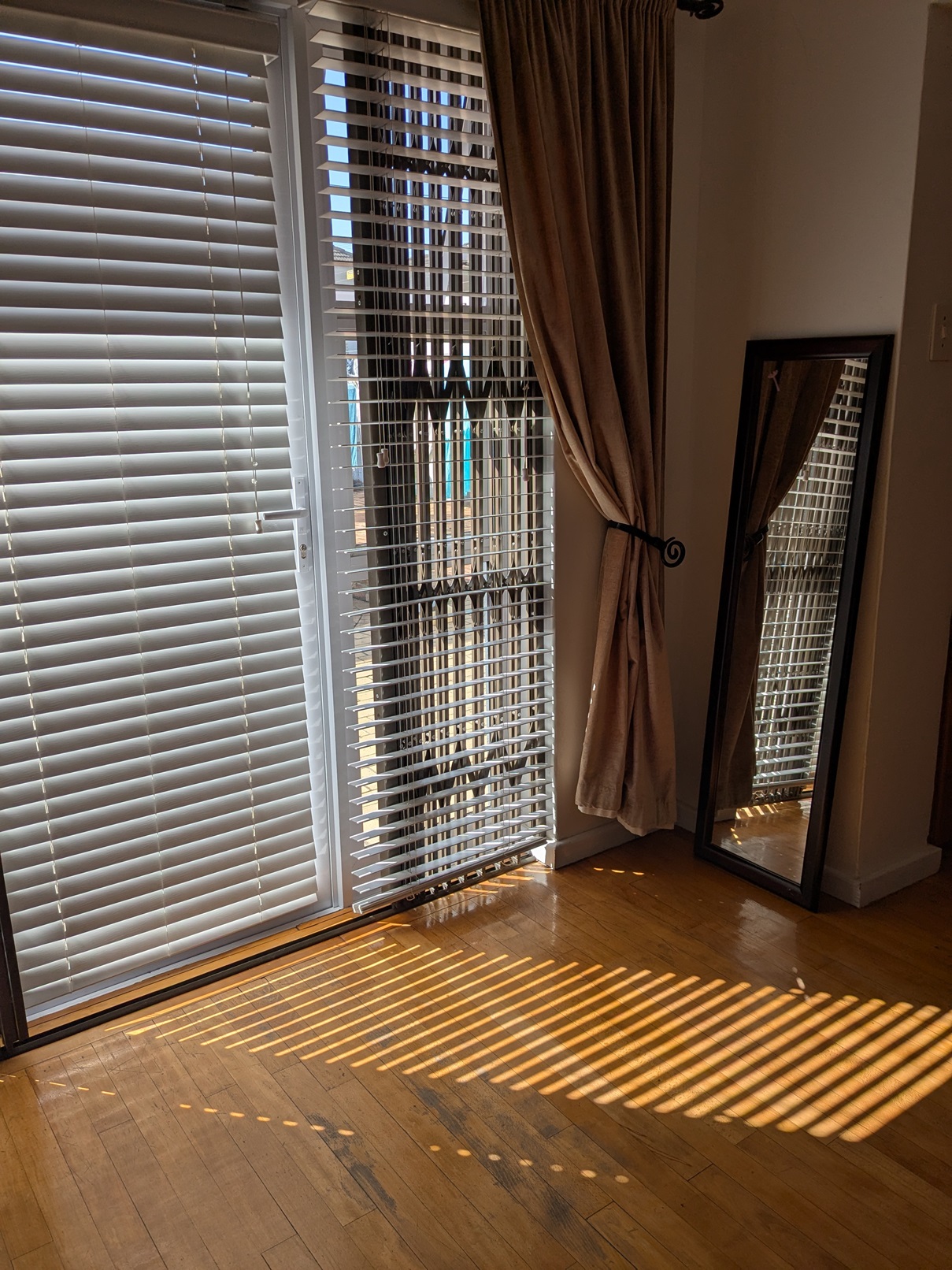
And now,
my current home
still holds its own spot:
far from the beauty
and serenity
of my hallowed havens,
yet still
peaceful enough
to warrant inclusion
on this list
of dear dwellings.
And that concludes
this travel through time and place.
Where I’ll find peace in future,
God alone knows.
But remembrance of these sanctuaries
sparked this poem.
 slip-sliding away.....
I think many of us can relate to this, Yacoob — finding those certain spots that bring brief bouts of tranquility. I still find solace in tennis courts for some odd reason :). It’s good that you’ve been able to track down sanctuaries wherever you have landed.
I think, also, it’s an introvert tendency, as a mechanism for coping with the constant environment of people everywhere. Find an escape no matter where you are…
In terms of tennis courts, or any sport for that matter, it’s just a natural fit. If your heart is attached to the game, it finds comfort in being in that game’s arena. I’ve heard from entertainers who are uneasy around people and crowds, but when they get on whatever stage or platform they perform on, it’s like everything fades away, and they’re in their happy place.
It’s just human nature.
Very true.
What a deep reflection honoring your awareness that places have energy and the necessity of choosing/creating sanctuary among them. I hope you’ll always have such a place for your peace and creativity, Yacoob.