In an age where we have so many digital (and other) distractions relentlessly assaulting our senses, it’s a struggle to actually sit down and read a book. Using your imagination, and taking time to think and process – rather than having ideas forced upon you (as is the case in visual and audio formats) – is something that used to come so easily to us, but these habits have been eroded in the age of information and media overload.
Having experienced something of a reading revival in recent years, and because this blog’s output is rather sporadic nowadays, I’ve decided to start what I hope will be a series, wherein I share my thoughts on some of the books I’ve managed to finish over the last while. (Note the word finish, because my unfinished list is far longer than the finished list.)
My intention is not to offer in-depth reviews, but merely to document books that have stood out to me for one reason or another.
Here goes…
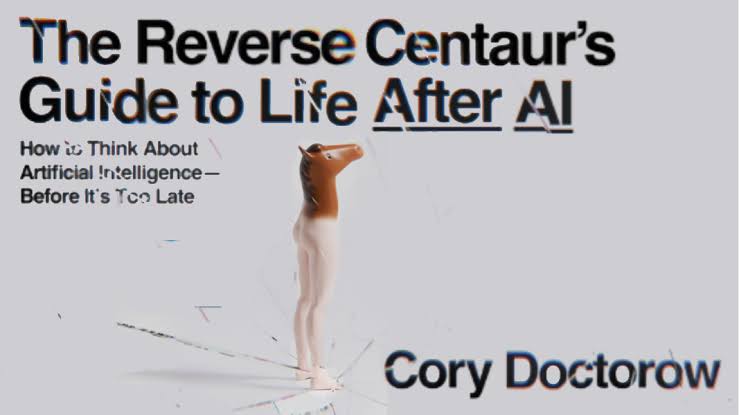
The Reverse Centaur’s Guide to Life After AI
by Cory Doctorow
A short, provocative guide to what’s good, bad, and stupid about AI and the discourse around AI, by the author of Enshittification. In modern tech parlance, a centaur is a person who is able to use technology to be a better, more productive version of themself. A reverse centaur is a person who is forced by technology to work at an inhuman pace―a driver made to deliver all day long, nonstop; a warehouse worker made to work without food or bathroom breaks; a programmer made to crank out impossible amounts of code.
For Doctorow, it is imperative to see through that hype to the real story, to understand the technology not just for what it does, but for who it does it to and who it does it for. Doctorow recounts both how we found ourselves in this dire situation and how we can get through it, to a life “after” AI in which the tools work for us, not the other way around.
My thoughts:
After hearing the author speak on ‘enshitification’ (the title of his previous book, which goes into depth about how things are being deliberately made worse), this one appealed to me because I, like many others, see through the intense, manufactured hype being touted about around artificial intelligence. Whether the discussion is praising it and its potential, or criticising its utter stupidity and dangers (e.g. to the environment; to intellectual property and human creativity), the discussion seems unavoidable these days.
In this book, Cory Doctorow – a journalist, author, and copyright activist associated with the Electronic Frontier Foundation – discusses how the AI hype machine is primarily aimed at investors, with the intention of encouraging massive investment into AI companies. Like other economic bubbles of the past, this one, too, will eventually pop, leaving some participants (those who got out in time) incredibly rich, but ruining the lives of most (including those who were NOT willing participants in this whole charade).
He breaks down what AI can actually do, and how AI salesmen pitch unrealistic future AI capabilities merely to gather more and more investment. He goes into depressing detail about how corporate greed – companies squeezing customers for as much as possible, while trying to give workers as little as possible (Amazon and Uber being significant examples) – is being advanced by AI technologies, and how, despite many recognising that AI really is not this miraculous entity that can replace humans en masse, the lie just keeps getting inflated. All in aid of pumping up an industry which is having monumentally negative effects on our planet and species (or at least, the ratio of harm to benefit is grossly out of proportion).
A significant portion of the book discusses how copyright – which we’re led to believe is meant to protect creatives – is actually used as yet another mechanism to enable greedy corporations to exploit those who do the work (i.e. artists and creatives) in the traditional record label, publisher, and digital platform industries.
Doctorow delves into the impact of AI on human art and creativity, and exposes real-world lies where we were told to believe the machines were at work, but there were actually humans behind the scenes.
It’s a relatively short book, but one which goes into impressive detail. It paints a depressing picture of our world, exposing some of the mechanisms that have enabled the exploitation we all feel, but can’t necessarily identify because they’re been so well hidden.
He ends with some current, positive uses for AI – such as how it’s being used to deal with large sets of data to aid human rights work, and how it has given rise to (and will continue to enhance) powerful, accessible image processing, and more refined language translation and speech-to-text tools. Given the state of the world, and how the powerful seem to be unstoppable in their never-ending greed, the one positive I drew from this is the knowledge that this AI bubble will burst at some point. Just how much damage will have been done by then is another story, but there’s at least some comfort in knowing that this madness won’t last forever. And, like any tool or technology, it’s up to us to make the best of what remains.
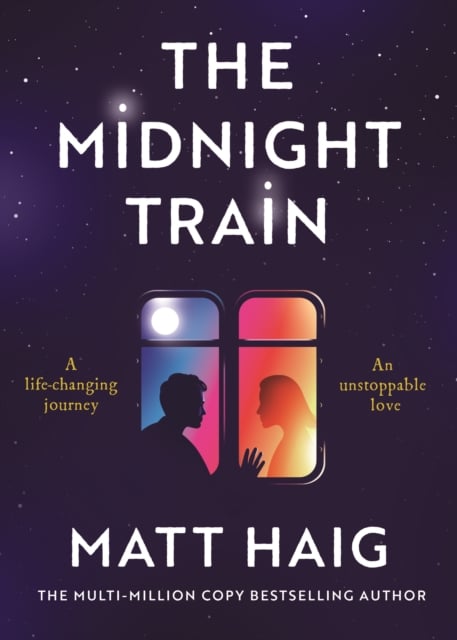
The Midnight Train
by Matt Haig
When your life flashes before your eyes, where would you stop?
No one can change the past, but the Midnight Train can take you there.
The chance to re-live the moments that meant most.
To see what kind of person you really were.
For Wilbur his best days were with Maggie, the love of his life. On his honeymoon in Venice.
Before he gave it all away.
He wishes he could go back and live differently. But to do so risks everything . . .
A magical, time-travelling love story, from the world of The Midnight Library.
My thoughts:
A great story, even though the concept is far from unique (e.g. “A Christmas Carol”; the wave of ‘I met my younger self for coffee’; etc).
The one thing that stood out was that at times, the life lessons / philosophies / advice came across a bit too transparently, rather than being intricately wrapped within the story. And that’s not a criticism of the author himself (I’ve enjoyed The Midnight Library and The Life Impossible), but merely an observation on how his preaching/teaching came through in this particular book.
Regardless, this is definitely one I’d recommend for those who could do with a reminder of balance in life and appreciating the moments as you live them.
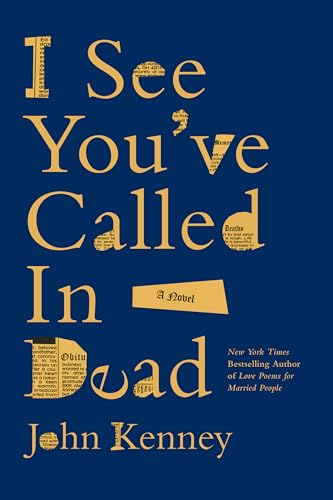
I See You’ve Called in Dead
by John Kenney
Obituary writer Bud Stanley isn’t really living his best life. He’s fallen into a funk after a divorce. (She left him for another man, who, in fairness, was far more interesting.) He’s not doing his job well. He’s given up on dating. And he’s about to be fired for accidentally publishing his own obituary one mildly drunken night (though technically the company can’t legally fire a dead person).
As Bud awaits his fate at work, he does the only logical thing: He goes to the wakes and funerals of total strangers to learn how to live again.
My thoughts:
I admired the beauty of this story: the descriptions, the capturing of life – what we overlook as ordinary, normal moments – so poetically portrayed.
It was funny, without overdoing it. Serious and thought provoking without being morbid or depressing. Finely balanced in many ways. Well worth the read.
If you have any recommendations, feel free to let me know in the comments 🙂
 slip-sliding away.....
Excellent and intriguing reviews; thank you, Yacoob! All three sound like books I would enjoy, though I’ve chosen to avoid the Doctorow books for now. I can’t sustain more bad news on top of what we’re living through, and have been involved in anti-AI data center construction in our communities, so am already aware of more facts than I want to know.
I’ve been reading Benjamin Black’s (pseudo. for John Bannen) old Quirke series, set in 1950’s Dublin, very atmospheric of time/place. Not overly fond of the characters, but mesmerized by Bannen’s writing.
Thank you again for your enticing reviews!
Live your life as an experiment. ~ Pema Chodron
We all have the extraordinary coded within us, waiting to be released. ~ Jean Houston
I am here, that I may wonder! ~ Goethe
Thanks for the recommendations, Yacoob. I’m going to add all of these on my “to read” list — especially the last two. I read a lot of books, but lately haven’t come across too many that really jump out. I used to keep a list of books I’ve read and plan to read on Goodreads and should probably go back to doing that, just so I can offer recs to others.